
 0
0
 0
0
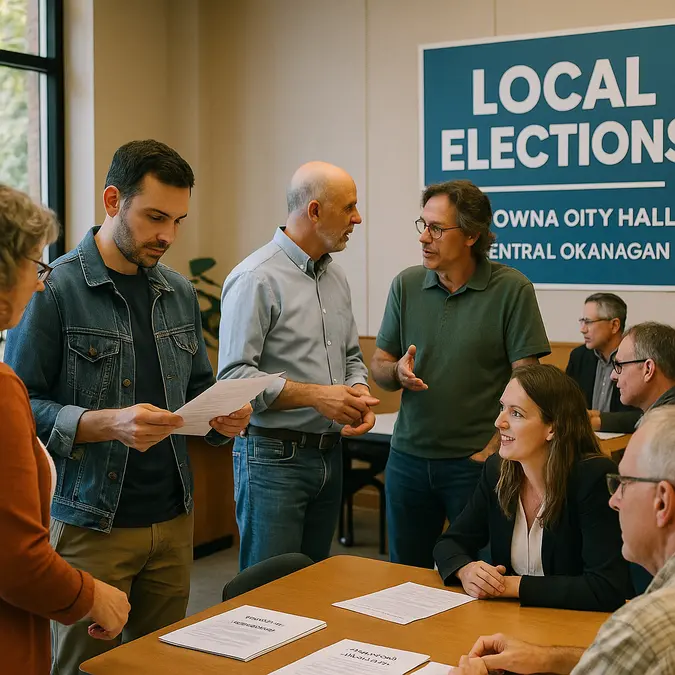
www.tnsmi-cmag.com – Central Okanagan municipal elections are less than 12 weeks away, and municipalities across the region, led by the City of Kelowna, are actively seeking candidates ready to step into public service and help shape the next four years of local decision-making.
The City of Kelowna has confirmed that nomination packages are now available both online and at city hall, signaling the formal start of the pre-election season. For residents considering a run, this is more than a bureaucratic milestone; it is a moment that demands strategic planning, community engagement, and a clear understanding of what it truly means to serve in local government.
Central Okanagan municipal elections: Why this cycle matters more than ever
Local elections often fly under the radar compared with federal or provincial contests, yet they are the level of government that most directly affects daily life. In the Central Okanagan, city councils and regional boards influence land use, property taxes, drinking water, road maintenance, public transit, policing priorities, parks, and cultural services. According to Wikipedia's overview of municipal government in Canada, municipalities exercise substantial authority over bylaws and planning, even though they are creatures of provincial legislation.
In this election cycle, the Central Okanagan faces converging pressures: housing affordability, wildfire risk, climate resilience, infrastructure strain from population growth, and debates over taxation and development pace. The Government of British Columbia stresses that municipal councils must balance community aspirations with fiscal responsibility. That balancing act will be at the heart of every platform presented in the upcoming Central Okanagan municipal elections.
For prospective candidates, understanding this context is vital. This is not simply about putting a name on a ballot; it is about stepping into complex governance challenges that require preparation, resilience, and a strong ethical compass.
Understanding how Central Okanagan municipal elections work
Before picking up a nomination package in Kelowna or any other Central Okanagan municipality, readers should understand the structure and mechanics of local elections in British Columbia. Municipal elections in B.C. typically occur every four years on a fixed date, with all council seats and the mayoralty open at the same time. Voters cast ballots for mayor, councillors, and in some cases school trustees or regional district directors.
In the Central Okanagan, the principal local jurisdictions generally include:
- The City of Kelowna
- The City of West Kelowna
- District of Lake Country
- District of Peachland
- Central Okanagan Regional District (including electoral areas)
Each local government sets its own nomination procedures within the framework of the B.C. Local Government Act and Local Elections Campaign Financing Act. Yet the overall flow remains consistent across the region: release of nomination packages, opening of the official nomination period, close of nominations, campaign period, advance voting days, and general voting day.
Central Okanagan municipal elections: What nomination packages really contain
The announcement that Kelowna has released nomination packages is more significant than it may seem. These packages are the gateway to the ballot, containing:
- Eligibility criteria – such as age, residency or citizenship requirements, and disqualifying conditions.
- Nomination forms – including signature requirements from nominators who are eligible electors.
- Financial disclosure obligations – initial statements, contribution rules, and spending limits.
- Code of conduct and ethics information – where adopted, outlining expectations of council members.
- Key dates and deadlines – including filing cutoffs, withdrawal dates, and campaign finance reporting deadlines.
Readers who are new to local politics often underestimate the administrative discipline needed to complete these documents correctly and on time. Missing a signature or missing a deadline can disqualify a campaign before it even begins. As a result, one of the most practical early steps for any aspiring candidate in the Central Okanagan municipal elections is to thoroughly review the full nomination package and, where possible, discuss it with municipal staff or experienced former candidates.
For broader context on public decision-making and civic strategy, readers can also explore our analysis under Politics, which often dissects how local and regional dynamics intersect with national debates.
Who should consider running in the Central Okanagan municipal elections?
The Kelowna announcement emphasizes a recurring theme in local democracy: serving your community is a meaningful way to shape its future. That sentiment is accurate, but it is only the beginning of the story. Not everyone is suited to elected office, and not every passionate resident will thrive in the demands of council work.
Prospective candidates should carefully reflect on at least four dimensions:
1. Motivation and purpose
Ask what truly drives you to stand in the Central Okanagan municipal elections. Are you reacting to a single contentious project, or are you prepared to govern across a wide range of files—finance, land use, public safety, infrastructure, and social policy? Research on local governance shows that councillors who approach the role with a long-term, community-wide focus tend to be more effective than those centered on one narrow grievance.
A useful test is to draft a one-page statement of purpose that explains, in plain language, why you want to serve, what values guide your decisions, and how you will listen to residents who disagree with you. If that exercise feels superficial or forced, it may be wise to reconsider, or to start in a lower-profile advisory role or volunteer board.
2. Time and workload
Many residents assume that municipal councils are part-time commitments. In practice, especially in fast-growing centers like Kelowna, workload can easily spill into what feels like full-time hours: evening meetings, committee work, budget deliberations, consultation events, and countless emails and calls from residents. Even where formal compensation is modest, expectations are high.
Family members, employers, and business partners should be part of the decision-making process. Entering the Central Okanagan municipal elections without a clear plan to balance professional, personal, and civic responsibilities is a recipe for burnout or underperformance once in office.
3. Skills and temperament
Local government requires a distinctive skill set rooted in listening, collaboration, and evidence-based reasoning. Candidates do not need to arrive with all the answers, but they should be comfortable:
- Reading lengthy staff reports and financial documents.
- Asking precise, respectful, and probing questions in public meetings.
- Engaging constructively with residents who are angry or fearful.
- Working with colleagues who may hold very different political views.
Temperament matters as much as ideology. In highly charged debates over development, homelessness, or public safety, voters often respond favorably to candidates who show composure and focus on solutions rather than division.
4. Ethical and transparency commitments
Trust is the invisible currency of municipal politics. The Central Okanagan municipal elections will unfold under increasing scrutiny about conflicts of interest, campaign contributions, and the relationship between developers and decision-makers. Prospective candidates should be prepared to disclose potential conflicts and to err on the side of recusal when in doubt.
Setting a personal transparency standard—such as proactively explaining donations, meeting with diverse stakeholder groups, and publishing voting rationales—can differentiate a candidate in a crowded field.
Key issues likely to shape the Central Okanagan municipal elections
While each municipality in the region has its own priorities, several core issues are likely to dominate candidate forums, media coverage, and household conversations leading into election day:
Housing affordability and growth management
Kelowna and its neighboring communities have experienced sustained population growth, driven in part by migration from other parts of B.C. and Canada. This growth has contributed to sharp rises in home prices and rents. Voters will look closely at candidate proposals on zoning reform, density, secondary suites, purpose-built rentals, and the balance between greenfield expansion and infill development.
Candidates in the Central Okanagan municipal elections who can clearly explain how land-use decisions influence affordability—without resorting to simplistic slogans—will likely gain credibility with both long-time residents and newcomers.
Climate resilience, wildfire risk, and infrastructure
The Central Okanagan's proximity to forests, lakes, and mountains is a core part of its appeal, but also a source of vulnerability. Wildfire seasons in recent years have brought evacuations, smoke events, and ongoing concerns about preparedness. Flood risk, extreme heat, and water scarcity are also on the public radar.
Voters will want to see practical, funded plans addressing:
- Wildfire mitigation, including fuel management near communities.
- Emergency response capacity and evacuation planning.
- Resilient infrastructure, from stormwater systems to cooling centers.
- Land-use decisions in high-risk areas.
Here, collaboration across municipalities and with the regional district will be essential. The next cohort of councillors elected in the Central Okanagan municipal elections will need to navigate these shared risks with a regional lens, not just a parochial one.
Public safety, social issues, and downtown vitality
Like many Canadian cities, Kelowna and nearby communities are grappling with visible homelessness, addiction, and mental-health crises. Business owners, residents, and service providers are all calling for nuanced responses that acknowledge both safety concerns and human dignity.
Superficial "law and order" rhetoric will likely be challenged by voters asking detailed questions about social services, supportive housing, policing models, and collaboration with provincial health authorities. Candidates in the Central Okanagan municipal elections who engage directly with front-line organizations, and who ground their proposals in data and proven approaches, will have an advantage in credibility.
Strategic campaigning in the Central Okanagan municipal elections
Once a candidate commits and files their nomination papers, the real work of engaging voters begins. Municipal races are often won or lost not on ideology, but on organization, clarity, and trust built over weeks of direct contact.
Building a resonant, realistic platform
A strong platform in the Central Okanagan municipal elections should meet three tests:
- Local specificity – Policies should clearly respond to conditions in Kelowna, West Kelowna, Lake Country, or Peachland, rather than reusing generic talking points from national politics.
- Fiscal realism – Every promise should be evaluated against budget limitations and competing priorities. Voters are wary of agendas that sound impressive but ignore financial constraints.
- Measurability – Whenever possible, include timelines, metrics, or benchmarks that allow residents to hold you accountable after the election.
Readers interested in how policy agendas intersect with energy, infrastructure, and long-term planning can explore related coverage under Energy, which often highlights how local choices ripple through environmental and economic outcomes.
Digital and ground-game outreach
Municipal campaigns operate on modest budgets, so efficient outreach is essential. In the Central Okanagan municipal elections, candidates should consider:
- Door-to-door canvassing – Still the most effective way to build recognition and trust, especially in residential neighborhoods.
- Targeted digital communication – Using social media, newsletters, and community forums to explain positions and invite questions.
- Issue-based events – Hosting or attending small gatherings focused on a single topic, such as transit or wildfire preparedness.
- Nonpartisan community engagement – Appearing at school events, cultural festivals, and local business roundtables.
Every interaction should reinforce a consistent message: what you stand for, how you listen, and how you will make decisions under pressure.
Democracy, diversity, and the future of Central Okanagan governance
One of the underlying goals of encouraging more nominations is to diversify who sits at local decision-making tables. Across Canada, municipal councils still tend to underrepresent younger residents, renters, Indigenous peoples, visible minorities, and lower-income communities. The Central Okanagan municipal elections present an opportunity to broaden participation and bring new voices into the room.
“Serving your community is a meaningful way to help shape its future” is not only a slogan; it is a call to rethink whose future is being shaped, and who gets to shape it.
Support networks—mentorship from past councillors, training offered by civic organizations, and informational sessions hosted by municipalities—can lower the barriers for first-time candidates. If Kelowna and other Central Okanagan municipalities succeed in attracting a diverse, capable slate of nominees, the region's governance will better reflect the full spectrum of its residents' experiences.
Conclusion: Why the Central Okanagan municipal elections deserve your attention
The release of nomination packages in Kelowna is more than an administrative notice; it is an invitation. Whether readers see themselves as potential candidates, volunteers, or simply informed voters, the Central Okanagan municipal elections will shape the region's trajectory on housing, climate resilience, infrastructure, and community well-being for years to come.
For those considering a run, the next few weeks are critical. This is the time to study the nomination documents, speak honestly with family and employers, map out a realistic campaign, and clarify the values that would guide you in office. For residents not on the ballot, this is the moment to ask hard questions, scrutinize platforms, and support a culture of respectful, evidence-based debate.
Ultimately, municipalities are only as strong as the people willing to lead them and the public willing to hold them accountable. The Central Okanagan municipal elections are a test of both. If the region seizes this opportunity—by fielding engaged, diverse candidates and by turning out to vote—these elections can become a turning point toward more resilient, inclusive, and forward-looking local governance.