
 0
0
 0
0
www.tnsmi-cmag.com – The T&T economy has become the stage for a loud and often shallow national drama, where selective outrage and partisan soundbites frequently drown out sober analysis, data, and genuine concern for long-term development.
The letter titled “Selective outrage” from a self-described “woke citizen” of St Ann’s captures a growing frustration among many Trinidad and Tobago citizens: economic issues are real, complex, and urgent—yet public discourse often reduces them to theatre. Instead of informed debate about growth, diversification, and inequality, we too often witness choreographed outrage, short news cycles, and superficial blame games.
In this long-form analysis, we examine how discussions about the T&T economy are framed, who benefits from selective outrage, and what readers should focus on if we truly want a fair, resilient, and competitive country. We also connect these debates to broader global economic trends and to the lived reality of workers, businesses, and vulnerable communities.
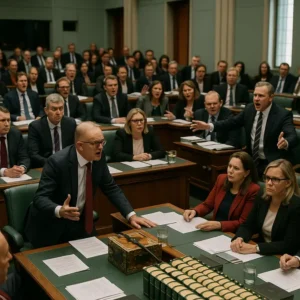
T&T economy at the center of public theatre
The T&T economy sits at the intersection of politics, energy markets, and social tensions. For decades, Trinidad and Tobago has relied heavily on oil and gas revenues to fund public services, social programmes, and a dense network of state institutions. According to global economic profiles, hydrocarbon exports have long been the backbone of national income.
However, as energy prices fluctuate and global markets shift toward decarbonisation, the country faces structural challenges: slow diversification, a constrained private sector, and persistent inequality. These realities should demand serious, inclusive discussion. Instead, the national conversation often swings between extremes—either apocalyptic rhetoric about collapse or triumphalist claims that everything is under control.
This theatrical framing serves political and partisan objectives, but it rarely helps ordinary citizens understand what is truly at stake: jobs, purchasing power, the quality of public education and health care, and the sustainability of social safety nets.
Selective outrage: who gets blamed, who gets protected?
Selective outrage occurs when commentators, politicians, or interest groups express intense anger about certain economic decisions, while quietly ignoring or excusing others of similar or greater impact. In the context of the T&T economy, this pattern appears in several ways:
- Fierce criticism of some subsidies (for instance, fuel or utility adjustments) while defending other costly exemptions and tax breaks.
- Condemning mismanagement in one state enterprise, but remaining silent when political allies benefit from contracts or appointments elsewhere.
- Railing against public debt only when a rival government is borrowing, even though both sides have historically relied on debt to maintain spending.
- Highlighting hardship in election seasons, then deprioritising social policy reform once power is secured.
This double standard erodes public trust. Citizens become cynical when they notice that outrage seems carefully targeted—often at convenient political enemies, not at the system-wide issues that cause persistent underperformance.
For readers who want a deeper policy lens on these dynamics, it is useful to track debates not just by who is speaking loudly, but by who benefits economically from a particular narrative. An important part of media literacy in small economies is asking: Who stands to gain if we focus anger here and ignore problems there?
Seven critical truths about the T&T economy debate
To move beyond theatre, we can identify several underlying truths about how economic conversations unfold in Trinidad and Tobago. These truths are not exhaustive, but they help explain why the national dialogue often feels stuck.
1. The T&T economy is structurally energy-dependent
Despite decades of talk about diversification, the T&T economy remains deeply reliant on the energy sector for foreign exchange earnings and fiscal revenue. This dependence creates a cycle:
- When energy prices rise, government revenue expands, and policy-makers delay tough reforms.
- When prices fall, deficits widen, debt increases, and calls for austerity or adjustment intensify.
Selective outrage emerges when stakeholders focus on the pain of adjustments during downturns while ignoring the missed opportunities to build buffers and diversify during boom periods. A serious national conversation would demand accountability over the full cycle, not only when energy markets turn against us.
2. Inequality and cost of living pressures are real—and rising
Behind the macroeconomic numbers, households in T&T face mounting cost-of-living pressures: higher food prices, housing challenges, and limited wage growth in many sectors. Data from international financial institutions such as the International Monetary Fund show that small, open economies are especially vulnerable to imported inflation and external shocks.
Yet public outrage about inflation or poverty is often episodic. It peaks when a price increase makes headlines, then fades without sustained advocacy for structural solutions—like wage negotiations linked to productivity, modernised social safety nets, or targeted support for vulnerable groups.
3. Fiscal policy debates are often framed in partisan terms
Budget speeches, mid-year reviews, and revenue measures attract intense commentary. However, much of it focuses on political point-scoring rather than long-term fiscal sustainability. For example:
- Deficits are denounced when the opposition is in power but normalised once the critic forms the government.
- Tax amnesties, waivers, and special incentives are attacked in one cycle and embraced in another.
This selective outrage prevents a pragmatic consensus around what responsible fiscal policy should look like in a resource-based economy. Citizens need transparent, data-driven explanations of trade-offs: what it means to cut spending, increase borrowing, or raise taxes in a context where growth is moderate and public services already face strain.
4. State enterprises sit at the heart of competing narratives
Trinidad and Tobago’s network of state enterprises—spanning energy, transport, utilities, culture, and social services—plays an oversized role in the economy. Debates around these entities are fertile ground for selective outrage:
- One side emphasises inefficiency, losses, and the fiscal drain of bailouts.
- Another side highlights employment, service provision, and the development mandate of the state.
Both arguments contain truth. However, a mature debate would move beyond binary positions and examine governance quality, transparency, and performance metrics. Should some enterprises be restructured, partially privatised, or merged? Which should remain fully public because they provide essential services? Readers can explore prior coverage on public management and governance through our analysis of Governance issues in the region.
5. The private sector is not monolithic
In popular discourse, “the private sector” is often portrayed either as a heroic engine of growth or as a self-interested lobby seeking concessions. Reality is more nuanced. The T&T economy hosts:
- Large energy and petrochemical players embedded in global value chains.
- Medium-sized manufacturing and services firms trying to scale and export.
- Micro and small enterprises struggling with access to finance, bureaucracy, and market volatility.
Selective outrage surfaces when criticism falls disproportionately on one segment while excusing another. For example, people may strongly oppose relief for small businesses but remain silent about generous incentives for larger multinationals. A balanced approach would assess how policy frameworks impact businesses of different sizes and how that, in turn, affects employment and innovation.
6. Media framing can either amplify or challenge theatre
Newsrooms and commentators wield significant influence over how citizens perceive the T&T economy. Headlines, talk show debates, and social media clips tend to reward conflict and drama. This can turn serious fiscal or industrial policy questions into polarised, personality-driven clashes.
However, media also has the power to challenge selective outrage. By foregrounding data, featuring independent experts, and following up on stories after the initial spike of attention, journalists can keep focus on structural issues rather than fleeting scandals.
For readers, one practical step is to diversify information sources—consult economic reports, independent think tank analyses, and specialised magazines such as our coverage of Economy trends across the Caribbean and Latin America.
7. Citizens are not passive spectators
Contrary to the narrative that politics and business alone shape outcomes, citizens in Trinidad and Tobago hold powerful tools: votes, consumer choices, civil society organisations, and digital platforms. Selective outrage loses its grip when citizens insist on consistency:
- Questioning all sides about plans for diversification, education, and social protection.
- Demanding clear timelines and measurable targets for reforms.
- Supporting advocacy groups that use evidence, not just emotion, to lobby for change.
The “woke citizen from St Ann’s” represents a growing cohort that wants less theatre and more substance. As that mindset spreads, policy-makers will face increasing pressure to move beyond slogans.
How to read debates about the T&T economy more critically
Readers who feel overwhelmed by conflicting narratives can adopt a simple framework to analyse economic debates more critically.
Ask: What is the actual problem being described?
Many statements about the T&T economy mix emotions, anecdotes, and selective data. Start by disentangling the core problem:
- Is the issue fiscal (revenue vs. expenditure)?
- Is it related to growth, employment, or competitiveness?
- Is it about governance, corruption, or transparency?
Once you identify the main problem, you can better evaluate whether the outrage matches the scale and nature of the challenge—or whether it serves another agenda.
Track who is consistently outraged, and about what
Pay attention to patterns. If a commentator only expresses concern about debt, poverty, or mismanagement when a particular party is in office, that inconsistency is revealing. Genuine advocacy tends to be principled and long-term, not cyclical and partisan.
Follow the money and the incentives
Economic narratives are rarely neutral. Ask:
- Which industries gain from a specific subsidy or tax concession?
- Who benefits if a state enterprise is restructured or remains unchanged?
- How do campaign contributions or lobbying relationships shape the debate?
This does not mean that every argument is corrupt or self-serving. But being conscious of incentives helps you see where selective outrage might be masking deeper interests.
Building a more honest conversation about the T&T economy
Moving from theatre to substance requires effort from all stakeholders: government, opposition, business, labour, media, and citizens. Several steps can help:
- Data transparency: Regular, accessible publication of fiscal, labour market, and social statistics allows independent verification of official claims.
- Independent oversight: Stronger roles for audit institutions, parliamentary committees, and civil society watchdogs can deter selective reporting of economic outcomes.
- Economic literacy: Integrating basic economic and financial education into schools and community programmes empowers citizens to engage beyond slogans.
- Long-term planning: Clear, cross-party development frameworks can outlast electoral cycles and reduce policy whiplash.
International experience shows that small, resource-rich countries thrive when they combine prudent management of natural wealth with investment in human capital, innovation, and strong institutions. The same can be true for Trinidad and Tobago—if the national conversation supports, rather than obstructs, that trajectory.
Conclusion: The T&T economy deserves more than selective outrage
The T&T economy stands at a pivotal moment. Energy markets are evolving, global competition is intensifying, and citizens are demanding more equitable growth and accountable governance. In this environment, selective outrage and political theatre are dangerous distractions. They consume public attention, breed cynicism, and delay the hard but necessary choices that any country must make to secure its future.
As readers, we can insist on a higher standard: evidence-based debate, consistent principles, and a willingness to confront uncomfortable truths about how the T&T economy is structured and who it serves. Only then can outrage—when justified—become a catalyst for reform rather than a recurring performance with no lasting impact.