
 0
0
 0
0
www.tnsmi-cmag.com – Air New Zealand Skynest bunk beds are moving from concept to cabin, with the airline confirming that paid, lie-flat sleep pods will go on sale from next month for selected ultra-long-haul flights, marking one of the most significant economy-class innovations in modern aviation.
Air New Zealand Skynest: A New Era for Economy-Class Sleep
When Air New Zealand first unveiled the Skynest prototype in 2020, many industry observers treated it as an ambitious experiment rather than a guaranteed product. Fast forward to today, and the Air New Zealand Skynest is set to debut on the carrier’s new Boeing 787-9 Dreamliner fleet, initially on the marathon Auckland–New York route from December. This development signals more than a novel cabin feature; it represents a strategic response to the demands of ultra-long-haul travel and escalating competition for premium leisure passengers.
According to the airline’s latest announcement, each eligible aircraft will feature a dedicated Skynest zone with six bunk-style pods. Economy and Premium Economy passengers will be able to reserve a pod for one of two four-hour sessions per flight, with prices reportedly starting at around AU$495. Bookings are set to open from 18 May, giving travelers a clear runway to plan ahead for end-of-year transpacific journeys.
For readers who track airline product innovation and passenger experience trends, the introduction of Skynest raises crucial questions: How will the system work in practice? Is the pricing competitive? And what does this mean for the future of long-haul cabins? We explore all of these angles in depth below. For additional context on shifting passenger expectations and mobility trends, see our coverage in Transportation and Innovation.
How the Air New Zealand Skynest Will Work in Practice
Unlike traditional seating upgrades, the Air New Zealand Skynest is designed as a shared, rotational amenity. It does not replace a passenger’s assigned seat; instead, it acts as a bookable sleep slot during a defined window of the flight.
Cabin Layout and Pod Design
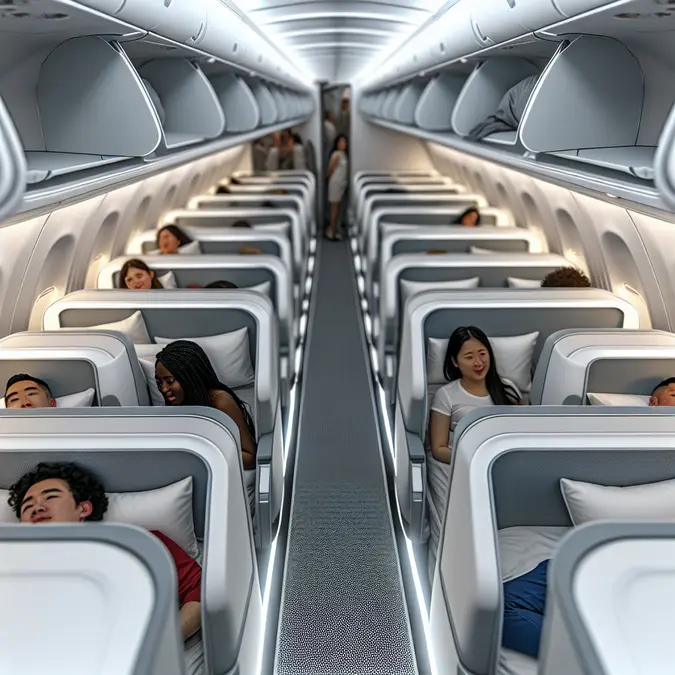
Skynest will feature six pods, stacked in a two-tier configuration, located in a separate section of the economy cabin on the Dreamliner. While Air New Zealand has not released every final detail, early prototypes and statements indicate several key design choices:
- Flat sleeping surface: Each pod offers a fully horizontal bunk, unlike recliner seats that only partially flatten.
- Soft furnishings: Passengers can expect a mattress pad, pillow, sheets, and a blanket, with linens refreshed between users.
- Privacy elements: Curtains or semi-rigid surrounds are expected to provide modest privacy, comparable to premium economy privacy wings.
- Personal amenities: USB power, a reading light, and possibly a storage cubby for small items are likely, following standard long-haul design trends.
The pods will be supervised and serviced by cabin crew, who will handle changeover, cleaning, and time management between sessions.
Booking Rules and Time Limits
The Air New Zealand Skynest will operate on a timed-session model. Current information indicates:
- Two sessions per flight: Each flight offers two distinct four-hour blocks during cruise, optimized around meal services and circadian rhythms for the long Auckland–New York sector, which can run close to 17 hours.
- Single-use per passenger: Passengers may be limited to one Skynest session per flight, ensuring equitable access and operational simplicity.
- Advance purchase: Bookings open from 18 May for qualifying flights, and demand is expected to be strong given the low number of pods.
- Eligible cabins: Economy and Premium Economy passengers will be able to purchase access; Business Premier passengers already have lie-flat beds in their cabin product.
Operationally, managing six pods for two rotations equates to a maximum of 12 passengers per flight enjoying a lie-flat sleep period. That scarcity is part of what allows Air New Zealand to price Skynest as a premium add-on.
Pricing Strategy: Is AU$495 for Four Hours of Sleep Worth It?
Air New Zealand has flagged starting prices of around AU$495 for a four-hour session in the Air New Zealand Skynest. On the surface, that rate may seem steep for what is essentially a bunk in the economy section. However, when placed against the broader pricing architecture of long-haul travel, the picture becomes more nuanced.
Comparing Skynest to Premium Economy and Business
On ultra-long-haul routes, stepping up from economy to premium economy or business can cost thousands of dollars:
- Premium Economy: Fares can be 1.5–3 times the price of economy, offering extra legroom, wider seats, upgraded dining, and enhanced service, but not a fully flat bed.
- Business Class: Lie-flat beds in Business Premier can cost multiple times the economy fare, reflecting both comfort and status.
By contrast, Skynest functions as a micro-upgrade targeted at one crucial part of the journey: meaningful sleep. For a price similar to a high-end airport hotel room or a same-day premium upgrade, passengers can secure horizontal rest without paying for a full-cabin class jump. For leisure travelers unwilling or unable to pay for business class, the Air New Zealand Skynest effectively offers a partial business-class benefit at a fraction of the cost.
Perceived Value for Different Traveler Segments
The value proposition will vary sharply between traveler types:
- Business travelers on economy tickets: For corporate road warriors whose companies only fund economy, Skynest could be an attractive self-funded add-on to arrive more refreshed for meetings.
- Premium leisure travelers: Couples or families willing to pay extra for comfort but not full business-class fares may see Skynest as an ideal compromise.
- Backpackers and budget travelers: For fare-sensitive travelers, AU$495 may be out of reach, leaving Skynest as a niche product.
Viewed through the lens of airline ancillary revenue—additional revenue from add-ons such as seats, luggage, and onboard amenities—Skynest aligns with broader industry trends documented by organizations such as the International Air Transport Association (IATA) and analysts cited in Reuters coverage. It adds a high-value, limited-availability product that can meaningfully boost yield on long-haul flights.
Operational and Regulatory Challenges Behind Skynest
Bringing the Air New Zealand Skynest from concept to commercial service required more than creative design. Airlines must navigate regulatory approvals, safety requirements, and complex operational planning before introducing any novel cabin product.
Certification and Safety Considerations
Any new structure in the passenger cabin must meet stringent standards from aviation regulators such as the Federal Aviation Administration (FAA) and the European Union Aviation Safety Agency (EASA), as well as New Zealand’s own regulators. In practice, this means:
- Crashworthiness: The Skynest pods must withstand specified g-forces in the event of turbulence or an impact scenario.
- Evacuation compliance: Skynest cannot impede emergency egress; crew must ensure that passengers are returned to seats with seat belts fastened during critical phases of flight and severe turbulence.
- Fire safety: Materials must meet flammability standards, and the layout must not interfere with access to firefighting equipment or exits.
Early renderings suggested that Skynest would only be available when the seatbelt sign is off and during cruise. Passengers will likely be required to vacate the pods for takeoff, landing, and any period of anticipated turbulence.
Cleaning, Turnover, and Crew Workload
The Skynest concept also introduces hotel-style turnover logistics into an airborne environment. Between sessions, crew must:
- Strip and replace linens.
- Check for left-behind personal items.
- Perform basic surface sanitization.
- Confirm that safety equipment and fixtures remain in place.
During the COVID-19 era, airlines heavily emphasized sanitation and hygiene, and those standards continue to shape customer expectations. Efficient turnover will be critical to maintain both health standards and schedule integrity on the Air New Zealand Skynest.
Strategic Rationale: Why Air New Zealand Is Betting on Skynest
Air New Zealand has long positioned itself as a creative, experience-led carrier, especially on long-haul and ultra-long-haul routes that connect Oceania with North America and Europe. The launch of the Air New Zealand Skynest fits a broader strategic logic.
Competing on Ultra-Long-Haul Comfort
As airlines extend route lengths—consider Qantas’s “Project Sunrise” plans or Singapore Airlines’ nonstop routes between Singapore and New York—comfort becomes a decisive differentiator. Ultra-long-haul flights amplify every discomfort: limited movement, poor sleep, and circadian disruption. Products that materially improve rest carry outsized value.
By offering Skynest on the Auckland–New York route, Air New Zealand:
- Signals its commitment to long-haul passenger wellbeing.
- Creates a unique selling point that few, if any, direct competitors can immediately match.
- Positions itself to capture premium leisure travelers who evaluate airlines based on comfort features as much as price.
Building Brand Differentiation and Loyalty
Innovations like the Air New Zealand Skynest also support long-term brand differentiation. When passengers share their experiences on social media, Skynest’s visual appeal and novelty factor will likely generate disproportionate buzz. That narrative helps frame Air New Zealand as inventive and customer-centric, which supports loyalty and repeat business.
Furthermore, if Skynest proves operationally successful and financially viable, it could be rolled out to additional long-haul routes beyond Auckland–New York, multiplying its impact across the network.
Passenger Experience: What Travelers Can Expect
From a passenger’s perspective, the Air New Zealand Skynest experience will be shaped as much by the details as by the core promise of a lie-flat bunk. Several experiential questions arise:
How Restful Is Four Hours?
Sleep research suggests that even a consolidated four-hour window of horizontal rest can meaningfully reduce fatigue on long-haul flights, especially compared with fragmented, upright dozing. Travelers who plan carefully—timing meals, caffeine, and screen use around their Skynest slot—can likely extract substantial recovery from that period.
For eastbound flights crossing multiple time zones, some passengers may use Skynest to align sleep with their destination’s night, potentially reducing jet lag. However, the effectiveness will depend on timing and individual sleep needs.
Fairness, Noise, and Social Dynamics
In practice, Skynest will create a new social micro-environment onboard:
- Noise levels: While the pods will likely be in a relatively quiet area, complete silence is unrealistic. Light sleepers may still want earplugs or noise-cancelling headphones.
- Queue management: Clear rules and signage will be crucial to avoid confusion or disputes about who can access the pods and when.
- Perception from non-users: Some passengers may feel that valuable cabin space is dedicated to a product they cannot afford, but this tension is similar to long-standing cabin class distinctions.
Handled well, Skynest can be not only a comfort upgrade but also a talking point that enhances the overall image of Air New Zealand flights, even for passengers who do not purchase access.
Industry Impact: Could Skynest Spark a Wider Trend?
The launch of the Air New Zealand Skynest will be closely watched by airlines, aircraft manufacturers, and passenger-experience designers worldwide. If the concept succeeds commercially and operationally, it may serve as a blueprint for similar products.
Potential Imitators and Adaptations
Other carriers may choose different models, such as:
- Shared nap cabins in premium economy zones.
- Convertible seat clusters that transform into lie-flat compartments for timed sessions.
- Dedicated quiet zones with enhanced recline and privacy screens.
Aircraft interior manufacturers and design consultancies are already exploring modular cabin concepts that make it easier to reconfigure space between seating, beds, and communal zones. Skynest demonstrates that passengers are prepared to pay extra for sleep-focused solutions, validating further R&D in this area.
Implications for Ancillary Revenue Models
For the airline industry, the Air New Zealand Skynest reinforces a critical lesson: ancillary revenues do not need to be limited to baggage fees and seat selection. High-value, scarcity-driven products can deliver strong returns per square meter of cabin space when thoughtfully executed.
Readers interested in how this fits into broader revenue strategies and product innovation can explore complementary analysis on Innovation, where we examine how mobility and travel companies monetize emerging customer expectations.
Conclusion: Air New Zealand Skynest and the Future of Long-Haul Flying
The Air New Zealand Skynest is more than a clever marketing concept; it is a practical, revenue-generating attempt to solve one of aviation’s oldest problems: how to help economy passengers truly sleep on ultra-long-haul flights. With six pods per aircraft, two four-hour sessions, and prices starting around AU$495, Skynest will not be accessible to everyone on board. Yet for those who choose to buy access, it promises a step change in comfort and recovery.
As bookings open from 18 May and the first Auckland–New York services with Skynest launch later this year, the industry will gain real-world data on demand, operational feasibility, and passenger satisfaction. If Air New Zealand can prove that dedicated bunk beds in economy deliver both a superior experience and a strong financial return, the Air New Zealand Skynest may herald a new chapter in cabin design—one where sleep itself becomes a core, monetized feature of long-haul travel rather than an elusive luxury.