
 0
0
 0
0
www.tnsmi-cmag.com – The Peru election has been thrust into the global spotlight after voting was unexpectedly extended to Monday, exposing logistical weaknesses, testing democratic norms, and deepening questions about governance in one of Latin America's most politically volatile nations.
Peru election delays: what happened and why it matters
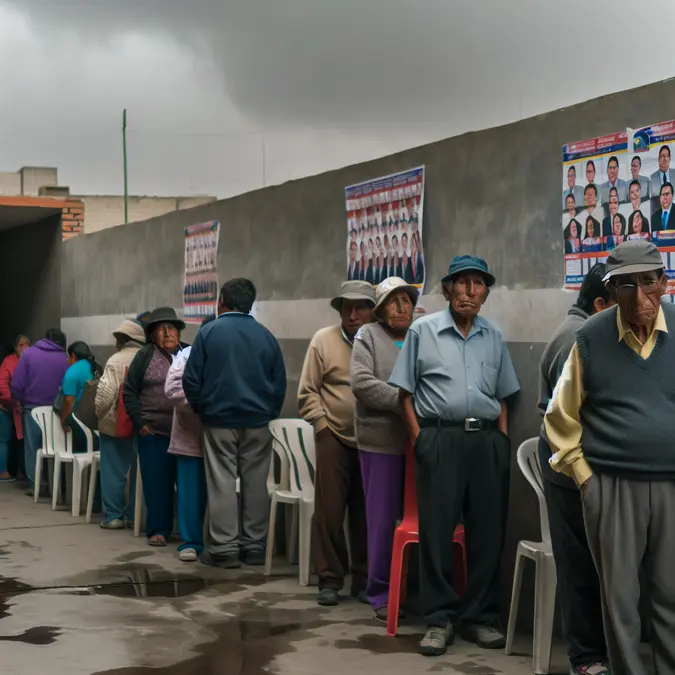
Electoral authorities in Peru have taken the unusual step of extending voting into Monday for tens of thousands of citizens after logistical problems disrupted the first round of the Peru election. According to officials, 63,300 residents in Lima, along with Peruvians registered in Orlando, Florida, and Paterson, New Jersey, were unable to cast their ballots during the scheduled voting period.
This decision goes far beyond a mere administrative adjustment. It raises immediate and serious questions about electoral integrity, the capacity of the state, and public confidence in the system. In a country where voting is mandatory for citizens between 18 and 70 years old, and where non-compliance carries financial penalties, any failure to ensure access to the ballot box is politically and socially consequential.
Furthermore, the timing could not be more sensitive. Thirty-five candidates are competing for the presidency, including a former minister, a well-known comedian, and a political heiress, all campaigning against the backdrop of rising crime, corruption scandals, and deep public disillusionment with traditional parties. Analysts already anticipate a June runoff, as the electorate is sharply fragmented and unlikely to rally behind a single contender in the first round.
Peru election and mandatory voting: what is at stake?
One of the defining features of the Peru election system is compulsory voting. Citizens aged 18 to 70 must vote, or they risk fines and administrative penalties. Mandatory participation is intended to increase democratic legitimacy by ensuring broad turnout, unlike many democracies where elections suffer from chronic low participation.
However, the current disruptions undermine that logic. When voting is required by law, the state carries a heightened obligation to provide smooth, accessible, and timely voting procedures. Any failure in logistics, from missing ballots to understaffed polling locations, is no longer just a technical mishap; it can be perceived as a breach of citizens' rights and a test of institutional reliability.
For readers tracking regional politics, this episode in the Peru election joins a wider pattern of tensions over electoral processes in Latin America. From prolonged vote counts to contested results, each irregularity can erode trust in democratic institutions unless authorities communicate transparently and remedy problems swiftly.
Peru election logistics: how a technical issue becomes political
At first glance, the extension of voting might look like a simple response to an administrative shortfall. But logistics in any election—especially the Peru election—are inherently political. Decisions about where polling stations are located, how many staff are deployed, and how overseas voting is organized can have real effects on turnout, and potentially on outcomes.
In this case, Peruvian authorities cited logistical issues that primarily affected:
- Urban voters in Lima, a metropolitan region that concentrates political, economic, and media power.
- Peruvian diaspora communities in Orlando, Florida, and Paterson, New Jersey, who maintain strong ties to their homeland and can influence tight races.
Extending voting to Monday aims to protect the inclusiveness of the Peru election, but it may also fuel debate about whether some groups received better opportunities to vote than others. Opponents could allege that certain regions or demographics benefit more from the extra day, particularly if late voting patterns appear to favor specific candidates.
Readers who wish to track how other democracies manage similar challenges can look at comparative analyses of electoral logistics by international organizations, such as materials referenced by research on electoral integrity and global election management standards covered in outlets like Reuters' Latin America section.
Fragmented politics and a crowded field of 35 candidates
The sheer number of candidates in the Peru election is a symptom of a fragmented party system. Thirty-five contenders—from establishment insiders to outsiders—are vying for the presidency. This crowded field dilutes vote shares, reduces the likelihood that any candidate will surpass the 50% threshold needed to avoid a runoff, and adds layers of uncertainty to an already tense environment.
The current roster reflects several broader trends:
- Collapse of traditional parties: Long-standing political organizations have lost credibility due to recurring corruption scandals and poor governance records.
- Rise of outsiders: Figures such as comedians or media personalities tap into public anger at the political class.
- Political dynasties: Heirs to powerful political families continue to play a prominent role, even as voters voice fatigue with entrenched elites.
These dynamics make the Peru election both unpredictable and volatile. Many voters are not loyal to any single party and often decide late, making shifts in public opinion especially sensitive to shocks like logistical failures or last-minute controversies.
On Politics, we have frequently examined how distrust in political institutions can undermine reform efforts and empower candidates who promise radical change, often without clear governing coalitions behind them. Peru appears to be following a similar pattern.
Peru election and the likely June runoff
Given the divided vote, a runoff in June is widely expected. The top two candidates from the first round of the Peru election will compete in a head-to-head contest, forcing alliances and strategic realignments among smaller parties.
This second round will not only decide Peru's next president; it will test whether the system can rebuild confidence after the initial irregularities. The runoff phase is often more polarized and negative in tone, as campaigns focus intensely on disqualifying opponents rather than building broad consensus. If questions about logistics and fairness remain unresolved, the post-election environment could prove especially contentious.
For international investors, diplomatic partners, and regional analysts, how Peru navigates this transition will send strong signals about the country's institutional resilience. Business and economic observers following Economy trends will be watching to see whether the next administration can stabilize policy, reassure markets, and address long-standing inequities.
Rising crime and corruption: the backdrop to the Peru election
No analysis of the Peru election is complete without acknowledging its core drivers: public alarm over crime and exhaustion with corruption. In recent years, Peru, like many countries in the region, has experienced:
- Surging violent crime in major cities, eroding citizens' sense of safety.
- High-profile corruption cases involving presidents, ministers, and business elites.
- Institutional instability, marked by repeated changes in leadership and confrontations between the executive and legislature.
These factors contribute to a cyclical pattern in which voters swing from one option to another in search of security and clean governance, often without granting any new administration enough time or political capital to implement lasting reforms. The current Peru election reflects this pattern: law-and-order rhetoric and anti-corruption pledges dominate campaign messages, even when specific policy proposals remain vague.
For everyday Peruvians—whether in Lima, regional cities, or abroad—the election is not an abstract contest of ideologies. It directly affects their personal safety, their economic prospects, and their trust in state institutions. When crime rises and scandals proliferate, every delay or irregularity in the voting process can seem like further proof that the system is broken.
How voting delays can shape perceptions of legitimacy
Extending voting into Monday may be a necessary corrective, but it also creates a perception challenge. The legitimacy of the Peru election depends not only on formal compliance with the law but also on public belief that the process is fundamentally fair and transparent.
Perceptions can be shaped by several factors:
- Communication quality: Are electoral authorities explaining clearly why the extension was needed and how it will be monitored?
- Equal treatment: Do citizens feel that no group is receiving special advantages through the extended voting window?
- Speed and transparency of results: Once voting ends, are results reported promptly with clear documentation?
If these conditions are not met, losing candidates in the Peru election may challenge the outcome, claiming that the extra day distorted the will of the people. Even if such claims lack evidence, they can fuel polarization, protests, or institutional gridlock.
The role of overseas voters in the Peru election
The decision to extend voting to Monday for Peruvians in Orlando and Paterson highlights the importance of the diaspora in the Peru election. Millions of Peruvians live abroad, sending remittances and maintaining close cultural and political ties with their home country. Their votes can be decisive in a tightly contested race.
Overseas voters often have different perspectives on governance. Exposure to other political and economic systems can shape their expectations regarding transparency, accountability, and service delivery. When they encounter administrative failures—such as closed polling stations or logistical confusion—it can be particularly jarring, given their familiarity with other models.
Moreover, managing expatriate voting is inherently complex: it requires coordination among foreign ministries, consulates, local authorities, and electoral bodies. In the Peru election, any breakdown in this chain can quickly accumulate into large numbers of disenfranchised voters, forcing last-minute corrections such as the current extension.
Institutional lessons from the Peru election delays
Behind the headlines, the current situation offers critical lessons for election management in Peru and beyond. Among them:
- Redundant planning: Electoral authorities need strong contingency plans to handle high turnout, staff shortages, or technical glitches.
- Technology and training: Investment in modern voting infrastructure and robust training for poll workers can reduce human error.
- Scenario testing: Simulations and stress tests, especially in large cities and foreign jurisdictions, can reveal weak points in the system.
If authorities effectively incorporate these lessons, future editions of the Peru election could run more smoothly, reinforcing public confidence. If not, each cycle risks repeating similar problems, with potentially greater political costs.
Looking ahead: can the Peru election restore trust?
Ultimately, the question facing Peru is larger than a one-day voting extension. The country must decide whether this Peru election becomes another episode in a long series of contested, crisis-driven transitions, or the start of a gradual rebuilding of institutional credibility.
For that to happen, several elements are essential:
- Clear, impartial oversight of the extended voting process, with transparent reporting of participation numbers and results.
- Responsible rhetoric from candidates, who should avoid unfounded accusations that could delegitimize the entire system.
- Post-election reforms focused on logistics, anti-corruption efforts, and crime prevention, rather than short-term political gains.
Readers who follow regional developments know that Peru holds significant strategic importance in South America, from its mining sector to its role in regional trade and migration flows. A credible, well-managed Peru election will influence not only domestic stability but also Peru's capacity to engage constructively with neighbors and global partners.
As votes continue and results eventually emerge, the world will be watching whether Peruvian institutions can convert this moment of strain into an opportunity for deeper democratic consolidation—or whether it becomes another case study in how logistical failures can cascade into political crises. In either scenario, the way this Peru election is managed and resolved will shape the country's political narrative for years to come.