
 0
0
 0
0
www.tnsmi-cmag.com – Croatian traditions in Australia are at a decisive crossroads, as community halls, football clubs, churches, and family homes from Sydney to Melbourne quietly wrestle with a core question: are these customs slowly fading, or are they transforming into something new that still carries the heart of Croatian identity?
Croatian traditions in Australia: History, Roots, and the Migration Story
To understand the present, readers must first revisit how Croatian traditions in Australia took root. Croatian migration to Australia accelerated in the mid-20th century, particularly after World War II and during the 1960s and 1970s, when thousands arrived seeking political freedom and economic opportunity. They brought with them language, Catholic faith, folk dances, music, and food that quickly became anchors of identity in a distant land.
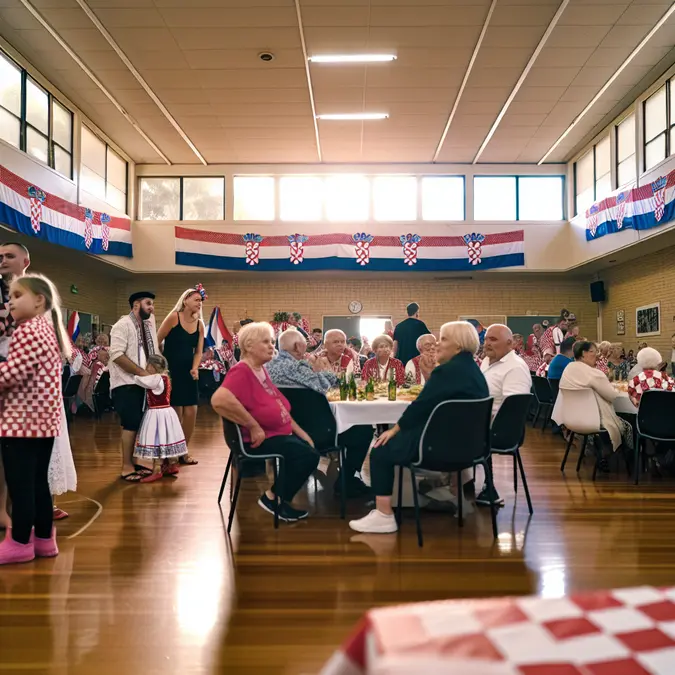
Across major cities, Croats built clubs and community halls, established parishes, founded newspapers, and formed football teams that doubled as cultural institutions. These spaces did more than host weekend gatherings; they became parallel hometowns. Sociologists often refer to such structures as “ethnic infrastructure”—the organizational backbone that allows diaspora communities to preserve and transmit culture across borders and generations. Readers can see similar patterns among Italian and Greek communities in Australia, extensively documented in sources like Wikipedia’s overview of immigration to Australia.
In this context, Croatian festivals, tamburica music, kolo dances, and religious feasts were never just entertainment. They were living statements: a way of declaring, “We are here, and we remember where we came from.”
7 Powerful Transformations Shaping Croatian Traditions in Australia
Today, however, the Croatian community spans several generations. The original migrants are aging, their children are middle-aged, and their grandchildren and great-grandchildren are often fully integrated into mainstream Australian life. Consequently, Croatian traditions in Australia are not simply disappearing; they are being reshaped by new realities. Let’s examine seven of the most significant shifts.
1. Language Shift: From Croatian First to English First
Language sits at the core of cultural continuity. The first generation of migrants often spoke Croatian at home and in community spaces, relying on English only for work and public life. For many of their Australian-born children, bilingualism became a daily reality. But with each succeeding generation, English has increasingly become the dominant language.
Research into heritage languages in immigrant societies, such as reports from the Australian Bureau of Statistics and academic studies on diaspora communities, shows a typical pattern: by the third or fourth generation, home use of the ancestral language declines sharply. This shift is already visible among young people with Croatian heritage, many of whom understand the language passively but struggle to speak it fluently.
That shift has real consequences. When young community members attend a Croatian club or church service delivered primarily in Croatian, they may feel slightly distanced from the rituals. Elders sometimes interpret this as disinterest, when in fact it can be a language barrier. The community is responding: more organizations now mix English and Croatian in events, newsletters, and social media posts to keep younger generations engaged.
2. Cultural Clubs and Halls: From Weekly Necessity to Occasional Gathering Space
For decades, community halls and clubs formed the beating heart of Croatian traditions in Australia. They hosted dances, weddings, fundraisers, language schools, and national day celebrations. Today, attendance patterns are changing. Work schedules, long commutes, and the diverse interests of younger Australians mean weekly visits to the club have become less common.
Yet this is not simply a story of decline. Many clubs are reimagining their role as multi-purpose cultural hubs. They host contemporary Croatian music concerts, screen football matches from Europe, organize heritage festivals, and collaborate with other European communities. Some are modernizing their facilities, integrating digital membership platforms, and promoting events via social media to remain relevant to younger audiences who live as comfortably on Instagram as in the parish hall.
Readers interested in broader patterns of diaspora club evolution can compare this with how Italian and Greek clubs have transformed over time, as reported in outlets like SBS’s multicultural coverage, which often highlights similar dynamics across ethnic communities.
3. Faith and Identity: Churches as Cultural Anchors
Catholicism has long played a central role in Croatian traditions in Australia. Croatian parishes were more than places of worship; they represented safe spaces where people spoke their mother tongue, celebrated national saints, and marked key historical dates. Priests from Croatia often served as cultural ambassadors, teaching language, history, and customs alongside religious doctrine.
As with club life, participation in explicitly Croatian-language religious services is changing. Younger generations may attend English-language masses at local parishes, while reserving Croatian parishes for major feasts, funerals, and special events. Some community leaders worry about the implications for cultural continuity, but a more nuanced view reveals a layered identity: younger Croatians in Australia can be deeply Catholic, strongly connected to family, and proud of their heritage, even if they seldom attend Croatian-language services.
Many parishes are responding with bilingual liturgies, youth-focused programs, and cultural-religious events that integrate music, food, and dance. This is another example where traditions are bending, not breaking.
4. Football Clubs: From Ethnic Symbols to Community Brands
Football clubs have always been more than sport for Croats in Australia. Teams like Sydney United 58, Melbourne Knights, and others emerged as emblematic institutions of the diaspora, proudly carrying Croatian colors, names, and symbols. For decades, they were among the most visible expressions of Croatian traditions in Australia in the broader public sphere.
Over time, national leagues and regulatory frameworks encouraged clubs to broaden their identities and appeal beyond single ethnic communities. Some Croatian-founded clubs have modified their branding, while retaining historical ties through supporter groups, heritage rounds, and community events.
This evolution reflects both pressure and opportunity. On one hand, clubs navigate league rules and public expectations; on the other, they gain access to a wider supporter base. For many younger Australian-Croatians, these clubs represent a proud, dynamic connection to their heritage—especially when Croatian flags fill the stands during big matches or when the Croatian national team performs strongly on the global stage, such as recent FIFA World Cup campaigns covered by international media including Reuters.
5. Home Traditions: The Quiet Power of Family Rituals
While public institutions draw the most attention, the heart of Croatian traditions in Australia still beats strongest in kitchens, living rooms, and backyards. Food, in particular, has proven remarkably resilient. Even when language skills fade, dishes like sarma, ćevapi, peka, fritule, and traditional Easter and Christmas baked goods continue to appear on family tables.
Family rituals—from slava-like name day celebrations to the blessing of homes at Epiphany or the singing of old songs at weddings—often persist quietly, passed along informally rather than through formal institutions. Younger generations may not know every historical detail behind a ritual, but they recognize its emotional weight. This emotional connection is a powerful form of cultural resilience.
In many households, children and grandchildren reinterpret recipes and rituals to fit modern lifestyles, replacing days-long preparations with quicker methods while maintaining core flavors and symbolism. Contrary to the idea of “loss,” these adaptations show how culture remains alive by evolving.
6. Digital Transformation: From Community Noticeboards to Global Networks
Digital media is profoundly reshaping how Croatian traditions in Australia are practiced and perceived. Where previous generations relied on printed newspapers, parish bulletins, and club noticeboards, younger Croatians connect through WhatsApp groups, Facebook communities, Instagram pages, podcasts, and YouTube channels.
This shift has several implications:
- Transnational ties: It is easier than ever to follow Croatian politics, music, sports, and entertainment in real time, narrowing the emotional distance between Australia and Croatia.
- New cultural producers: Young Australian-Croatians are creating their own content—from bilingual podcasts to heritage cooking channels—that interpret traditions in contemporary, relatable formats.
- Archiving memory: Old photographs, songs, and historical documents are increasingly digitized and shared, preserving stories that might otherwise vanish as the first generation passes away.
Digital spaces also expand the concept of community. A young person in Perth can collaborate with peers in Zagreb, Melbourne, or Toronto on projects that explore shared heritage. Culture becomes less dependent on physical proximity and more anchored in networks of shared identity.
7. Identity Negotiation: From Either/Or to Both/And
Perhaps the most profound change in Croatian traditions in Australia lies in how identity is understood. The first generation often felt caught between two worlds. Many clung tightly to Croatian customs as a defense against assimilation, while their children navigated schoolyards where being visibly “ethnic” could mean exclusion or curiosity.
Today’s younger generations, however, tend to embrace hybrid identities more comfortably. They may describe themselves as “Croatian-Australian” or “Aussie Croats,” reflecting a both/and mentality. This is not a rejection of heritage; it is a modern expression of it.
Heritage, for many young descendants, is less about replicating life in the old country and more about selectively curating rituals, symbols, and stories that resonate with their lives in Australia.
Such curation can worry elders who fear dilution of tradition. Yet it is also the mechanism by which culture survives in changing contexts. When younger generations choose to keep certain customs—celebrating Croatian national days, following Croatian football, cooking family recipes, visiting Croatia—they are actively re-affirming identity, even as other practices gently fade.
Are Croatian Traditions in Australia Fading or Quietly Transforming?
So, how should readers interpret the current moment? On the surface, indicators of decline are real: language attrition, reduced weekly club attendance, and fewer traditional folk ensembles operating at full strength. Long-time observers of Croatian traditions in Australia understandably ask whether we are witnessing the slow end of a once-vibrant diaspora culture.
However, a deeper analysis reveals a more complex and hopeful picture. Rather than a simple line of decline, we see multiple arcs of change:
- Formal institutions are restructuring rather than disappearing.
- Language use is shifting, but cultural pride remains strong.
- New platforms and formats — from social media to hybrid events — are emerging.
- Identity is expanding from singular to layered, embracing both Croatian and Australian dimensions.
In many ways, what is fading are the forms that suited post-war migrants, while what is emerging are forms suited to 21st-century, multi-identity citizens. This is not unique to Croats; it mirrors broader patterns across diaspora communities documented in migration and cultural studies. The key policy and community question is not how to freeze a culture in 1965, but how to channel its core values into formats that still feel authentic for people living in 2026 and beyond.
For readers and community leaders who want to explore broader issues of identity and cultural transition, related analyses on Culture and Migration offer additional context on how traditions evolve across borders and generations.
Safeguarding the Future of Croatian Traditions in Australia
If we accept that change is inevitable, the next question becomes: how can communities shape that change rather than merely react to it? Several strategic priorities stand out for anyone invested in the future of Croatian traditions in Australia.
Investing in Youth and Intergenerational Dialogue
Events designed with young people, rather than for them, tend to succeed. This means inviting younger generations into decision-making roles within clubs, parishes, and community organizations. It also means supporting initiatives where elders share stories, music, and skills in formats that resonate—from oral history projects and film nights to collaborative digital archives.
Intergenerational dialogue can bridge misunderstandings. When elders see that their grandchildren’s identity expressions are not rejections but reinterpretations, trust grows. When young people understand why certain customs mattered so deeply to their grandparents, respect deepens. The result can be a shared commitment to preserving the heart of tradition even as the outer forms adapt.
Flexibility in Language and Format
Language remains a sensitive topic. While not every family can realistically expect full fluency in Croatian by the fourth generation, communities can still nurture key phrases, songs, prayers, and expressions that keep the sound and rhythm of the language alive. Supplementing Croatian with English in public events, bulletins, and social media does not automatically signal surrender; it can be a pragmatic bridge that keeps younger audiences connected.
Similarly, allowing flexible event formats—combining traditional kolo with contemporary music, blending heritage cuisine with modern dietary preferences, or pairing religious feasts with cultural festivals—can attract both elders and youth under the same roof.
Leveraging Digital Tools for Cultural Continuity
Well-curated digital platforms can serve as living archives and dynamic meeting places. Clubs and parishes that maintain active, bilingual websites and social channels reach audiences far beyond their physical neighborhoods. They can livestream masses, festivals, concerts, and community discussions, ensuring that those who have moved away or cannot attend still feel connected.
Digital storytelling projects, in which young people record their grandparents’ migration stories, recipes, and memories, can preserve unique aspects of Croatian traditions in Australia for future generations. These collective efforts create a repository of identity that outlives any single institution.
Conclusion: A Living, Evolving Heritage
When we look at the big picture, it becomes clear that Croatian traditions in Australia are not simply vanishing into history. They are undergoing a complex, sometimes painful, but ultimately creative transformation. The language may soften at the edges, club attendance may fluctuate, and certain rituals may recede. Yet the core impulses—to remember, to belong, to honor ancestors, and to celebrate a distinct heritage within a multicultural nation—remain remarkably strong.
For readers who care about the future of this heritage, the task now is not to mourn an imagined golden age, but to actively shape the next chapter. By embracing intergenerational collaboration, adapting formats without abandoning values, and using digital tools to connect rather than replace community, Croatian traditions in Australia can continue to thrive as a living, evolving expression of identity for decades to come.