
 0
0
 0
0
www.tnsmi-cmag.com – Volunteer familiarisation tours are quietly becoming one of the most powerful tools regional communities have to strengthen tourism, support local businesses, and ensure visitors receive accurate, first-hand advice about where to go and what to experience.
The recent initiative involving volunteers from The Slab Hut touring the Marlo and Cape Conran region in East Gippsland offers a compelling case study of how structured, on-the-ground learning can transform the way a destination welcomes and serves its guests. From free camping areas along Marlo Road to coastal landmarks like East Cape and Salmon Rocks, these tours help volunteers move from second-hand information to lived experience.
Volunteer Familiarisation Tours: Why They Matter More Than Ever
Across Australia and globally, volunteer familiarisation tours are emerging as a critical backbone of regional visitor servicing. In communities that rely on tourism, volunteers often serve as the first human point of contact for travellers. They staff visitor information centres, answer questions, recommend attractions, and troubleshoot problems when conditions change unexpectedly.
For regions such as East Gippsland, which encompasses Marlo, Cape Conran and the wider Snowy River corridor, tourism is not just a lifestyle enhancer; it is a key economic driver. According to Tourism Research Australia, regional visitation contributes billions of dollars annually to local economies, supporting jobs, small enterprises and community services. When volunteers are well-trained and well-informed, they help capture more of that value locally by directing visitors to diverse experiences and businesses.
The Marlo and Cape Conran tour illustrates how intentional design of volunteer familiarisation tours responds to several real-world needs:
- Rapidly changing conditions – Road access, campsites and coastal environments can change quickly due to weather, maintenance or natural events.
- Growing visitor expectations – Travellers increasingly seek personalised, authentic, and sustainable experiences rather than generic “top 10” lists.
- Stronger local storytelling – First-hand encounters allow volunteers to share vivid, credible stories that online listings alone cannot provide.
In short, these tours are not a luxury. For any destination that relies on volunteer labour to support tourism, they are an operational necessity.
Inside the Marlo and Cape Conran Volunteer Familiarisation Tour
The Slab Hut volunteers’ recent itinerary through Marlo and Cape Conran was carefully curated to balance natural attractions, practical site checks, and engagement with local businesses.
The group headed south towards Marlo, following the main route towards the coast. En route, volunteers stopped at several free camping areas along Marlo Road. These stopovers served a dual purpose: confirming current conditions and facilities at each campsite, and allowing volunteers to experience the setting from the visitor’s perspective.
Along the way, the group also discovered a distinctly local piece of character – a tongue-in-cheek feature known as the “Snowy River Croc,” posed as if keeping watch near one of the campsites. While obviously not a real crocodile, this playful landmark is exactly the kind of detail visitors love to hear about, photograph, and share. Once volunteers have seen it in person, they can describe it with authenticity and humour, transforming a simple direction into a memorable anecdote.
From there, the tour moved to the Marlo Jetty, a popular focal point for fishing, river views and sunset watching at the mouth of the Snowy River. The jetty is often a starting point for visitors who want to understand the geography of the region – where the river meets the sea, how the estuary behaves, and what activities are possible depending on the season.
Beyond the jetty, volunteers explored the surrounding natural highlights, including:
- Cabbage Tree Palms – A distinctive and ecologically significant palm community that offers visitors a sense of East Gippsland’s unique biodiversity.
- Yeerung Lookout – A scenic vantage point, giving panoramic views that help volunteers explain the broader landscape and recommend walking routes or photography spots.
These stops matter because they turn basic maps and brochures into lived geography in the minds of volunteers. When a visitor later asks, “Is Yeerung Lookout worth the drive?” the answer is grounded in personal experience, not guesswork.
How Coastal Parks Benefit from Volunteer Familiarisation Tours
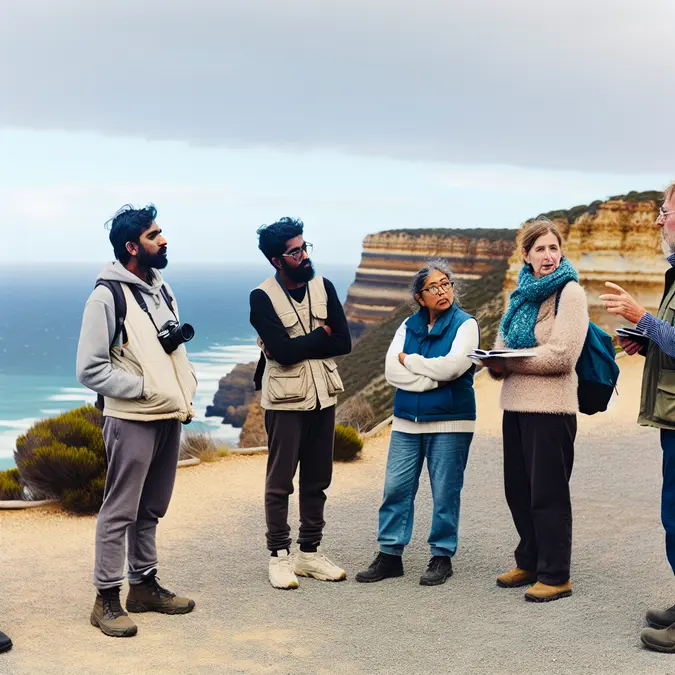
Continuing into the Cape Conran Coastal Park, the group visited two of the region’s most recognisable coastal drawcards: East Cape and Salmon Rocks. Both locations feature prominently in tourism photography and online guides, yet they are also dynamic coastal environments where conditions can shift due to tides, swells and weather.
By integrating these landmarks into volunteer familiarisation tours, organisers achieve several outcomes:
- Safety messaging – Volunteers can better advise on safe vantage points, appropriate footwear, and the realities of ocean conditions, reducing the risk of misinformed decisions by visitors.
- Environmental awareness – First-hand exposure to fragile dune systems and rocky shorelines reinforces the importance of staying on marked tracks and following park guidelines.
- Experience design – Volunteers can suggest the best times of day for photography, wildlife spotting or quieter visits, helping visitors plan richer experiences.
Well-structured field experiences like this align with wider best practice in visitor management promoted by organisations such as UNESCO’s sustainable tourism initiatives and UNWTO’s guidelines, which encourage destinations to balance visitor enjoyment with environmental stewardship.
Connecting Volunteers with Local Tourism Businesses
One of the defining strengths of the Marlo and Cape Conran program lies in its deliberate engagement with local tourism operators. The tour included a guided visit to Sailors Grave Brewing at Dunetown, followed by an inspection of nearby Little Drift accommodation, which now features two newly established tiny homes.
This business-facing component of volunteer familiarisation tours serves several strategic purposes:
- Product knowledge – Volunteers gain precise, up-to-date understanding of what an operator offers: capacity, style, target markets, accessibility, and booking channels.
- Relationship building – Direct conversation with owners such as Hannah from Little Drift and Gab from Sailors Grave Brewing strengthens trust and opens a two-way feedback channel between front-line volunteers and businesses.
- Destination cohesion – Volunteers see how accommodation, hospitality, and natural attractions can be combined into compelling itineraries for different visitor types.
The inclusion of tiny homes at Little Drift, for example, reflects broader trends in contemporary tourism: travellers seeking compact, sustainable, experiential lodging that feels both distinctive and embedded in its environment. Volunteers who have stepped inside these spaces can accurately communicate what makes them unique, rather than relying on generic language.
Similarly, a behind-the-scenes tour of a craft brewery like Sailors Grave helps volunteers understand production processes, tasting options, and event capabilities. They can then confidently recommend the venue to visitors looking for local flavours, evening activities or family-friendly spaces, aligning with broader coverage of regional entrepreneurship often highlighted in our Business section.
Seven Essential Insights from Volunteer Familiarisation Tours
Looking beyond this single itinerary, what can destination managers, councils and community groups learn from the East Gippsland example? Drawing on both the Marlo and Cape Conran experience and global tourism practice, we can identify seven essential insights about volunteer familiarisation tours:
1. Volunteer Familiarisation Tours Turn Information into Insight
Printed brochures and websites provide data. Field-based learning transforms that data into context. When volunteers walk the tracks, stand on the lookouts, or navigate unsealed roads themselves, they acquire what might be called “situational intelligence” – the ability to anticipate visitors’ real questions and concerns, not just recite standard descriptions.
2. They Improve the Accuracy of Visitor Advice
Road conditions, campsite availability, and park accessibility can change quickly. Regular volunteer familiarisation tours keep local knowledge current. Volunteers can confidently clarify which free camping sites are suitable for caravans, which require four-wheel drive, or which may be temporarily affected by works or weather.
3. They Strengthen Community Ownership of Tourism
When volunteers experience their own region as learners and explorers, they deepen their sense of pride and responsibility for place. This increases their willingness to champion sustainable behaviour, encourage off-peak visitation, and spread visitor traffic beyond the most saturated hotspots.
4. They Enhance Storytelling and Visitor Engagement
Authentic stories often arise from small details: a quirky feature like the “Snowy River Croc”, a surprising view at Yeerung Lookout, or a conversation with a brewer about a locally inspired beer. Volunteer familiarisation tours collect these details, allowing volunteers to build rapport with visitors through engaging, personalised recommendations.
5. They Align Visitor Flows with Local Business Needs
By embedding visits to operators such as accommodation providers and breweries, tour organisers help volunteers understand capacity, seasonality and target markets. This enables better matching between visitor demand and business offerings, which is particularly relevant for the kinds of communities we profile in our Tourism coverage.
6. They Support Resilience in Times of Disruption
Whether in the wake of bushfires, floods, or public health events, regions often need to quickly update their messaging: which areas are open, which have recovered, and which require caution. A structured program of volunteer familiarisation tours provides a mechanism to reset local knowledge fast and deliver consistent information to visitors.
7. They Build Bridges Between Policy and Practice
Destination management plans, marketing strategies and sustainability policies can remain abstract unless they are grounded in what people actually see and experience on the ground. Familiarisation tours convert policy into practice, allowing volunteers to embody the destination’s positioning in the way they speak, guide and advise.
Well-designed volunteer familiarisation tours act as a live classroom. Every campsite, jetty, lookout and business becomes a case study in how tourism operates – and how it can be improved.
Designing Effective Volunteer Familiarisation Tours
For councils, visitor centres and community groups considering their own programs, the Marlo and Cape Conran example suggests several design principles for successful volunteer familiarisation tours:
- Purposeful itineraries – Combine natural sites, infrastructure checks and business visits with clear learning objectives.
- Regular scheduling – Treat tours as an ongoing investment rather than a one-off exercise; conditions and products change, and training must keep pace.
- Cooperation with operators – Invite local businesses to host short sessions explaining their operations, unique selling points and ideal customers.
- Environmental education – Integrate park rangers or conservation voices to reinforce sustainable visitor behaviour.
- Feedback loops – After each tour, capture volunteers’ observations on signage, access, visitor pinch points and opportunities for improvement.
Crucially, tours should be inclusive. New volunteers need foundational exposure, while experienced volunteers benefit from advanced insights, behind-the-scenes access and updates on new products like the tiny homes at Little Drift. This layered approach creates a culture of continuous learning.
The Strategic Payoff for Regional Destinations
When viewed through a strategic lens, volunteer familiarisation tours are more than an educational outing; they are a form of soft infrastructure. They enable regions such as East Gippsland to compete effectively with better-known destinations by leveraging their greatest asset: local people who know and love their place.
For visitors, the payoff is immediate. They receive advice that is current, nuanced and tailored. They are directed to lesser-known walks, viewpoints or businesses that match their interests, spreading economic benefits more widely across the community. For operators, a better-informed volunteer network translates into more qualified referrals and higher visitor satisfaction.
For the community at large, these tours foster cohesion. Volunteers, operators and land managers meet on-site, see each other’s challenges, and work collaboratively to enhance the overall destination experience. Over time, this builds a more resilient and adaptable tourism ecosystem.
As regional tourism continues to evolve, the model demonstrated in Marlo and Cape Conran will only grow in relevance. Destinations that invest in systematic, thoughtfully curated volunteer familiarisation tours will be better positioned to deliver the informed, sustainable and memorable visitor experiences that modern travellers increasingly seek.
Ultimately, volunteer familiarisation tours are not just about seeing the sights. They are about equipping the people who greet visitors every day with the knowledge, confidence and stories that bring a region like East Gippsland to life.