
 0
0
 0
0
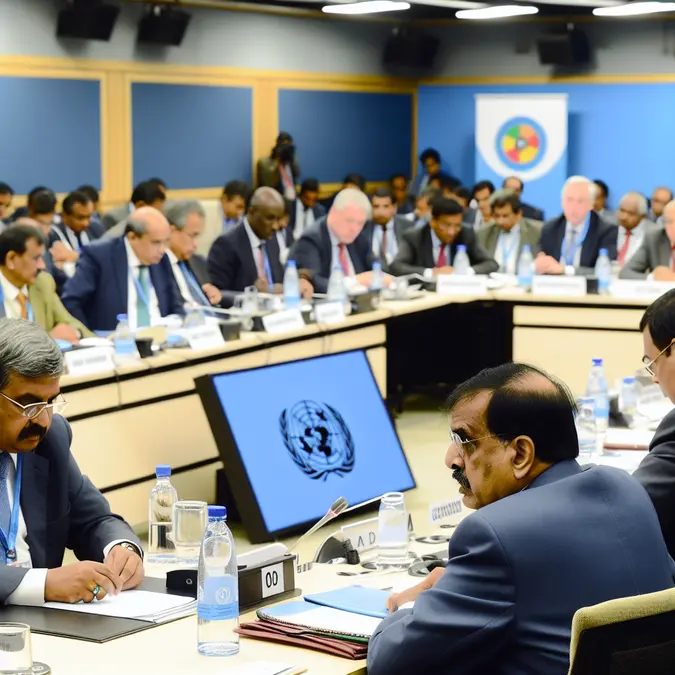
www.tnsmi-cmag.com – The India-UN Development Partnership Fund has entered a pivotal moment, as India’s Permanent Mission in New York and the Fund’s Board of Directors recently reviewed its operations and strategic future—an exercise that carries weighty implications for developing countries across Asia, Africa, the Pacific, the Caribbean, and beyond.
India-UN Development Partnership Fund: A Strategic Engine for South-South Cooperation
Launched in 2017, the India-UN Development Partnership Fund was conceived as a flagship instrument of South-South cooperation. Administered by the United Nations Office for South-South Cooperation (UNOSSC), it channels Indian grant assistance to demand-driven development projects in partner developing countries. According to UN data, the Fund has supported dozens of projects across multiple regions, focusing on areas such as renewable energy, climate resilience, health, agriculture, and digital governance.
Unlike traditional donor-recipient models, the Fund operates on the principle of solidarity among the Global South. Partner governments identify priorities, the UN system provides implementation capacity, and India finances projects through the Fund. As India’s geopolitical and economic profile grows, this initiative also strengthens its role as a responsible development partner rather than a mere aid recipient.
Sources from the United Nations and India’s Ministry of External Affairs indicate that the Fund has been praised for its agility and responsiveness, particularly in small island developing states (SIDS) where climate and vulnerability challenges are acute. These attributes make the current board review in New York especially significant: it is not just an internal audit, but an opportunity to redefine how the Fund delivers impact in a more uncertain global environment.
Why This Board Review of the India-UN Development Partnership Fund Matters Now
The recent meeting between India’s Permanent Mission to the UN in New York and the Board of Directors of the India-UN Development Partnership Fund took place against a backdrop of converging global crises—economic slowdown, climate emergencies, and lingering post-pandemic vulnerabilities. A strategic review at this juncture serves several purposes:
- Accountability and transparency in the use of public funds and multilateral mechanisms.
- Alignment with evolving global agendas including the 2030 Agenda for Sustainable Development and the Paris Agreement.
- Reprioritization of sectors and regions where needs are most pressing.
- Governance fine-tuning to ensure speed, flexibility, and measurable results.
Furthermore, the review allows India and its partners to assess whether the initial design features are still fit for purpose. As new technologies, financing models, and geopolitical realities emerge, even successful funds must periodically recalibrate.
7 Critical Shifts Emerging from the India-UN Development Partnership Fund Review
While detailed minutes of the Board’s deliberations are not public, available diplomatic readouts and the Fund’s existing mandate allow us to identify seven likely strategic shifts that will define the next phase of the India-UN Development Partnership Fund.
1. Sharper Focus on High-Impact SDG Sectors
The Fund is designed to support the implementation of the Sustainable Development Goals (SDGs). In its early years, it backed a broad spectrum of projects—from solar electrification to e-governance. As part of the board review, we can reasonably expect a sharper sectoral focus, targeting areas where measurable impact and visibility are highest:
- Climate resilience and renewable energy, especially for SIDS and climate-vulnerable states.
- Health systems strengthening, in light of COVID-19 and future pandemic risks.
- Digital public infrastructure, leveraging India’s own experience with digital identity, payments, and e-governance.
- Agriculture and food security, including climate-smart farming and value-chain integration.
This kind of rationalization does not reduce the Fund’s ambition; instead, it concentrates resources where India’s comparative experience and UN implementation capacity can deliver outsized returns.
2. Deeper Alignment with India’s Development Diplomacy
India’s foreign policy increasingly integrates development cooperation as a core pillar. From lines of credit in Africa to humanitarian aid in the Indian Ocean, development partnerships shape its global identity. The India-UN Development Partnership Fund complements bilateral initiatives by channeling assistance multilaterally through the UN system.
In the board review, the Indian mission and other stakeholders are likely examining how the Fund can more deliberately reflect India’s flagship initiatives such as the International Solar Alliance, Coalition for Disaster Resilient Infrastructure, and the G20 development agenda. This does not mean politicization; rather, it suggests strategic coherence across India’s growing portfolio of global initiatives.
3. Stronger Governance, Monitoring, and Evaluation
Any modern development fund faces scrutiny over how projects are selected, monitored, and evaluated. As the Fund matures, stakeholders will demand clearer metrics and transparent reporting. International best practice, as documented by organizations like the OECD Development Assistance Committee, places strong emphasis on results-based management and independent evaluation.
For the India-UN Development Partnership Fund, this likely means:
- Standardized logical frameworks and performance indicators for each project.
- Periodic independent evaluations shared publicly where appropriate.
- Digital dashboards for real-time monitoring, accessible to partner governments and implementing UN agencies.
- Clearer criteria for project selection, including sustainability and scalability.
Such measures do more than satisfy auditors. They strengthen policy learning, enabling India and partner countries to replicate successes and avoid repeating mistakes.
4. Enhanced Voice for Partner Countries
One of the hallmarks of South-South cooperation is an emphasis on partnership, not conditionality. The India-UN Development Partnership Fund follows a demand-driven model: recipient countries propose projects based on their national priorities. As part of the board’s review, there is likely to be a conversation about deepening this ownership.
That could translate into formal mechanisms for partner-country feedback, advisory committees composed of representatives from beneficiary regions, or regional consultations convened by UNOSSC. Enhancing partner voices will not only improve project relevance, but also reinforce the Fund’s political legitimacy within the Global South.
5. More Visibility and Communication of Success Stories
Despite funding impactful projects, the Fund’s global profile remains modest outside diplomatic and development circles. Increased communication—through case studies, documentaries, and joint media outreach—could be another major theme of the review.
For readers and policymakers alike, understanding concrete results—such as a solar micro-grid powering a remote island, or a telemedicine program linking rural clinics to urban hospitals—transforms abstract cooperation into tangible progress.
We can expect more emphasis on impact narratives, data visualization, and public dashboards in the coming years. This would also align with global expectations around transparency and storytelling in development finance.
6. Integration with Digital and Climate Innovation
India has emerged as a knowledge exporter in digital public goods and low-cost technology solutions—from digital identity systems to affordable clean energy. The next chapter of the India-UN Development Partnership Fund is likely to leverage this experience much more deliberately.
Potential areas include:
- Supporting partner countries to adopt open-source digital ID, payments, and e-government platforms.
- Scaling up decentralized renewable energy solutions inspired by India’s own solar and biomass initiatives.
- Funding climate adaptation tools such as early warning systems, climate data platforms, and resilient infrastructure planning.
For readers following global development trends, this positions the Fund not merely as a financial instrument, but as a conduit for technology and policy innovation across the Global South.
7. Long-Term Sustainability and Financing Strategy
No review of a development fund is complete without confronting questions of financial sustainability. While the Fund has been capitalized largely through Indian contributions, the board’s forward-looking discussions inevitably touch on:
- The scale and pace of India’s future pledges.
- Options for co-financing with other countries, regional banks, or philanthropic foundations.
- Innovative financing mechanisms that could stretch each dollar further.
Crucially, any expansion has to preserve the Fund’s core identity as an Indian-led South-South facility under UN auspices. Balancing scale with strategic control will be one of the most delicate tasks for the board in the years ahead.
How the India-UN Development Partnership Fund Fits into a Shifting Global Order
The review of the India-UN Development Partnership Fund does not occur in isolation. It intersects with broader reconfigurations in development finance, geopolitics, and multilateralism. Several trends stand out.
First, developing countries are increasingly seeking diversified sources of partnership beyond traditional donors. South-South platforms—often more flexible and less prescriptive—are filling part of that demand. Second, the credibility of multilateralism is under strain, yet mechanisms that deliver concrete results on the ground, such as this Fund, can rebuild trust in the UN system.
Third, India’s own trajectory as a major economy, G20 leader, and key voice of the Global South makes the Fund an important symbol of its global responsibilities. Its performance will influence not only project beneficiaries, but also perceptions of India’s capacity to shape a more equitable world order.
Readers interested in global governance will note that the Fund also serves as a laboratory for how middle-income countries can design and manage development instruments within the UN ecosystem. Lessons from this experience could inform similar initiatives by other emerging economies in the future.
Implications for Partner Regions and Sectors
The outcome of the board’s discussions will have concrete implications for partner countries, many of which face acute fiscal constraints and climate-related stress. For small island states in the Pacific or Caribbean, a well-targeted grant from the India-UN Development Partnership Fund can catalyze critical infrastructure, from coastal defenses to resilient health facilities.
For African and Asian partners, the Fund offers a bridge between India’s expertise in digital public infrastructure and their own modernization agendas. Projects in tele-education, e-health, or digital agriculture could help close capability gaps far more quickly than traditional brick-and-mortar investments alone.
From a policy standpoint, this also underscores the growing role of knowledge exchange. India’s development journey—characterized by scale, frugality, and innovation—provides a rich bank of experience. When channeled through the UN system and mediated by local priorities, it can produce context-specific solutions rather than one-size-fits-all models.
Editorial View: What Success Should Look Like
From an analytical perspective, the success of the current review process will be measured not by lofty declarations, but by concrete shifts visible over the next five years. Readers and stakeholders should watch for several indicators:
- A clearer, publicly communicated strategy for the India-UN Development Partnership Fund, including priority themes and regions.
- Improved, accessible reporting on project results, timelines, and budgets.
- Evidence of partner-country ownership—governments driving project design, with communities involved in implementation.
- Alignment with global conversations on climate justice, inclusive growth, and digital equity.
For ongoing insights into multilateral diplomacy and global cooperation, readers can explore our coverage under United Nations and related discussions in International Relations, where we examine how countries like India are reshaping the architecture of development assistance.
India-UN Development Partnership Fund and the Future of South-South Cooperation
South-South cooperation has evolved from solidarity rhetoric to concrete financial and technical mechanisms. The India-UN Development Partnership Fund exemplifies this shift: it is structured, rules-based, and embedded within the UN system, yet driven by priorities of developing countries themselves.
As the board and India’s Permanent Mission refine its operations and future direction, the Fund could become a template for similar initiatives—where emerging powers accept responsibility not just for their own growth, but for shared prosperity across the Global South. The review now underway in New York is therefore about much more than internal housekeeping; it is about consolidating a new development paradigm.
Conclusion: Why the India-UN Development Partnership Fund Review Deserves Attention
The ongoing review of the India-UN Development Partnership Fund by its Board and India’s Permanent Mission is a critical inflection point for one of the most prominent instruments of South-South cooperation within the UN system. It will influence how quickly and effectively grant resources reach vulnerable communities, how transparently the Fund operates, and how strategically it aligns with the SDGs and global climate goals.
For policymakers, development professionals, and informed readers, this process deserves close attention. The choices made today about governance, focus sectors, and financing models will determine whether the India-UN Development Partnership Fund becomes a long-term pillar of equitable global development—or a promising experiment that fails to reach its full potential.