
 0
0
 0
0
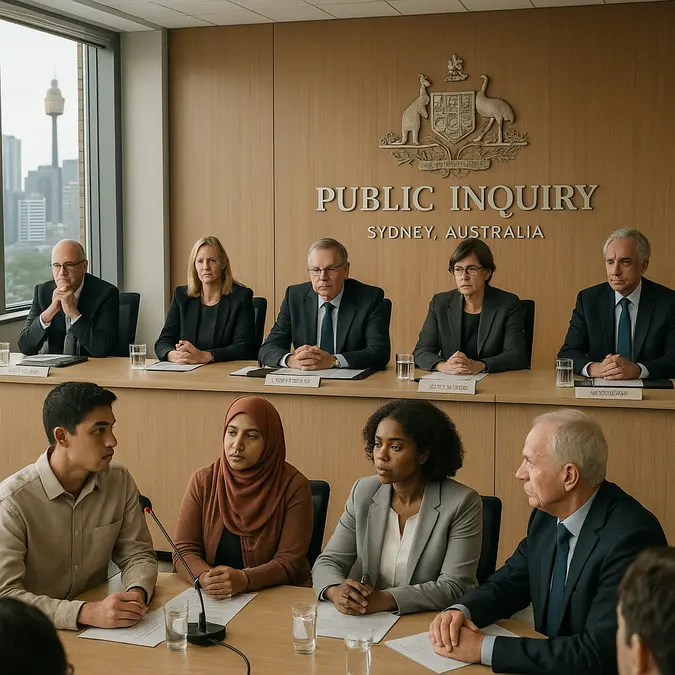
www.tnsmi-cmag.com – Royal Commission on Antisemitism and Social Cohesion has become one of Australia’s most closely watched inquiries, yet growing criticism suggests it is hearing only half the story by sidelining evidence of Islamophobia and anti-Palestinian racism. As the Commission moves through its third Sydney hearing block, scheduled to run until 10 July, its narrow evidentiary focus risks undermining both its credibility and its stated mission to strengthen social cohesion after the Bondi Beach attack that killed 15 people.
Royal Commission on Antisemitism and Social Cohesion: Why Its Mandate Matters Now
Established in January in the immediate aftermath of the violent Bondi Beach attack, the Royal Commission on Antisemitism and Social Cohesion was framed as a turning point for Australia’s response to rising hate, extremism, and community division. Royal Commissions carry exceptional weight in the Australian system; their recommendations often shape national legislation, policing frameworks, and social policy for decades. That is why the scope of this inquiry — and what it chooses to hear or ignore — matters so profoundly.
At its core, the Commission’s mandate is two-fold: to examine the drivers and impacts of antisemitism, and to recommend strategies to protect social cohesion. Both goals are tightly linked. When one community is targeted, others watch how the state responds. Inclusive, rights-based approaches can strengthen trust across society, while selective concern can fuel resentment and deepen fractures.
Globally, we have seen how rising antisemitism intersects with other forms of hate crime and bigotry. Reports from the United Nations on racism and intolerance and research compiled by Human Rights Watch highlight the complex, overlapping nature of contemporary hate, from online radicalisation to real-world violence. A Royal Commission that isolates antisemitism from Islamophobia, anti-Arab racism, or anti-Palestinian hostility risks misdiagnosing the problem.
How the Bondi Beach Attack Shaped the Commission’s Political Context
The Bondi Beach attack, which left 15 people dead, shocked the nation and catalysed emergency debates about security, extremism, and hate speech. For many Australians, it created a sense of urgency around combating antisemitism, particularly amid heightened tensions linked to the conflict in the Middle East. Policymakers moved quickly, and calls for a robust national response gained momentum.
In that climate, the Royal Commission on Antisemitism and Social Cohesion became a symbol of resolve. Yet speed often comes at the cost of nuance. While the political narrative focused strongly on the protection of Jewish communities — a vital and non-negotiable aim — communities experiencing Islamophobia and anti-Palestinian racism saw a different picture. Many reported an escalation of threats, abuse, and surveillance, but with far less public or institutional empathy directed their way.
For readers who follow democratic accountability issues through Democracy-focused coverage, this dynamic will feel familiar. Governments in times of crisis often design inquiries around the most politically salient form of harm, not the full spectrum of lived experience.
Seven Critical Gaps in the Current Approach
As hearings unfold in Sydney, critics argue that the Royal Commission on Antisemitism and Social Cohesion is in danger of entrenching an incomplete narrative about hate and belonging in Australia. Let’s unpack seven critical gaps that threaten the effectiveness — and legitimacy — of this landmark inquiry.
1. Exclusion of Islamophobia and Anti-Palestinian Racism
The most serious allegation is that the Commission has effectively sidelined evidence concerning Islamophobia and anti-Palestinian racism. This is not a marginal omission; it cuts to the heart of its stated mission. By foregrounding antisemitism while leaving other forms of racialised hate at the edges, the process risks appearing selective and politicised.
Community advocates report that Muslim, Arab, and pro-Palestinian voices struggle to secure adequate space in hearings or are constrained by narrow terms of reference. This produces a skewed public record: official transcripts and testimony will show a detailed mapping of antisemitism, but a fragmented or incomplete account of parallel harms experienced by other communities since the Bondi Beach attack.
2. A Narrow Definition of Social Cohesion
Social cohesion is not simply the absence of violence; it is the presence of trust, equal dignity, and shared civic belonging. If the Royal Commission on Antisemitism and Social Cohesion defines cohesion largely as the protection of one community from hate, it inadvertently sets up a hierarchy of concern.
True cohesion demands that the state treat threats against all communities with consistent seriousness. That means documenting anti-Jewish hate comprehensively, while also examining anti-Muslim bigotry, anti-Arab racism, and the weaponisation of security law against minorities. Anything less looks like selective solidarity.
3. Limited Lived-Experience Testimony
Royal Commissions gain legitimacy when they foreground lived experience alongside expert evidence. Yet emerging commentary suggests that Muslims, Palestinians, and allies who have faced abuse, harassment, or institutional discrimination sometimes feel unwelcome or marginalised in the current process.
We know from previous Australian inquiries — from the Royal Commission into Institutional Responses to Child Sexual Abuse to investigations into aged care — that survivors’ testimony can reshape public understanding. If the Royal Commission on Antisemitism and Social Cohesion under-represents key communities, it will miss patterns that only lived experience can reveal: patterns of racial profiling, chilling effects on protest, or biased community-policing practices.
4. Over-Reliance on Security and Law-Enforcement Frames
Another emerging issue is the heavy weight placed on security, policing, and counter-terrorism narratives. When hate is addressed primarily as a security issue rather than as a civic and human rights concern, the policy response can skew towards surveillance, control, and exceptional powers.
This framing may protect some communities but harm others. Muslim and Arab Australians have long described the burden of securitised policy approaches: more stops and searches, more intelligence scrutiny, and a constant sense of being seen as a risk rather than as rights-bearing citizens. A balanced Royal Commission on Antisemitism and Social Cohesion would critically examine how security tools are applied, to whom, and with what consequences.
5. Insufficient Attention to Digital Radicalisation
Today’s antisemitism, Islamophobia, and anti-Palestinian racism spread rapidly online. Encrypted messaging channels, fringe forums, and algorithm-driven platforms all play a role in amplifying hate. Yet public reporting on the hearings so far suggests that digital ecosystems have not received the depth of scrutiny they deserve.
Without a robust analysis of online radicalisation — including the role of platform design, content policies, and recommendation algorithms — the Commission’s eventual recommendations risk being outdated upon release. Comprehensive social cohesion strategies must confront how disinformation and digital echo chambers fuel mutually reinforcing prejudices across communities.
6. Limited Intersectional Analysis
Experiences of hate are rarely one-dimensional. A Palestinian Muslim woman, a Jewish person of color, or a queer Arab Australian may face multiple, intersecting forms of discrimination. Intersectionality is not an academic luxury; it is a practical tool for understanding where harm is most acute.
If the Royal Commission on Antisemitism and Social Cohesion focuses narrowly on community identities in isolation, it will overlook those at the sharpest edge of overlapping prejudice. This, in turn, leads to one-size-fits-all solutions that meet the needs of the most visible, not the most vulnerable.
7. Risk of Politicisation and Eroded Public Trust
Finally, there is the broader risk: if the Commission appears aligned with one set of political narratives about the Middle East and its local repercussions, it may lose the confidence of large segments of multicultural Australia. Once trust erodes, implementation of any recommendations will be contested and fragile.
For a publication that often examines International Relations, the link is clear: domestic cohesion cannot be insulated from global conflicts, but nor can it be allowed to become a proxy battlefield. The Commission must show that it is not adjudicating the politics of the Israel-Palestine conflict, but rather addressing the safety and dignity of all Australians, regardless of origin or viewpoint.
Balancing Protection from Antisemitism with Universal Human Rights
None of this detracts from the reality that antisemitism is a grave and growing concern. Jewish communities in Australia and worldwide have reported spikes in hate crime, vandalism, online abuse, and intimidation. A serious democratic society must confront this directly and without equivocation.
The critical question is how. A human rights-based approach insists on universality: measures designed to combat antisemitism should not undermine the rights of others. For example, policies that criminalise certain forms of political expression, restrict protest, or simplify complex international issues into binaries of loyalty and threat may create more division than they resolve.
The most effective Royal Commission on Antisemitism and Social Cohesion would frame its task as building an architecture of protection that works for everyone — Jewish, Muslim, Christian, secular, Indigenous, migrant, and otherwise. It would carefully distinguish between hate speech and legitimate criticism of governments or foreign policy, ensuring that necessary protections do not morph into broad instruments of censorship.
What an Inclusive, Evidence-Based Commission Could Deliver
Despite current concerns, the opportunity remains. If the Commission broadens its evidentiary base and actively invites testimony on Islamophobia and anti-Palestinian racism, it can still set a global standard for inclusive policy making. Several practical shifts would help:
- Expanded Terms of Reference: Explicitly recognise Islamophobia, anti-Arab racism, and anti-Palestinian hostility as key factors affecting social cohesion.
- Targeted Community Hearings: Hold dedicated hearing days in suburbs and regions where Muslim and Arab communities are heavily represented, making participation logistically and psychologically easier.
- Community Liaison Panels: Establish advisory panels drawn from a broad range of communities, with real influence over witness selection and questioning priorities.
- Independent Data Review: Commission independent researchers to analyse hate-crime data, complaint statistics, and online abuse across all affected communities, not only one.
- Transparency on Security Input: Disclose, wherever possible, the extent to which security and intelligence agencies shape the Commission’s analysis and recommendations.
These steps would not dilute the Commission’s focus on antisemitism; they would strengthen it by situating that focus within a coherent, principled approach to all forms of racially or religiously motivated hate.
Media Narratives, Public Perception, and the Road Ahead
How media outlets report on the Royal Commission on Antisemitism and Social Cohesion will also influence its legacy. Simplistic headlines that frame the inquiry as a binary contest between communities miss the point. The real issue is whether Australian institutions can respond to overlapping harms with fairness, precision, and respect for pluralism.
Responsible coverage should highlight antisemitic incidents in detail, while also giving equal prominence to rising Islamophobia and anti-Palestinian racism. It should scrutinise the design of the Commission itself, not only the most emotive pieces of testimony. And it should ask a blunt but necessary question: will the final recommendations leave all communities feeling more protected, or will some feel that their pain was officially documented while others remain unofficial, uncounted, and unheard?
As the current Sydney hearing block continues through 10 July, the Commission still has time to adjust course. Its credibility — and its potential to shape a more cohesive Australia — depends on whether it chooses to listen to the full diversity of voices now calling for inclusion.
Conclusion: Royal Commission on Antisemitism and Social Cohesion Must Hear Every Community
The Royal Commission on Antisemitism and Social Cohesion stands at a crossroads. It was born from a moment of tragedy at Bondi Beach and entrusted with a powerful mandate: to diagnose the roots of hate and recommend a path towards a more united, resilient Australia. Yet by giving insufficient space to Islamophobia and anti-Palestinian racism, it risks reproducing the very divisions it seeks to resolve.
For readers, policymakers, and affected communities alike, the imperative is clear. A truly effective Royal Commission on Antisemitism and Social Cohesion must embrace a universal, rights-based vision of protection — one that recognises the specific gravity of antisemitism while acknowledging, documenting, and confronting parallel forms of hatred. Only then can its findings command the trust of all Australians and offer a credible blueprint for social cohesion in an increasingly polarised world.