
 0
0
 0
0
www.tnsmi-cmag.com – Melbourne school zones are reshaping how families buy property, with some clever strategies reportedly saving buyers as much as $400,000 while still securing access to top-tier public education. As competition intensifies around a handful of elite government schools, understanding the new rules of the game has become essential for any parent planning their next home purchase.
Melbourne school zones and the $400,000 question
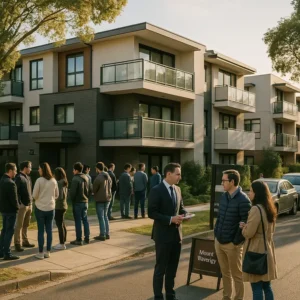
In Melbourne, school catchment boundaries have become one of the most powerful forces in the residential property market. For many families, the choice is no longer simply about suburb, commute, or lifestyle; it is about which public school zone a property sits in, and what that does to its price. Reports from the local real estate sector indicate that homes inside some of the city’s most coveted Melbourne school zones can sell for hundreds of thousands of dollars more than nearly identical homes just outside the boundary.
This premium reflects a wider trend in Australian capital cities, but Melbourne stands out because of the reputation of a small group of high-performing public schools, particularly in the inner and middle suburbs. According to multiple market analyses and on-the-ground agents, the gap between in-zone and out-of-zone prices can reach or exceed $400,000, depending on the suburb, dwelling type, and level of buyer competition at a given time.
For parents, this raises a difficult dilemma: pay the premium upfront for a home in a blue-chip school zone, or look for smarter, more flexible strategies that still unlock access to a preferred school without overextending the family budget. That is where innovative buyer tactics now come into play.
Why Melbourne school zones command such a premium
To understand why some Melbourne school zones are now a defining feature of the market, we need to look at the intersection of education, demographics, and housing supply. Government school catchment maps, published by the Victorian Department of Education, effectively create micro-markets. When NAPLAN scores, VCE results, and university admission rates position a school at the top of the rankings, demand for property within that zone can surge.
Research from sources such as the Australian Bureau of Statistics and education departments shows that families with school-aged children increasingly prioritise proximity to high-performing schools over house size or even commute time. That trend is not unique to Melbourne. International studies, including data frequently cited on Wikipedia’s school catchment area entry, highlight how catchment-based admission systems can create sharp price gradients between neighbouring streets.
In Melbourne, these gradients are especially visible around high-demand government schools in suburbs with constrained housing supply. Character homes, heritage overlays, and strict planning controls limit new development, while the pandemic-era shift toward lifestyle-driven moves intensified interest in leafy, amenity-rich neighbourhoods. The result: families are often competing fiercely for a small number of in-zone listings, pushing prices ever higher.
How the $400,000 saving emerges
The reported $400,000 saving is best understood as the difference between buying a full-sized family home in a coveted zone and adopting alternative approaches that either:
- Target smaller, more affordable properties within the same zone, or
- Purchase just outside the zone and use other strategies to secure school access.
By benchmarking recent sales data, buyers and their advocates have shown that similar homes in adjacent but out-of-zone streets can be significantly cheaper. Families willing to trade land size, bedroom count, or period charm for financial flexibility can, in some cases, redirect hundreds of thousands of dollars into savings, investments, or future upgrades.
5 powerful strategies buyers use in Melbourne school zones
While every family’s circumstances differ, several recurring strategies are emerging in the way buyers approach Melbourne school zones. These approaches are not shortcuts around official enrolment rules – which remain strict – but rather ways to balance property decisions with educational objectives.
1. Buying smaller in-zone, then upgrading later
One of the most effective methods involves buying a compact property – such as a two-bedroom unit, villa, or townhouse – within the target school zone, rather than stretching for a large family home. By doing so, families obtain an in-zone address and legitimate enrolment eligibility, but avoid the full price premium associated with larger blocks and freestanding houses.
Over time, after children have secured their place and progressed through critical years of schooling, some families then choose to upgrade, either within the same zone (if affordability allows) or to a more spacious home elsewhere, once the pressure of school access has eased. This staged strategy spreads financial risk over multiple years.
From a broader market perspective, this has also increased demand for smaller dwellings within premium Melbourne school zones, making them an emerging investment class rather than simply “starter homes”.
2. Targeting fringe streets just outside the boundary
Another tactic focuses on the fringe of a high-demand zone. Properties one or two streets outside the official catchment can be markedly more affordable, yet still offer convenient access to the same facilities, transport corridors, and community networks. For some families, this strikes the right balance between lifestyle and budget.
However, it is critical to recognise that fringe buying does not equate to guaranteed enrolment at the preferred school. Victorian government schools generally require proof of permanent residence within the catchment for priority entry. Families considering this strategy must therefore:
- Study the official school zone maps for their target school.
- Confirm how the school has applied its zone rules in recent years.
- Seek advice from the school or Department of Education about any recent or planned changes to boundaries.
Because these micro-markets can shift, we often advise readers to combine map research with on-the-ground conversations. A buying decision based on assumptions about future boundary changes can carry substantial risk.
3. Renting in-zone as a transitional strategy
Some families choose to rent within coveted Melbourne school zones while owning property elsewhere. This can be a transitional strategy, particularly for parents who have not yet decided where to settle long term, or who want to test a suburb before committing to a mortgage.
In practice, this approach can still be expensive. High demand for rental homes in elite school zones has driven up weekly rents, and schools often scrutinise rental tenure to ensure families genuinely reside in-zone. Nonetheless, when compared against a potential $400,000 purchase premium, a carefully managed multi-year tenancy can sometimes be the more flexible option.
In addition, some parents combine renting in-zone with retaining an investment property in a more affordable suburb. That diversification can offer capital growth in emerging areas while children benefit from a highly regarded public education.
4. Exploring alternative high-performing zones
It is easy to focus on a handful of flagship schools and overlook the many other strong performers across the city. A growing share of informed buyers are now using data – such as academic results, specialist programs, and co-curricular offerings – to identify lesser-known but still high-quality schools whose zones do not yet attract extreme price premiums.
By broadening the search beyond the headline names, families can often find suburbs where housing remains more affordable yet educational outcomes remain strong. This approach requires deeper research and, ideally, visits to multiple schools. However, it can unlock a much wider landscape of opportunity.
For readers who follow broader market and policy trends, our coverage on Property and Economy often highlights how shifting demographics can elevate new zones into the spotlight over a five-to-ten-year horizon.
5. Leveraging expert advice and long-term planning
Finally, families who succeed in navigating competitive Melbourne school zones tend to seek expert guidance early. Buyer’s agents, financial planners, mortgage brokers, and education consultants can each provide a piece of the puzzle. Together, they help households understand:
- How much they can safely borrow without overexposing themselves to interest rate rises.
- Which suburbs and property types align with both education goals and long-term wealth creation.
- What trade-offs (such as a longer commute or smaller land size) make sense relative to their values.
Crucially, this professional guidance helps parents avoid impulsive decisions driven by fear of missing out. In a market as emotionally charged as school-zone property, clear-eyed planning can be a significant competitive advantage.
Risks and ethical questions around school-zone strategies
As pressure builds in popular Melbourne school zones, so too do concerns about equity and ethics. Critics argue that extreme price gaps reinforce socio-economic divides, as only wealthier households can buy or rent in the most desirable catchments. This, they say, undermines the foundational Australian principle of universally accessible, high-quality public education.
There are also occasional reports of families attempting to game the system – for example, by using short-term leases, questionable documentation, or relative’s addresses to appear in-zone. Victorian authorities have responded by tightening verification processes, conducting audits, and in some cases cancelling enrolments if an address is found to be non-genuine.
From a policy standpoint, the tension lies between giving local families priority access to nearby schools and ensuring that postcode does not become destiny for a child’s educational prospects.
For ethically minded buyers, the key is to work within the rules: choosing genuine residences, respecting local communities, and recognising that enrolment policies exist to keep class sizes manageable and resources fairly allocated.
Long-term implications for Melbourne’s housing and education landscape
The concentration of demand within certain Melbourne school zones has several long-term consequences that readers should consider:
- Urban stratification: High-demand zones can become enclaves of relative affluence, while neighbouring areas remain more mixed. That shapes everything from retail offerings to public transport advocacy.
- Pressure on infrastructure: As families cluster in specific catchments, local roads, parks, and community facilities experience higher demand, prompting calls for better planning and investment.
- Policy debates: Governments may explore reforms such as periodic boundary reviews, new school construction in growth corridors, or alternative enrolment mechanisms to ease pressure.
- Investment patterns: Savvy investors increasingly view properties in resilient school zones as defensive assets, less likely to suffer price falls during downturns due to enduring demand from families.
For the broader city, these forces contribute to a more complex and segmented housing market. For individual families, they underline the importance of aligning property decisions not just with current needs, but with how suburbs may evolve over the next decade.
How buyers can make smarter, data-driven choices
To navigate this environment effectively, families should move beyond anecdotes and focus on verifiable information. When assessing Melbourne school zones, you can:
- Review official catchment maps and school profiles.
- Compare recent sale prices for in-zone versus out-of-zone properties with similar attributes.
- Assess commute times, public transport, and future infrastructure projects that may change suburb dynamics.
- Factor in non-academic priorities such as sports facilities, music programs, and pastoral care.
By approaching the decision with an analyst’s mindset, rather than relying solely on headline rankings or social media chatter, buyers can often uncover opportunities that the broader market has not fully priced in.
Conclusion: mastering Melbourne school zones without overpaying
For modern families, property is no longer just about shelter or even lifestyle; it has become a strategic tool in shaping children’s educational pathways. The fierce competition in select Melbourne school zones – and the reported ability of some buyers to save around $400,000 through smarter strategies – illustrates how tightly intertwined housing and schooling have become.
By understanding why certain zones command such extraordinary premiums, recognising the ethical boundaries around enrolment, and exploring a wider spectrum of schools and suburbs, readers can approach their next move with greater confidence. With careful planning, data-driven research, and, where appropriate, professional advice, it is possible to secure strong educational outcomes without sacrificing long-term financial security. In a city where Melbourne school zones will likely remain a defining market force for years to come, informed decision-making is your most valuable asset.