
 0
0
 0
0
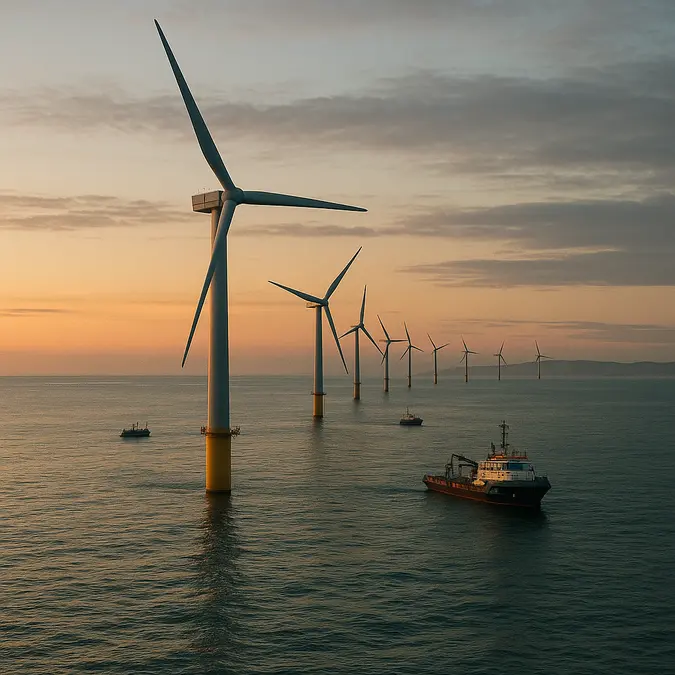
www.tnsmi-cmag.com – Offshore wind farms are finally moving from vision to reality in Victoria as the state government opens bidding for 2 gigawatts (GW) of capacity off the coast of Gippsland, a milestone arriving roughly a year later than first promised and raising important questions for investors, policymakers, and communities.
Offshore Wind Farms and Victoria’s High-Stakes 2GW Gippsland Auction
Victoria has positioned itself as Australia’s frontrunner in the race to build large-scale offshore wind farms, and the Gippsland auction marks the state’s most significant clean energy procurement to date. Energy Minister Jaclyn Symes has confirmed that companies can now submit proposals to develop around 2GW of offshore wind capacity in waters off the state’s southeast coast.
This auction is not just another infrastructure tender. It sits at the intersection of climate policy, regional development, and energy security. The one-year delay in launching the process underscores both the complexity of offshore projects and the high expectations for what these wind farms must deliver: reliable renewable power, private capital inflows, and long-term jobs in coastal communities.
Globally, offshore wind has become a cornerstone of decarbonisation strategies. According to the International Energy Agency (IEA), offshore wind capacity could grow fifteenfold by 2040 under current policies, with investment running into the trillions of dollars (IEA report). Victoria now wants its share of this emerging industrial revolution.
Why Offshore Wind Farms Matter for Victoria’s Energy Transition
For Victoria, the strategic logic behind building large offshore wind farms is clear. The state has legislated ambitious emissions reduction and renewable energy targets, and it is planning for the progressive retirement of aging coal-fired power stations in the Latrobe Valley. That combination creates both a supply gap and an opportunity.
Offshore wind can help fill that gap in several critical ways:
- High capacity factors: Offshore wind resources are typically stronger and more consistent than onshore wind or rooftop solar, offering more reliable output.
- Large unit scale: Individual offshore projects can reach gigawatt scale, meaning fewer projects are needed to deliver large amounts of clean power.
- Proximity to demand: Gippsland’s coastline offers a pathway to connect into Victoria’s transmission network, feeding power back into population and industrial centres.
Furthermore, the Gippsland region carries symbolic and practical weight. It has long hosted the coal industry that powered Victoria’s economy for decades. Now, it is set to become a focal point for the next chapter of the energy story, with Energy policy shifting strongly toward renewables and electrification.
Seven Critical Insights from the Delayed Offshore Wind Auction
Behind the headline that bids are finally open lies a more nuanced picture. Based on current public information and international experience, here are seven critical insights readers should understand about Victoria’s push for offshore wind farms.
1. Offshore Wind Farms Signal a Structural Shift in Energy Investment
The Gippsland auction is a visible sign that Australia’s energy system is structurally shifting from centralised, fossil-fuel-based generation to diversified renewable portfolios. While Victoria has already built significant onshore wind and solar capacity, the decision to tender 2GW offshore raises the stakes for developers and financiers.
Large institutional investors, infrastructure funds, and global energy majors have already shown interest in Australian offshore wind zones following the Commonwealth’s declaration of the Gippsland offshore area. The new auction provides a concrete mechanism for those investors to commit capital, locking in long-term power purchase agreements or support mechanisms that make multi-billion-dollar offshore projects bankable.
2. The One-Year Delay Reflects Complexity, Not Indifference
Critics may focus on the one-year delay in launching the auction, but globally, the rollout of offshore wind farms has rarely followed a straight timetable. Delays commonly stem from:
- Detailed marine and environmental assessments
- Consultation with fishing, shipping, and local communities
- Designing market and contract frameworks that balance investor certainty with consumer protection
Compared with mature markets like the United Kingdom or Germany, Victoria is building its regulatory and technical frameworks largely from the ground up. It is therefore unsurprising that timelines shifted. What matters now is that the auction design is robust and that project delivery can proceed with fewer surprises once winners are announced.
3. Transmission and Grid Integration Are Make-or-Break
Announcing 2GW of offshore capacity is only the first step. Ensuring that the power from these offshore wind farms can actually reach homes and businesses is equally critical. Transmission infrastructure remains one of the most significant bottlenecks in Australia’s energy transition, as noted repeatedly by the Australian Energy Market Operator (AEMO).
New high-voltage connections, grid reinforcements, and potentially energy storage will be needed to accommodate the additional offshore capacity. If these investments lag behind project construction, Victoria risks curtailment, higher system costs, and community frustration over perceived underutilisation of new assets.
4. Regional Jobs and Supply Chains Will Define Public Perception
For Gippsland communities, the promise of offshore wind farms is not just cleaner power; it is also new economic purpose. The government has repeatedly highlighted jobs in fabrication yards, port services, operations, and maintenance as core benefits.
However, international experience shows that realising domestic industrial benefits is not automatic. Countries that have captured strong local content share, such as Denmark and the UK, have combined clear policy signals with long-term pipeline visibility and workforce planning (Wikipedia: Offshore wind power). Victoria will need similar long-termism if it wants Gippsland to host not only turbines in the distance, but also workshops, training centres, and component manufacturing onshore.
5. Environmental and Social License Issues Cannot Be an Afterthought
While offshore wind farms are central to decarbonisation, they also raise legitimate questions about marine ecosystems, fishing grounds, visual impact, and cultural heritage. Thorough environmental impact assessments and genuine consultation with Traditional Owners and local stakeholders are essential.
Developers will need to demonstrate how they will minimise ecological disturbance, protect migratory species, and design layouts that respect navigation routes. In many jurisdictions, early, transparent engagement has proven more effective than reactive damage control after opposition has formed.
6. Policy Stability Will Determine Cost and Investor Appetite
Offshore wind is capital-intensive, with individual projects often exceeding several billion dollars. Policy stability—at both state and federal levels—directly influences the cost of capital and the price consumers ultimately pay for electricity generated by offshore wind farms.
Clear long-term targets, predictable auction schedules, and consistent planning approvals help compress risk premiums, which in turn reduce bid prices in competitive tenders. Conversely, policy reversals or prolonged uncertainty tend to raise financing costs and delay final investment decisions.
7. Victoria’s Choices Will Shape Australia’s National Offshore Blueprint
Although the Commonwealth has established the broader legal framework for offshore renewable energy zones, Victoria is effectively acting as a test case in translating those rules into functioning, large-scale projects. The success or struggle of the Gippsland auction will influence how other states—such as New South Wales, Tasmania, and Western Australia—design their own approaches to offshore wind farms.
If the state can achieve cost-effective bids, secure broad community support, and move projects into construction within a reasonable timeframe, it will create a template for the rest of the country. If not, regulators and industry will need to reassess assumptions, from contract design to port readiness.
How Offshore Wind Farms Fit into Victoria’s Broader Energy Strategy
The Gippsland tender cannot be viewed in isolation. It forms part of a broader suite of policies that include renewable energy targets, transmission acceleration, storage incentives, and sectoral decarbonisation plans. Offshore wind offers firm, large-scale generation that can complement solar and onshore wind, smoothing overall system variability.
For readers following the evolution of Renewable technologies, several strategic advantages stand out:
- Complementarity with solar: Offshore wind often produces more power in the evenings and winter months, when solar output is weaker, improving system balance.
- Potential for green industry: Stable low-carbon power can support new industrial loads, from green hydrogen production to electrified manufacturing.
- Resilience: Diverse generation sources across onshore and offshore sites reduce the system’s exposure to localised weather events or infrastructure failures.
In policy terms, the Gippsland auction represents a practical test of whether Victoria can translate headline targets into executable projects that deliver both climate and economic dividends.
Opportunities and Risks for Investors and Developers
For developers considering bids in this auction, the commercial opportunity is compelling but demanding. Large offshore wind farms offer long-lived assets with predictable revenue streams, especially when supported by offtake contracts or government-backed mechanisms.
Key opportunity dimensions include:
- First-mover advantage: Early projects can secure prime sites and build crucial local relationships.
- Portfolio diversification: Global energy companies can balance exposure across different regulatory regimes and markets.
- Reputation and track record: Successful delivery in a new market enhances a developer’s standing for future tenders across the Asia-Pacific region.
However, risks are equally real:
- Cost inflation: Recent global trends in materials, shipping, and finance have strained offshore wind project economics.
- Supply chain bottlenecks: Limited availability of installation vessels, specialized port infrastructure, and high-voltage components may constrain rollout timelines.
- Regulatory uncertainty: While frameworks are emerging, details around seabed leasing, grid connection charges, and long-term pricing arrangements must be carefully parsed.
Astute bidders will therefore weigh technical resource quality alongside policy robustness, community sentiment, and project delivery risk when shaping their proposals.
What This Means for Consumers and the Broader Economy
From a consumer perspective, the most pressing questions are straightforward: Will offshore wind farms lower power bills? Will they make the system more reliable? And will they truly create durable jobs?
In the short term, offshore wind may not be the absolute cheapest form of renewable energy compared with onshore wind or large-scale solar. Yet its system value—stemming from higher capacity factors, diversity of supply, and proximity to load—can offset headline cost differences when viewed across the entire grid.
Over the medium term, as more projects are built and supply chains mature, the levelised cost of energy from offshore wind typically falls, as seen in European markets where auction prices have dropped dramatically over the past decade. The balance between near-term investment and long-term consumer benefit will depend heavily on how regulators structure contracts and allocate risks.
For the broader economy, the development of offshore wind in Gippsland could catalyse new port upgrades, training programs, research partnerships, and industrial clusters tied to clean energy. This extends beyond electricity into sectors like green steel, ammonia, and hydrogen, all of which need abundant, low-carbon power.
Conclusion: Offshore Wind Farms at the Core of Victoria’s Next Energy Chapter
Victoria’s decision to open its long-awaited Gippsland auction, even a year later than initially planned, signals that offshore wind farms are no longer a speculative concept but a central plank in the state’s energy and industrial strategy. The 2GW of capacity now up for bidding will shape not only the local power mix, but also the trajectory of jobs, infrastructure, and regional development for decades.
Success is not guaranteed. Delivering these projects on time and on budget, while maintaining public trust and environmental integrity, will require disciplined policy, technical excellence, and genuine collaboration between government, industry, and communities. Yet if Victoria can align those pieces, the Gippsland offshore wind zone may become a flagship example of how to transition from a coal-based past to a resilient, low-carbon future powered by world-class offshore wind farms.