
 0
0
 0
0
www.tnsmi-cmag.com – Iranian-Americans are confronting a new wave of internal division six months after the latest chapter of the Iran-Iraq conflict and U.S. military strikes reshaped the political landscape. What began as a moment that some in the diaspora believed could accelerate regime change in Tehran has instead exposed deep rifts over war, sanctions, humanitarian costs, and the very meaning of loyalty to both Iran and the United States.
Within one of America’s most politically engaged immigrant communities, families, activists, and professionals now find themselves debating whether military pressure hastens freedom or simply magnifies suffering on the ground. The diaspora’s disagreements reflect not just reactions to the war, but decades of trauma, exile, and contested visions of Iran’s future.
Iranian-Americans at a Crossroads: War, Hope, and Disillusionment
The recent six-month conflict has forced Iranian-Americans to confront a painful question: can external military pressure truly deliver political change, or does it merely deepen repression while inflicting heavy humanitarian damage? In the early weeks of the strikes, parts of the diaspora welcomed what they saw as a rare opportunity to weaken an entrenched regime. On social media and in diaspora media outlets, some voices framed the escalation as a turning point that could embolden domestic opposition.
Yet as the months passed, two realities collided. First, the expected rapid political transformation did not materialize. Second, reports of civilian casualties, economic disruption, and growing hardship in Iran reminded many of the enormous human cost of conflict. This disconnect has fueled frustration among war supporters and moral unease among those who once remained on the fence.
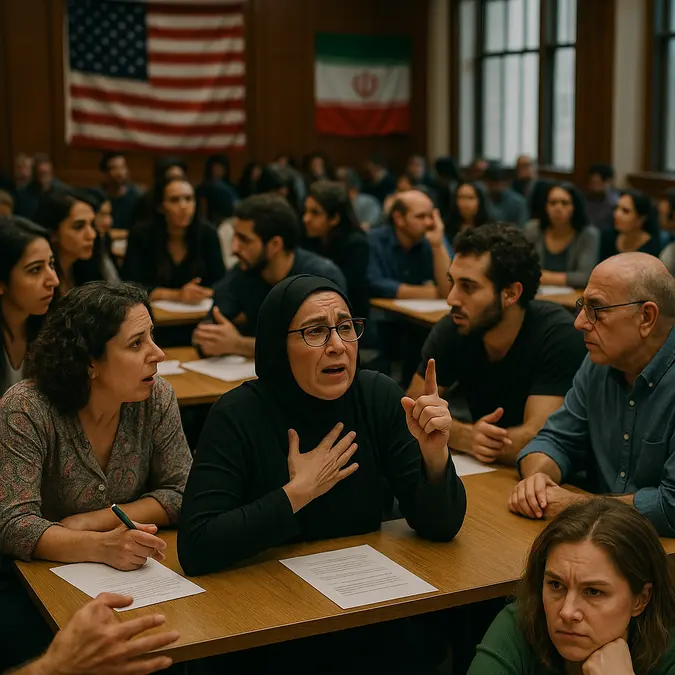
Iranian-American communities, from Los Angeles to Washington D.C., now host parallel conversations: one that prioritizes political liberation at almost any cost, and another that centers humanitarian concerns and the long-term damage of sanctions and war. These parallel narratives rarely meet in the middle, leading to mutual distrust and accusations of naivety, extremism, or even betrayal.
Historical Trauma: How the Past Shapes Today’s Diaspora Divide
To understand why Iranian-Americans are so divided, we must revisit the historical arc that produced this diaspora in the first place. Most Iranian immigrants in the United States arrived in waves following the 1979 Islamic Revolution, the Iran hostage crisis, and the brutal eight-year Iran-Iraq War that began in 1980. Many fled persecution, ideological purges, or the dismantling of the pre-revolution monarchy. Others left later, escaping economic hardship, political pressure, or social restrictions.
This shared history does not produce a unified political outlook. Instead, it has crystallized into distinct identity clusters:
- Pre-revolution exiles who often retain nostalgia for the monarchy or secular nationalism.
- Post-revolution migrants who may oppose the current regime but are skeptical of foreign intervention.
- Second-generation Iranian-Americans who grew up in the U.S. and view their heritage through the lens of American civic values and global human rights.
Each group brings different memories and priorities to the discussion. For some older exiles, the recent conflict revives hopes that the regime they once fled might finally fall. For many younger and more progressive Politics-oriented Iranian-Americans, however, militarized solutions clash with their commitment to diplomacy, human rights, and non-intervention.
Historical trauma is therefore not only emotional; it is profoundly political. Experiences of loss, exile, and dispossession inform whether people view foreign pressure as justice delayed or as a dangerous repetition of past violence.
Seven Critical Fault Lines Dividing Iranian-Americans
Within this complex context, at least seven major fault lines now shape the discourse among Iranian-Americans. These fault lines rarely appear in isolation; they intersect and intensify one another.
1. Regime Change vs. Reform from Within
The first and most visible divide revolves around strategic goals. One camp believes that only full regime change can deliver freedom and stability for Iran. For them, the recent war and related military pressure represent a necessary catalyst, even if the path is violent and uncertain. They argue that decades of incremental reform efforts have failed and that the state’s core structure is incompatible with democratic transformation.
The other camp supports reform from within, emphasizing civil society, gradual change, and internal movements rather than external force. They point to episodes like Iran’s 2009 Green Movement and the protests of recent years as proof that domestic pressure, amplified by global solidarity, can challenge the state without triggering full-scale war.
This debate is not purely theoretical. It affects how Iranian-Americans lobby U.S. lawmakers, which organizations they donate to, and how they frame Iran in public commentary. It also fuels suspicion: advocates of reform are sometimes accused of appeasing the regime, while supporters of regime change are branded as warmongers or indifferent to civilian suffering.
2. Humanitarian Toll vs. Strategic Opportunity
Another decisive tension pits geopolitical strategy against human cost. Many Iranian-Americans with relatives in Iran receive constant updates on rising prices, shortages, and security crackdowns. For them, sanctions and bombardment are not abstractions; they represent daily survival challenges for loved ones.
Conversely, some activists argue that temporary hardship is an inevitable price for long-term freedom and that backing down from pressure only prolongs the status quo. However, as months pass without profound political change, this “short-term pain for long-term gain” argument becomes harder to sustain in community discussions.
“We are told to wait for a better Iran while our families are crushed between sanctions and repression,” one Iranian-American academic recently noted in a panel discussion. “At what point does strategy stop justifying suffering?”
These clashing perspectives have turned family gatherings, cultural events, and online forums into battlegrounds where policy debates feel deeply personal.
3. Sanctions: Targeting the Regime or Punishing the People?
Sanctions remain one of the most divisive issues among Iranian-Americans. Supporters emphasize that targeted sanctions against officials, Revolutionary Guard entities, and affiliated companies limit the regime’s financial reach and curb its regional activities. They highlight precedents in other countries where economic pressure contributed to negotiations or political openings.
Critics counter that even so-called “targeted” sanctions radiate through the broader economy, restricting access to medicine, financial services, and investment. Humanitarian exemptions often exist on paper but are mired in compliance risk and bureaucracy. Reports from organizations such as Human Rights Watch and coverage by outlets like Reuters have documented how sanctions regimes in the region can disproportionately burden ordinary citizens.
Within the diaspora, this debate often turns moral: is it acceptable to support tools that may harm civilians in order to weaken a government widely accused of human rights abuses? The answer, for many Iranian-Americans, depends on personal history, ideological leanings, and professional exposure to international policy.
4. Diaspora Activism vs. On-the-Ground Realities
Another fault line involves the perceived legitimacy of diaspora voices. Activists based in U.S. cities, often fluent in English and well-connected to media and policymakers, play an outsized role in shaping narratives about Iran. Yet residents inside Iran regularly complain that diaspora debates overlook daily realities, misread social dynamics, or prioritize symbolic gestures over practical needs.
Some Iranian-Americans acknowledge this imbalance and insist on centering voices from within Iran in advocacy work. Others argue that exile communities have a responsibility to speak out precisely because they can operate more safely. This tension raises important questions about representation, consent, and the risk of foreign-based activism unintentionally escalating risks for people on the ground.
5. Generational and Identity Gaps
Generational divides within the community are increasingly pronounced. First-generation immigrants sometimes view U.S. military power through the lens of Cold War rivalries and regional conflicts that shaped their youth. Younger Iranian-Americans, who came of age in the post-9/11 era and the wars in Afghanistan and Iraq, are more attuned to the long-term consequences of interventions and the rise of Islamophobia and anti-immigrant sentiment in the West.
In many families, this translates into difficult conversations: older relatives may see any reduction in pressure on Tehran as a betrayal of past sacrifices, while younger members emphasize multilateral diplomacy, people-to-people engagement, and global solidarity with other oppressed groups. Identity plays a role as well; those who strongly identify as American often invoke U.S. constitutional values and international law, whereas those who foreground their Iranian heritage may prioritize national dignity, historical grievances, and sovereignty.
6. Media Narratives and Misinformation
Information ecosystems amplify these divides. Iranian-Americans consume content from Persian-language satellite channels, U.S. and European news outlets, social media influencers, and state-linked platforms from the region. Narratives about the war, sanctions, and protests can differ wildly across these sources.
Propaganda, selective reporting, and misinformation circulate easily, particularly in moments of crisis when verification is difficult. Competing media narratives shape whether people perceive the conflict as a just struggle against tyranny, a reckless regional gamble, or a complex contest among state and non-state actors. The absence of trusted, balanced, and deeply contextual coverage leaves space for echo chambers, where pre-existing beliefs harden rather than evolve.
7. Loyalty, Belonging, and Accusations of Betrayal
Perhaps the most emotionally charged fault line concerns questions of loyalty. Within the community, labels such as “traitor,” “sympathizer,” or “agent” appear far too easily. Diaspora figures who favor engagement or diplomacy may be accused of whitewashing the regime. Conversely, those who support military pressure are sometimes portrayed as indifferent to Iranian lives or as aligning with foreign agendas.
For Iranian-Americans, who already navigate prejudice and stereotyping in the United States, this internal polarization can feel especially painful. Balancing love for Iran, commitment to American democratic values, and fear of being misunderstood on both sides creates a sense of permanent negotiation over identity and belonging.
How Policy Debates Spill Into Everyday Life
The political divides described above are not confined to think tank panels or televised debates. They seep into workplaces, universities, community centers, and even cultural events that were once neutral spaces. In some organizations, quiet codes of silence now govern conversations about Iran, because leaders fear that an open stance could alienate donors or participants.
Student groups face similar dilemmas. Younger Iranian-Americans in academic settings often struggle to reconcile activism over Iran with broader causes, such as refugee rights, anti-racism, or peace movements. Aligning with one coalition can be interpreted as endorsing its entire foreign policy agenda, which may clash with the views of family members back home or older community leaders in the diaspora.
Even social media, which once served as a connective tissue for a scattered diaspora, has become a venue for public shaming, call-out campaigns, and pressure to adopt uncompromising positions. Nuance rarely goes viral; absolutism does. This leaves limited room for the cautious, evidence-based analysis that a complex region like the Middle East demands.
Paths Forward: Can Iranian-Americans Rebuild Trust?
Despite these profound divisions, there are constructive steps that Iranian-Americans can take to rebuild trust and foster more productive dialogue.
- Centering human rights consistently: By agreeing that the dignity and safety of civilians must be the starting point for any policy discussion, diaspora factions can at least share a moral baseline, even when they disagree on strategy.
- Separating people from policies: Recognizing that disagreement over war or sanctions does not equate to moral failing can reduce the tendency to question each other’s motives or patriotism.
- Amplifying diverse voices from inside Iran: Including perspectives from journalists, activists, academics, and ordinary citizens in Iran allows diaspora debates to align more closely with on-the-ground realities.
- Investing in civic literacy: Understanding how U.S. foreign policy is actually made, and how lobbying, legislation, and public opinion interact, can help Iranian-Americans pursue more effective, transparent advocacy strategies.
- Building cross-generational dialogue: Structured conversations between first-generation exiles and younger Iranian-Americans can surface shared values and reduce misunderstanding based solely on age or political experience.
Media literacy is pivotal as well. Learning to evaluate sources, verify facts, and distinguish opinion from reporting can mitigate the impact of disinformation that seeks to exploit diaspora tensions. Here, responsible journalism and in-depth analysis—including coverage from outlets such as Wikipedia’s overview of Iranian-Americans and high-quality international reporting—play a vital role.
Crucially, World affairs do not unfold in isolation. The war’s implications extend beyond Iran and Iraq to regional security, global energy markets, and international law. This means that Iranian-American debates are not just internal disputes; they intersect with how policymakers, analysts, and other communities understand the Middle East as a whole.
Conclusion: A Divided Community in a Defining Moment
Six months after renewed conflict and military strikes raised hopes among some and fears among others, Iranian-Americans find themselves in a defining moment. Their divisions over regime change, sanctions, and humanitarian priorities are not signs of apathy, but of deep engagement shaped by decades of history and personal sacrifice. Yet without mechanisms to manage disagreement and uphold shared principles, these rifts risk weakening the very influence the community seeks to have on U.S. policy and international opinion.
For Iranian-Americans, the challenge now is to transform polarization into pluralism—to acknowledge profound differences while insisting on dialogue grounded in evidence, empathy, and an unwavering commitment to human rights. How they navigate this internal crossroads will not only shape their relationship with Iran and the United States, but also influence how future generations understand what it means to belong to a diaspora forged in revolution, war, and the enduring search for justice.