
 0
0
 0
0
www.tnsmi-cmag.com – The Hawaii housing shortage is entering a decisive phase as a new AARP Hawaiʻi analysis projects the state will need nearly 60,000 additional homes by 2050 to keep pace with demand, especially from an aging population facing some of the highest housing costs in the United States.
Hawaii housing shortage and the 60,000 home gap by 2050
Hawaiʻi's housing crisis is not new, but the scale of the coming shortfall is now clearer. According to the AARP Hawaiʻi-commissioned report, the state must add almost 60,000 housing units by 2050 just to meet baseline demand. That figure does not attempt to fix existing overcrowding, homelessness, or substandard housing; it simply reflects what is needed to prevent the Hawaii housing shortage from worsening.
For context, Hawaiʻi already ranks among the most expensive housing markets in America. The median home price in the islands consistently sits near the top of national rankings, while rents outpace wages for many local workers. National data from sources such as the U.S. Census Bureau and industry housing research repeatedly highlight Hawaiʻi as one of the least affordable places to buy or rent.
Layered on top of this is a rapidly aging population. By 2050, a significantly larger share of residents will be over 65, and many will depend on fixed or limited incomes. This convergence of demographic change and scarce, high-cost housing is at the heart of the projected Hawaii housing shortage.
Why AARP is sounding the alarm on Hawaii housing shortage
AARP is best known as an advocacy organization for older adults, but its interests extend deeply into housing and community design. Stable, affordable housing is a foundation for healthy aging. In Hawaiʻi, where multi-generational households are common and cultural ties to place are strong, the stakes are even higher.
The AARP Hawaiʻi analysis underscores several strategic concerns:
- Housing for aging in place: Many older adults prefer to remain in their homes and communities rather than move to institutions. That requires accessible, single-level or adaptable units.
- Proximity to services: Seniors need housing near healthcare, transit, food, and community services, not isolated developments far from town centers.
- Fixed-income vulnerability: As housing costs rise faster than pensions and Social Security, older residents face a higher risk of housing insecurity or displacement.
These factors mean that the Hawaii housing shortage is not just a numbers problem; it is a design, location, and affordability problem. The report calls on policymakers to view housing planning through a long-term, age-friendly lens.
Drivers behind the Hawaii housing shortage
The projected 60,000-unit gap does not appear in a vacuum. Several structural forces are converging to create and deepen the Hawaii housing shortage.
Hawaii housing shortage, demographics, and an aging population
Hawaiʻi has one of the highest life expectancies in the United States, according to public health and demographic data. Longer lives are a positive story, but they also mean that more people will need appropriate housing for more years, often while living with chronic conditions or reduced mobility.
Key demographic realities include:
- Rising share of seniors: A larger portion of the population will be 65 and older by 2050, increasing demand for smaller, accessible units and assisted living options.
- Smaller household sizes: As family structures change, there is more need for one- and two-bedroom units, not just large single-family homes.
- Caregiver housing: Family caregivers—often adult children or relatives—also need stable housing nearby to support older family members.
This demographic shift intensifies the Hawaii housing shortage and requires a different mix of housing types than what has traditionally been built.
High construction costs and limited land
Hawaiʻi's geography and regulatory environment make building new homes expensive and complex. The islands have limited developable land, especially outside conservation and agricultural zones. Coastal areas are further constrained by sea-level rise, erosion, and climate adaptation concerns.
Construction costs in Hawaiʻi are also among the highest in the nation due to imported materials, labor constraints, and stringent building codes. While these codes are crucial for safety and resilience—especially after disasters such as the Lahaina wildfire—they add to per-unit costs, discouraging developers from building lower-priced housing that would ease the Hawaii housing shortage.
Tourism, short-term rentals, and investment demand
Hawaiʻi's global appeal as a tourist and investment destination creates intense competition for housing units. Short-term rentals, second homes, and speculative purchases can reduce the stock of long-term rental housing available to residents.
Local policymakers have taken steps to regulate vacation rentals and discourage speculative vacancies, but enforcement is uneven. Meanwhile, many local families find themselves priced out of neighborhoods their families have lived in for generations, further amplifying the Hawaii housing shortage.
Regional impacts across the islands
The projected shortfall of nearly 60,000 homes by 2050 will not be evenly distributed. Each county faces its own particular version of the Hawaii housing shortage based on geography, economy, and existing housing stock.
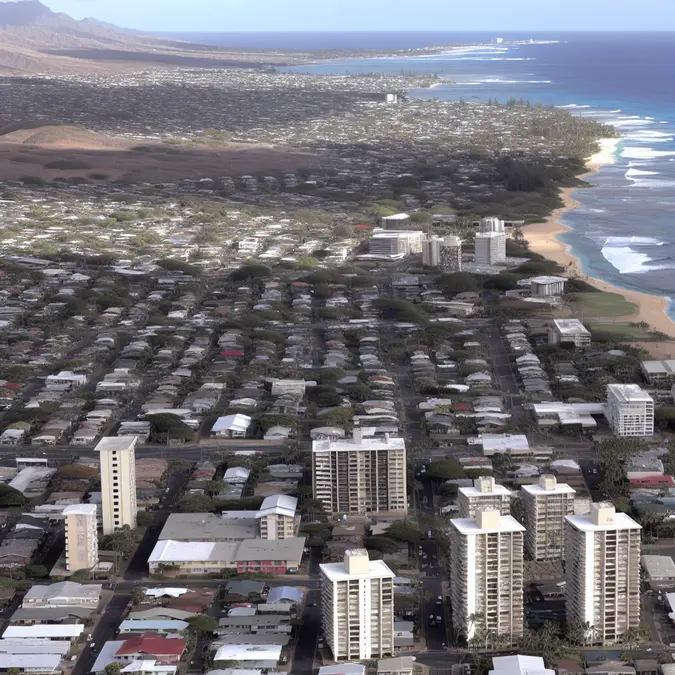
- Oʻahu: As the most populous island, Oʻahu bears the brunt of demand. High-rise development in urban Honolulu has added units, but affordability and congestion remain major challenges.
- Maui County: Recovery and rebuilding after the devastating Lahaina wildfire intersect with long-standing housing shortages. Balancing disaster recovery, cultural preservation, and new construction is especially complex.
- Hawaiʻi Island (Big Island): More available land offers opportunities, but infrastructure—roads, water, sewer, healthcare access—lags behind demand in many areas.
- Kauaʻi: Limited land and sensitive ecosystems constrain growth, heightening the tension between conservation and development.
For readers tracking policy and planning, following county-level initiatives and zoning reforms is essential to understanding how the Hawaii housing shortage will evolve over the next two decades.
Policy levers to address the Hawaii housing shortage
If Hawaiʻi is to build nearly 60,000 additional homes by 2050—and ensure they are affordable and age-friendly—policy change must be deliberate and sustained. Several levers are already on the table or widely discussed by housing experts.
Land use reform and smart density
Many urban planners argue that Hawaiʻi needs smarter density rather than unchecked sprawl. That means:
- Upzoning key corridors: Allowing mid-rise apartments near transit and job centers, rather than reserving most land for single-family homes.
- Accessory dwelling units (ADUs): Legalizing and simplifying the process for ʻohana units or backyard cottages can add gentle density and multi-generational flexibility.
- Transit-oriented development: Concentrating housing around rail, bus, and future mobility hubs can lower transportation costs and support aging residents who no longer drive.
Thoughtfully applied, these tools can ease the Hawaii housing shortage while protecting open space and cultural landscapes.
Incentives for affordable and senior housing
Market forces alone are unlikely to generate sufficient affordable housing for seniors and low- to moderate-income families. Targeted incentives can realign developer priorities:
- Tax credits and subsidies: Expanding state and county participation in programs similar to the Low-Income Housing Tax Credit can unlock projects that otherwise would not pencil out.
- Inclusionary zoning: Requiring a share of new units to be affordable, or allowing developers density bonuses if they include more affordable units.
- Public-private partnerships: Leveraging public land for mixed-income, age-friendly developments can create long-term community assets.
These mechanisms help convert projections about the Hawaii housing shortage into concrete projects that serve residents across income levels and generations.
Designing housing for aging in place
Numbers alone do not solve the problem. The type and quality of housing built between now and 2050 will determine whether older adults can age with dignity and independence in Hawaiʻi.
What age-friendly housing looks like
Experts in gerontology and universal design point to several key features:
- Step-free access: No-step entries, wider doorways, and single-level living to accommodate walkers and wheelchairs.
- Flexible interiors: Rooms that can be adapted over time, including space for live-in caregivers if needed.
- Safety and technology: Good lighting, grab bars, non-slip surfaces, and smart-home features like remote monitoring or automated alerts.
- Community integration: Sidewalks, parks, and social spaces that reduce isolation and support mental health.
When we talk about addressing the Hawaii housing shortage, these design elements should be non-negotiable for a significant share of new units, especially those developed with public support.
The economic stakes of Hawaii's housing gap
Beyond individual households, the Hawaii housing shortage has broad economic implications. Employers struggle to recruit and retain workers when housing near job centers is out of reach. Younger residents, including healthcare professionals and teachers, may leave for the continental U.S. where housing is more attainable.
For older adults, housing instability increases healthcare costs, strain on social services, and demand for institutional care. Keeping seniors safely housed in the community is typically far less expensive than nursing home care and aligns with most residents' preferences.
Addressing the projected 60,000-unit shortfall therefore supports workforce stability, economic resilience, and lower long-term public expenditures.
Community voices and cultural context
Any conversation about the Hawaii housing shortage must acknowledge the deep cultural and historical context of land and housing in the islands. Native Hawaiian communities, in particular, have long experienced displacement, loss of ancestral lands, and barriers to homeownership.
Incorporating Hawaiian values such as mālama ʻāina (care for the land) and kuleana (responsibility) into housing policy can lead to more equitable outcomes. That may include:
- Supporting community land trusts that keep housing permanently affordable.
- Expanding access to Hawaiian Home Lands for beneficiaries.
- Ensuring that major developments include meaningful community consultation and cultural impact assessments.
Readers interested in the broader social and cultural dimensions of housing can explore related analysis in our coverage of land use and demographics at Politics and Society.
What readers should watch between now and 2050
With 2050 on the horizon, several signposts will indicate whether Hawaiʻi is on track to close its 60,000-unit gap and ease the Hawaii housing shortage:
- Annual housing production: Are counties consistently permitting and completing enough homes to move the needle?
- Affordability metrics: Do rent and mortgage costs begin to align more closely with local incomes?
- Senior housing options: Are new projects including accessible, age-friendly units and services that support aging in place?
- Policy follow-through: Do zoning reforms, incentives, and public investments actually translate into on-the-ground housing?
Furthermore, climate resilience and disaster recovery will play a growing role. Building in safer locations, hardening structures, and planning for sea-level rise and extreme weather will all influence where and how new homes are added to address the Hawaii housing shortage.
Conclusion: turning projections into action on Hawaii housing shortage
The AARP Hawaiʻi finding—that nearly 60,000 new homes will be needed by 2050—transforms the Hawaii housing shortage from an abstract concern into a measurable, time-bound challenge. Meeting that challenge will require coordinated action from state and county governments, private developers, community organizations, and residents themselves.
If Hawaiʻi can align land use policy, affordability tools, and age-friendly design, the state has an opportunity to turn a looming crisis into a catalyst for more resilient, inclusive communities. If it cannot, the projected shortfall may deepen existing inequalities, accelerate outmigration, and put even more pressure on seniors and working families. The next decade will be decisive in determining which path the islands take, and how the Hawaii housing shortage ultimately reshapes life in the Aloha State.