
 0
0
 0
0
www.tnsmi-cmag.com – Global investors are renewing their confidence in the Gulf, even as regional tensions and geopolitical risks dominate global headlines. Surveys, bank research, and equity flow data all point in the same direction: capital is not fleeing the Gulf Cooperation Council (GCC); it is quietly, steadily, and in some cases aggressively, flowing in.
This paradox – rising risk yet rising investment – deserves a deeper look. Why are sophisticated asset managers and multinational corporations doubling down on the Gulf at a time when caution would seem rational? What do they see in Saudi Arabia, the UAE, Qatar, Kuwait, Bahrain, and Oman that others might be underestimating?
Global investors and the Gulf: A resilient growth story
To understand why global investors are keeping faith with the region, we need to step back from the daily news cycle and examine the structural forces at work. The GCC has transformed over the past decade from a cluster of hydrocarbon-dependent economies into one of the world’s most ambitious hubs for trade, tourism, infrastructure, and technology.
According to the International Monetary Fund (IMF), the GCC has repeatedly outperformed many emerging markets in terms of growth, fiscal buffers, and external balance sheets. The region’s sovereign wealth funds – from Saudi Arabia’s Public Investment Fund (PIF) to Abu Dhabi’s Mubadala – are now among the most influential capital allocators worldwide. This, in turn, reassures global investors that governments have the firepower and intent to support long-term transformation.
Furthermore, the Gulf’s strategic location – bridging Asia, Europe, and Africa – has only grown in importance as companies rethink supply chains after the pandemic and amid geopolitical fragmentation. Dubai, Abu Dhabi, Riyadh, and Doha are competing to become the preferred headquarters for multinational corporations serving the broader Middle East, Africa, and South Asia.
For readers exploring how the region’s role in the global system is evolving, the broader context of Geopolitics and economic power realignment is crucial to understand these capital flows.
7 critical signals that global investors still trust the Gulf
When we dissect recent surveys, bank research notes, and equity flows, seven clear signals emerge that explain why global investors continue to deploy capital in the Gulf despite periodic volatility.
1. Global investors focus on GDP resilience and diversification
First, growth in the GCC has proven remarkably resilient. While oil price cycles still matter, non-oil sectors now drive a growing share of economic activity. Sectors such as tourism, logistics, financial services, manufacturing, and digital industries have expanded quickly, supported by massive public investment and a push to localize value chains.
For example, Saudi Arabia’s Vision 2030 and the UAE’s long-term economic strategies both explicitly target non-oil GDP expansion through megaprojects, regulatory reforms, and incentives for foreign direct investment. Global investors read these blueprints carefully; what used to look like aspirational rhetoric is increasingly reflected in hard data – rising hotel occupancy, accelerating construction, growing fintech ecosystems, and booming aviation hubs.
Contrary to the outdated perception that the Gulf is purely an oil story, many institutional allocators now view it as a structural growth play anchored by reform agendas and young populations hungry for jobs and innovation.
2. Equity flows show global investors reallocating to GCC markets
Capital markets data provide another powerful signal. Over the last several years, GCC stock exchanges have attracted sustained inflows, especially after prominent index providers such as MSCI and FTSE Russell upgraded Saudi Arabia, the UAE, and Qatar to emerging market status. This triggered benchmark-driven allocations, bringing in passive and active funds alike.
Even during periods of regional tension, local exchanges have remained liquid, and initial public offerings (IPOs) have often been oversubscribed. Large listings in sectors such as energy, logistics, fintech, and consumer goods have created new avenues for global investors seeking exposure to Gulf growth stories.
For portfolio managers balancing risk, the Gulf offers an appealing combination of robust state backing, disciplined fiscal policies, and increasingly sophisticated corporate governance. Those characteristics compare favorably with some other emerging markets grappling with high debt, political instability, or weak institutions.
3. Trade momentum and logistics hubs reassure long-term capital
The third signal is trade. GCC ports and airlines have turned the region into a critical logistics node for global commerce. Jebel Ali Port in Dubai, Hamad Port in Qatar, and King Abdulaziz Port in Dammam are integral elements in East–West shipping routes. Carriers such as Emirates, Qatar Airways, and Saudia connect hundreds of cities, enabling both business travel and tourism.
Amid supply chain reconfiguration, global investors see opportunity in this connectivity. Manufacturing, e-commerce distribution centers, and value-added logistics services increasingly cluster around these hubs. As global trade flows pivot toward Asia and the Global South, the Gulf benefits as a natural transfer and aggregation point.
Analysts at institutions like the World Bank and the Organisation for Economic Co-operation and Development (OECD) have repeatedly highlighted the role of efficient infrastructure and trade facilitation in attracting foreign investment. The Gulf’s multibillion-dollar investments in ports, airports, and free zones are textbook examples of this thesis in action.
4. Strong balance sheets and sovereign wealth funds build confidence
Fourth, the Gulf’s financial buffers remain a core anchor for global investors. Years of high hydrocarbon revenues, combined with often conservative fiscal policies, have left many GCC states with sizable foreign exchange reserves and powerful sovereign wealth funds.
These funds play a dual role. Internationally, they deploy capital into global equities, infrastructure, and private markets, reinforcing the Gulf’s image as a patient and sophisticated investor. Domestically, they catalyze transformation by financing new industries, mega projects, and innovation ecosystems.
From an investor’s perspective, this means that local markets enjoy an implicit backstop: governments and their investment vehicles can intervene to stabilize conditions, support strategic sectors, and maintain investor confidence even during shocks.
5. Structural reforms attract global investors beyond hydrocarbons
Fifth, the reform agenda has become too significant to ignore. Labor market changes, new residency schemes, updated bankruptcy laws, and clearer foreign ownership rules all aim to create a more predictable and dynamic business environment.
The UAE’s various long-term visa programs and Saudi Arabia’s new investment laws, for instance, signal that governments are serious about retaining talent and capital. Free zones and special economic zones across the GCC provide streamlined regulation and tax advantages, attracting global technology firms, financial institutions, and manufacturing companies.
Because global investors value legal certainty and transparency, every improvement in regulation, dispute resolution, and corporate governance magnifies the region’s appeal. Professional investors often benchmark these changes against other emerging markets, and many now see the Gulf as outperforming peers on reform momentum.
6. Demographics and domestic consumption support long-term theses
Another structural driver is demographics. The GCC’s population is young, urbanizing, and increasingly digitally connected. As incomes rise and governments prioritize quality of life, sectors such as healthcare, education, entertainment, e-commerce, and financial services have strong growth trajectories.
For global investors, these trends create long-term themes: the rise of regional champions in retail, food and beverage, healthcare, and technology; expansion of private education and training; and scalable digital platforms tailored to local languages and cultural preferences.
This consumption story is especially attractive to global consumer and private equity firms seeking exposure to fast-growing middle-class markets with relatively high spending power and improving regulatory clarity.
7. Risk is real, but priced – not ignored – by global investors
None of this means that risk has disappeared. The Gulf remains in a geopolitically sensitive neighborhood, and tensions – whether regional rivalries, conflicts, or energy market volatility – periodically weigh on sentiment. However, professional capital rarely treats risk in binary terms.
Instead, global investors look at whether risk is understood, manageable, and properly priced. In many GCC markets, the combination of robust fiscal positions, proactive diplomacy, and strong state institutions leads investors to conclude that volatility, while real, is unlikely to derail the fundamental economic trajectory.
Moreover, higher perceived risk can translate into more attractive valuations and yields, especially in local equity and debt markets. For investors with longer time horizons, this can be a compelling mix: near-term noise, but solid long-term potential.
How global investors navigate opportunities across GCC markets
As confidence in the Gulf solidifies, the question becomes how different categories of global investors choose to gain exposure. Their strategies vary according to mandates, risk appetite, and time horizons, but some clear patterns have emerged.
Public markets: Equities, debt, and index inclusion
Public equity markets in Saudi Arabia, the UAE, and Qatar remain the most visible entry points. International funds buy blue-chip financials, telecoms, industrials, and consumer plays that offer liquidity and scale. In parallel, fixed-income investors purchase sovereign and quasi-sovereign bonds, attracted by relatively strong credit ratings and yields that often compare favorably with developed markets.
Index inclusion has broadened participation. After the GCC’s gradual inclusion in major emerging market and bond indices, benchmark-tracking funds were compelled to allocate. This mechanical flow then encouraged active managers to deepen their research coverage, creating a more mature ecosystem in which global investors can operate.
Private markets and alternative investments
Beyond listed markets, private equity, venture capital, and infrastructure funds are increasingly active in the Gulf. Start-up ecosystems in Riyadh, Dubai, Abu Dhabi, and Doha have drawn attention as fintech, logistics-tech, health-tech, and entertainment ventures scale up.
Large infrastructure funds and pension schemes, too, are partnering with GCC governments on energy transition projects, logistics assets, and digital infrastructure such as data centers. These long-duration investments align with Gulf governments’ own ambitions to diversify revenue sources and build future-ready economies.
Corporate expansion and regional headquarters strategies
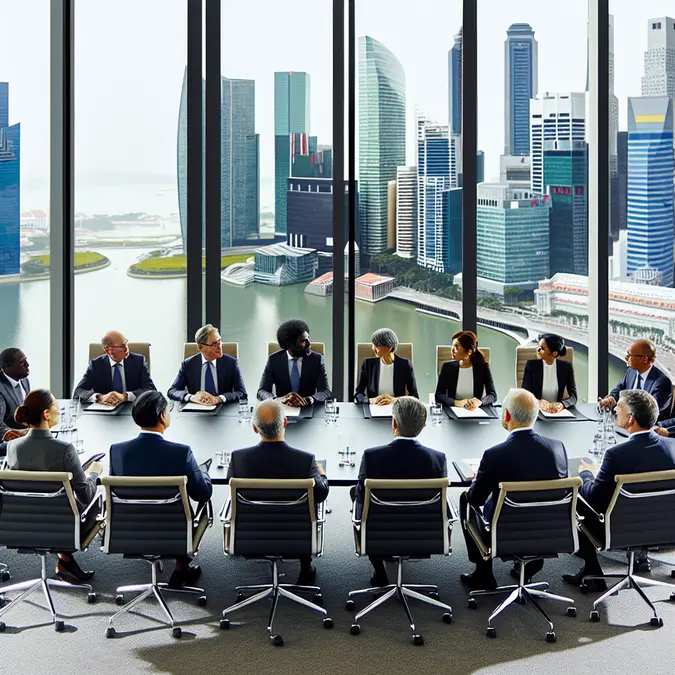
Multinational corporations represent another category of global investors. Rather than portfolio flows, their commitment is reflected in bricks, mortar, and people. Many are establishing or upgrading regional headquarters in Gulf cities to coordinate operations across the wider Middle East and Africa.
This trend is supported by competitive incentives and regulatory frameworks. Governments vie to attract corporate regional hubs by offering tax advantages, streamlined licensing, and access to decision-makers. For the companies themselves, basing operations in the Gulf offers connectivity, talent pools, and a perception of stability compared with some neighboring markets.
Readers interested in how these shifts intersect with financial innovation and new business models can explore more perspectives via our coverage under Finance, where investment strategy and capital markets trends are closely tracked.
What global investors will watch next
Looking ahead, the sustainability of inflows will depend on how the region manages several key transition points. Global investors are watching at least four themes very closely.
- Energy transition: How GCC hydrocarbons power today’s budgets while funding tomorrow’s low-carbon technologies will shape credit ratings, growth, and climate risk perceptions.
- Reform follow-through: Announced reforms must keep progressing into implementation, especially around labor markets, transparency, and dispute resolution.
- Geopolitical diplomacy: Efforts to de-escalate tensions and increase regional cooperation will influence risk premia demanded by investors.
- Human capital and innovation: Education, skills, and research ecosystems will determine whether the Gulf can move higher up the global value chain.
In the calculus of institutional capital, sustained reform and credible long-term planning can matter more than short-term volatility. The Gulf’s challenge is to keep proving that its transformation story is real – not just rhetorical.
For now, the verdict from surveys, bank research, and capital flows is clear: despite regional tensions, global investors are not turning away from the Gulf. On the contrary, they are integrating the region more deeply into their strategic portfolios – a powerful vote of confidence in the GCC’s evolving economic model.
As this dynamic continues to unfold, global investors will likely remain central players in financing the Gulf’s next chapter, from green energy and advanced manufacturing to digital infrastructure and creative industries.