
 0
0
 0
0
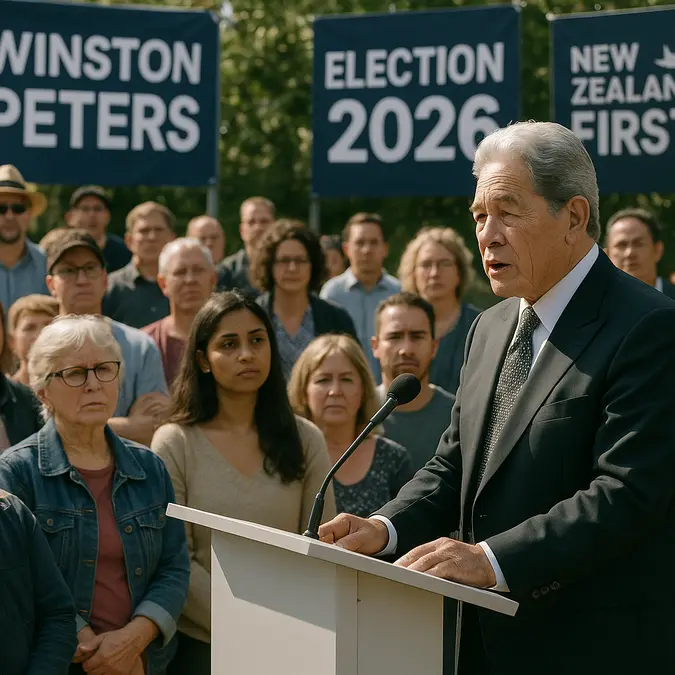
www.tnsmi-cmag.com – Election 2026 in New Zealand is already taking shape as a defining contest, with NZ First veteran Ron Mark returning to the party and leader Winston Peters floating a headline-grabbing NZ$45,000 grant for parents with three children. These moves signal a deliberate effort to reset the political narrative around family support, demographic decline, and the balance of power in Wellington long before voters head to the polls.
The announcement, first reported by the New Zealand Herald, is more than a personnel change and a policy teaser. It opens a window into how minor parties intend to leverage social policy to regain relevance after a volatile decade in New Zealand politics.
Election 2026 and the Return of Ron Mark to NZ First
As Election 2026 approaches, the return of Ron Mark to NZ First stands out as a strategically timed development. Mark, who first entered Parliament in 1996 and later served as Defence Minister in the Labour–NZ First–Greens coalition (2017–2020), brings experience, regional credibility and a proven constituency vote base back into Winston Peters’ orbit.
Mark is widely recognised in New Zealand political circles for his defence portfolio work and for his strong advocacy for the armed forces. His career has included stints as an MP, a mayor, and a prominent regional figure. According to his public record and biographies summarised on Wikipedia, he has often positioned himself as a straight-talking, socially conservative voice with a pragmatic streak on economic issues.
For NZ First, which has historically hovered around or just above the 5% threshold in mixed-member proportional (MMP) elections, his return could be critical. The party’s survival in recent cycles has relied on strong personalities, disciplined messaging, and carefully targeted appeals to older voters, regional communities and those sceptical of major-party dominance.
Readers can explore broader context about coalition dynamics and minor party influence in our deeper coverage on Politics, where we examine how electoral thresholds and list/constituency splits shape long-term strategy.
Election 2026: Winston Peters’ NZ$45,000 Grant for Parents with Three Children
Alongside Ron Mark’s high-profile return, Winston Peters has floated a bold social policy proposal: a NZ$45,000 grant for parents who have three children. Details remain limited at this early stage, but the direction is clear. NZ First is choosing to enter the Election 2026 cycle by anchoring itself in debates about family formation, cost of living, and population growth.
Election 2026 and the Demographic Argument Behind the Grant
New Zealand, like many advanced economies, is confronting a combination of ageing demographics and falling fertility rates. According to data consistently highlighted by global institutions such as the World Bank, the country’s total fertility rate has trended downward for years, mirroring patterns in Europe and parts of East Asia.
By proposing a NZ$45,000 grant tied to having three children, Peters is intervening directly in this demographic conversation. The implicit message: New Zealand’s long-term economic and social stability will depend on encouraging larger families, and the state should help shoulder the financial burden.
- Scale of the promise: NZ$45,000 is substantial in the context of family budgets, particularly for lower and middle-income households already struggling with housing, childcare, and education costs.
- Symbolic politics: The figure also serves as a symbol of priority. It signals that NZ First wants to be known in Election 2026 not just for immigration and regional issues, but for explicit pro-family economic support.
- Policy questions: Key questions will revolve around eligibility (citizens vs residents), payment structure (lump sum vs staged), and interaction with existing benefits and tax credits.
Furthermore, this proposal could be read as part of a wider global trend in which governments consider direct financial incentives to nudge fertility. Countries such as Hungary and France have experimented with enhanced family benefits, tax breaks, and housing subsidies for parents with multiple children. New Zealand First now appears keen to place such ideas onto the domestic agenda in Election 2026.
How Election 2026 Is Being Shaped by Economic Anxiety and Cost of Living
To understand why a NZ$45,000 grant might resonate with some voters, we must locate it within the broader economic mood ahead of Election 2026. New Zealand households face persistent cost-of-living pressures: high housing costs, elevated interest rates after a tightening cycle, and ongoing food and energy price volatility.
These pressures have deep political consequences. In successive elections, cost of living has ranked at or near the top of voter concerns in surveys. A direct payment tied to family size is therefore not just a demographic tool; it is a response to this entrenched financial stress. For NZ First, it is a way to offer a tangible benefit while positioning itself as a champion of “ordinary” families.
Contrary to popular belief, targeted grants often have as much symbolic power as economic impact. They tell voters who is valued and which lifestyles the political system seeks to reward.
Still, that symbolism cuts both ways. A targeted grant for families with three children may raise concerns about fairness and inclusivity among smaller families, older voters without children, or single individuals who also struggle with living costs.
Ron Mark’s Role in the Election 2026 Strategy
Ron Mark’s return gives NZ First more than just name recognition ahead of Election 2026. It also gives the party another seasoned operator capable of explaining and defending complex or controversial policies in front of a sceptical press.
Mark’s previous role as Defence Minister showcased his ability to navigate big-budget portfolios, balance strategic priorities, and communicate with both bureaucrats and the public. That experience will be vital if NZ First moves beyond broad-brush announcements and begins to release detailed costings and implementation pathways for the NZ$45,000 family grant.
Moreover, Mark has a track record of retail politics—public meetings, local media, and on-the-ground campaigning. In an Election 2026 environment likely to be fiercely contested across regional electorates, that skillset may prove decisive in attracting list votes and possibly reclaiming an electorate seat.
As we have explored in our coverage of Economy, long-term fiscal sustainability and social spending are moving back to the centre of New Zealand’s political debate. A figure like Mark can help bridge the gap between ambitious promises and fiscal credibility, a tension that all minor parties must manage if they hope to participate in governing coalitions.
Coalition Arithmetic and Election 2026
Under New Zealand’s MMP system, minor parties like NZ First often play kingmaker. Winston Peters has built an entire political career on this leverage, having partnered with both National and Labour at different points. As Election 2026 approaches, any sign that NZ First is consolidating its base and refreshing its talent will prompt recalculations within the major parties.
Election 2026 Scenarios: Where Could NZ First Fit?
Several plausible scenarios emerge when we consider current polling trends and historical patterns:
- Threshold survival: If NZ First again sits near the 5% mark, the party’s policy profile—including the NZ$45,000 grant—will be crucial in mobilising enough support to cross the line.
- Balance-of-power role: In a tight Election 2026, a few percentage points for NZ First could decide whether National or Labour forms the next government, potentially giving Peters and Mark leverage to insert family policy into coalition agreements.
- Policy bargaining chips: Even if the precise NZ$45,000 figure does not survive coalition negotiations, the idea of enhanced support for larger families could reappear as tax credits, childcare subsidies or housing support packages.
Historically, coalition agreements in New Zealand have been vehicles for minor parties to secure signature policies—whether in transport, regional development, or social programmes. Given that background, the family grant looks less like an isolated promise and more like an opening bid in a complex negotiation that will continue well beyond election night.
Fiscal and Policy Challenges of a NZ$45,000 Family Grant
Ambitious promises inevitably draw scrutiny. By the time Election 2026 campaigns enter full swing, economists, think tanks and civil society groups will likely interrogate the cost, targeting, and long-term impacts of the NZ$45,000 grant proposal.
Key questions include:
- Total fiscal cost: How many families would qualify each year? Over a decade, would this policy cost hundreds of millions or several billions of dollars?
- Design and timing: Would the grant be paid after the birth of the third child, or phased over time? Would it be means-tested?
- Interaction with other benefits: Could the grant inadvertently penalise some families by affecting eligibility for existing welfare payments or tax credits?
- Outcomes vs intentions: International evidence is mixed on whether financial incentives alone significantly raise fertility rates, especially in societies where housing and work-life balance present major structural barriers.
From an editorial perspective, readers should pay close attention not only to the promise, but to how rigorously it is costed and debated ahead of Election 2026. Robust independent analysis, including from New Zealand’s Parliamentary Budget Office and academic economists, will be essential to separating political theatre from implementable policy.
What Election 2026 Reveals About New Zealand’s Political Priorities
The early contours of Election 2026 already indicate a shift in emphasis. After years dominated by pandemic response, border controls and emergency spending, the conversation is turning toward enduring structural questions: demographic trends, intergenerational equity, and how the state supports families across the income spectrum.
By centring a large family grant and bringing Ron Mark back into the fold, NZ First is betting that a significant slice of the electorate wants a politics that explicitly rewards traditional family structures and responds to anxieties about national decline. Other parties will respond in different ways—through childcare reforms, housing supply measures, or targeted tax relief—but they will not be able to ignore the demographic and cost-of-living frames that Peters is amplifying.
For engaged readers, the task ahead of Election 2026 is to look beyond slogans. Which proposals meaningfully ease cost pressures on households without compromising fiscal stability? Which policies recognise diverse family forms and uphold social cohesion? And which announcements are primarily designed to dominate headlines rather than reshape lives?
Conclusion: Election 2026 as a Test of Policy Depth and Political Memory
Election 2026 will test both the institutional memory of New Zealand politics and its capacity for renewal. The return of Ron Mark underlines how enduring personalities and long-running parties continue to shape outcomes in an MMP environment. Winston Peters’ NZ$45,000 grant proposal, meanwhile, illustrates how bold, attention-grabbing ideas can rapidly reset the national agenda around families and demographics.
As voters and observers, we should welcome detailed debate over these proposals—demanding clear costings, transparent assumptions, and honest discussion about trade-offs. Whether or not NZ First’s ideas survive coalition negotiations, Election 2026 is poised to redefine how New Zealand thinks about supporting families, managing demographic change, and balancing immediate relief with long-term fiscal responsibility.
In that sense, Election 2026 is not only another date on the electoral calendar; it is a critical referendum on what kind of social contract New Zealanders want for the next generation—and what they are prepared to invest to secure it.