
 0
0
 0
0
www.tnsmi-cmag.com – Active ageing in India is no longer a niche idea; it is rapidly becoming a defining megatrend as life expectancy rises, families evolve, and older adults demand more meaningful, productive, and healthier lives after retirement.
Active Ageing in India: From Quiet Retirement to a New Life Stage
For decades, retirement in India meant stepping back, slowing down, and often withdrawing from public life. That narrative is changing dramatically. With improving healthcare, rising incomes in urban centers, and growing awareness about mental and physical well-being, active ageing in India is emerging as a powerful social and economic force.
According to the Aging of India overview, India’s elderly population (60+ years) is projected to reach over 300 million by 2050. This demographic shift brings both challenges and opportunities. On one hand, policymakers and families must plan for financial security, healthcare, and social care. On the other, a large cohort of experienced, educated, and healthier-than-ever seniors is redefining what it means to grow old in the world’s largest democracy.
Furthermore, readers will notice that this shift does not happen in isolation. It intersects with changes in work patterns, women’s employment, urbanization, and digital inclusion. For a deeper look at related socio-economic trends, our coverage in Economy and Health offers complementary insights.
Why Active Ageing in India Matters Now
Active ageing in India matters for three core reasons: demographics, economics, and dignity. Let’s unpack each of these dimensions.
Demographic transformation and longevity
India is often portrayed as a “young country,” but that label can obscure a quieter trend: Indians are living longer. Improvements in public health, vaccination, and disease management have increased life expectancy considerably over the past few decades. As the post-liberalization generation approaches its 60s and 70s, the country will experience a steep rise in the number of seniors who are relatively healthier, better educated, and more financially aware than previous generations.
This longevity dividend, however, can turn into a burden if older adults are seen only as dependents. Active ageing reframes them as contributors—socially, intellectually, and economically.
Economic implications: Seniors as producers, not just consumers
Contrary to outdated stereotypes, many older adults want to remain in the workforce—formal or informal—beyond the traditional retirement age of 58–60. Their motivations range from financial necessity to personal fulfillment and social engagement.
- Second careers: Retired professionals are launching consulting practices, teaching part-time, mentoring startups, or taking on advisory roles.
- Gig and flexible work: The rise of digital platforms has opened new avenues for flexible, project-based work even for seniors.
- Entrepreneurship: Some retirees are starting small businesses in sectors like education, wellness, tourism, and local services.
From a macroeconomic standpoint, keeping older adults economically engaged helps reduce the pressure on pensions and family transfers while enriching the labor market with experience and institutional memory. According to multiple analyses compiled by organizations such as the World Health Organization, active ageing is closely linked to better health outcomes and reduced healthcare costs.
Dignity, identity, and mental health
The psychological dimension of active ageing in India is profound. Retirement often triggers an identity crisis, particularly for individuals whose social status and self-esteem are tied to their professional roles. Active ageing offers an alternative narrative: retirement as a transition to a new, purpose-driven phase of life.
Retirement is no longer an exit; it is a pivot—towards contribution, creativity, and community.
Mental health among seniors benefits when they remain engaged in meaningful activities—be it work, volunteering, caregiving, or learning. Isolation and loneliness, especially in urban nuclear families, have become significant concerns. Active ageing frameworks directly address these risks by encouraging regular social interaction, structured routines, and continued learning.
Seven Essential Shifts Driving Active Ageing in India
To understand the rise of active ageing in India, readers should focus on seven critical shifts reshaping retirement and later life.
1. From dependency to autonomy
Traditional Indian family structures emphasized filial responsibility: children would care for parents in old age. While this value endures, the reality is more complex. Urban migration, dual-income households, and smaller family sizes mean older adults cannot always rely on continuous family support.
This has triggered a movement towards financial and lifestyle autonomy among seniors:
- Greater emphasis on retirement planning and pension products.
- Investments in health insurance and long-term care coverage.
- Choosing independent or assisted-living arrangements over multigenerational households when necessary.
Active ageing, in this context, is about staying in control—of finances, daily routines, and long-term goals.
2. Work as choice, not obligation
For a growing segment of India’s middle-class and professional retirees, continued work is increasingly a matter of choice rather than survival. Many choose to:
- Return to their industries in mentoring or advisory roles.
- Join non-profits and social enterprises where their expertise has direct community impact.
- Engage in part-time teaching at universities, training institutes, or online platforms.
These pathways support active ageing in India by integrating seniors into the knowledge economy and extending their sense of relevance and purpose.
3. Health from illness-care to wellness-care
Healthcare for older adults in India has historically been reactive—focused on treating illness. The active ageing model promotes a proactive, preventive approach:
- Regular screenings for chronic conditions like diabetes, hypertension, and heart disease.
- Structured exercise programs—including yoga, walking clubs, and strength training.
- Nutrition counselling tailored to age-related needs.
- Mental health support and cognitive training to reduce the risk of depression and dementia.
Readers will see more hospitals, wellness centers, and digital health platforms designing customized programs for seniors. This wellness-first mindset aligns with global best practices and helps keep older adults independent for longer.
4. Digital inclusion as a lifeline
Digital literacy has become a crucial enabler of active ageing in India. The pandemic accelerated this trend as seniors turned to smartphones and laptops for:
- Telemedicine consultations.
- Digital payments and banking.
- Online learning courses and webinars.
- Video calls with family and social groups.
NGOs, community groups, and even resident welfare associations are organizing basic digital training sessions for older adults. When seniors become comfortable with technology, they gain access to information, services, and social networks that dramatically improve quality of life.
5. New living arrangements and communities
Another visible marker of active ageing in India is the rise of senior living communities and retirement townships. These are not simply old-age homes; they are lifestyle-driven environments designed for active, independent seniors:
- Planned campuses with medical support, recreation, and security.
- Clubs and activities—from book circles to hobby workshops and travel groups.
- Shared spaces that encourage friendships and community participation.
Some developments are targeted at affluent retirees, while others aim to serve middle-income groups through cooperative or public–private models. The common denominator is the recognition that social interaction and supportive environments are central to healthy ageing.
6. Lifelong learning and intellectual engagement
Education does not need to stop at 60. Universities of the Third Age, community colleges, and online learning platforms are beginning to see older learners as a distinct audience. Many seniors now enroll in courses spanning:
- Languages and literature.
- Technology and digital skills.
- Art, music, and creative writing.
- Entrepreneurship and management.
This culture of lifelong learning is integral to active ageing in India because it keeps cognitive functions sharp, fosters curiosity, and opens new social networks.
7. Policy attention and institutional support
Government and institutional frameworks are slowly catching up with the demographic realities. Policies on pensions, healthcare access, age-friendly infrastructure, and workplace equality are being debated and refined. While implementation remains uneven, the direction is clear: ageing is moving from the margins to the mainstream of India’s policy agenda.
For readers tracking these changes, ongoing coverage in our economy and governance verticals on TNSMI CMAG will be vital to understand the long-term implications.
Challenges on the Road to Active Ageing in India
Despite encouraging trends, several structural challenges could slow the progress of active ageing in India if left unaddressed.
Persistent inequality among older adults
The benefits of active ageing are not evenly distributed. Rural seniors, informal-sector workers, and older adults without savings or land face far greater vulnerability. Social security coverage is limited, and many depend entirely on family support or irregular income.
Designing inclusive models—such as community-based elder care, subsidized health insurance, and targeted pension schemes—will be crucial to ensure that active ageing does not become a privilege reserved only for the urban middle and upper classes.
Healthcare gaps and ageism
India’s healthcare system still struggles with accessibility and affordability, especially for geriatric care. Specialized training in gerontology and geriatric medicine remains limited. At the same time, social biases—ageism in workplaces, dismissive attitudes toward older patients, and stereotypes in media—can undermine the confidence and participation of seniors.
To truly embed active ageing in India, health systems must prioritize senior-friendly services, and employers must recognize the value of older workers’ experience.
Urban design and mobility
Age-friendly cities require thoughtful urban planning: barrier-free public spaces, accessible transport, safe pedestrian infrastructure, and proximity to essential services. Many Indian cities are still far from this ideal. Poor pavements, overcrowded public transport, and long travel distances can discourage older adults from stepping out and staying active.
Integrating universal design principles into city planning would not only help seniors but also benefit people with disabilities, children, and caregivers—making urban India more inclusive overall.
Strategies to Strengthen Active Ageing in India
Given the scale of demographic change, how can India accelerate and broaden the benefits of active ageing? Several practical strategies stand out.
Empowering seniors through financial literacy
Financial education tailored to pre-retirees and retirees can make a significant difference. Workshops on pension planning, insurance, estate planning, fraud prevention, and digital banking empower seniors to make informed decisions and avoid exploitation.
Banks, mutual fund houses, and insurance companies are well-positioned to partner with civil society to deliver such programs at scale.
Creating age-friendly workplaces and second-career pathways
Employers can design flexible roles that leverage the strengths of older professionals:
- Part-time schedules and consulting roles.
- Mentoring programs for younger employees.
- Short-term project assignments where deep expertise is critical.
Such initiatives do more than support individuals; they build intergenerational collaboration and preserve institutional knowledge.
Scaling community-based health and wellness programs
Local governments, resident associations, and NGOs can play an outsized role in promoting health-focused active ageing in India:
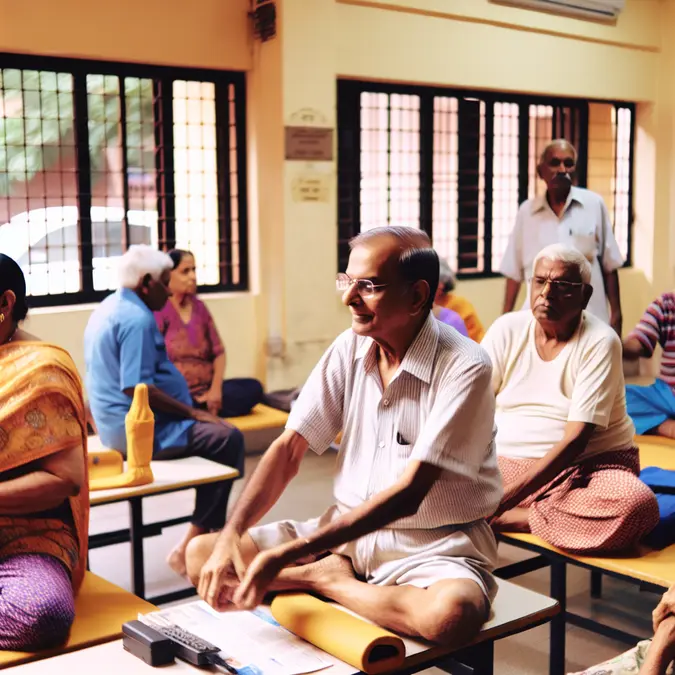
- Organizing regular fitness, yoga, or walking groups for seniors.
- Hosting mental health awareness sessions specifically for older adults.
- Facilitating telehealth kiosks in communities with limited medical facilities.
These low-cost interventions have high impact and can be replicated across both urban and semi-urban regions.
The Cultural Reframing of Retirement
Ultimately, active ageing in India is about more than policies and programs; it is about culture. How families, media, institutions, and seniors themselves imagine old age will determine whether the next decades are marked by disengagement or dynamism.
We are already seeing early signs of this cultural reframe:
- Films and series showcasing older protagonists with complex, active lives.
- Books and memoirs written by seniors about their second innings.
- Social media communities where older adults share fitness journeys, travel experiences, and entrepreneurial ventures.
These stories matter because they normalize an expanded, optimistic view of later life.
Conclusion: Active Ageing in India and the Future of Retirement
Active ageing in India represents one of the most consequential social transformations of the 21st century for the country. As millions of Indians enter their 60s and beyond, the question is no longer whether this shift will occur, but how inclusive and sustainable it will be. If policymakers, businesses, communities, and families work together to support health, autonomy, and continued participation, retirement can evolve from an endpoint into a powerful new chapter—one defined by productivity, purpose, and dignity for India’s seniors.