
 0
0
 0
0
www.tnsmi-cmag.com – Industrial Technology World Asia Vietnam 2026 is rapidly shaping up to be one of the most strategically important trade shows for manufacturers across ASEAN and beyond, as booths fill fast and Vietnam cements its role as a premier alternative in global supply chains. Early 2026 data showing a 22.2% year-on-year surge in industrial activity underscores how quickly the country is stepping into a leadership position in regional manufacturing.
Industrial Technology World Asia Vietnam 2026 and the ASEAN Manufacturing Moment
The story behind Industrial Technology World Asia Vietnam 2026 is not just about another industry expo. It reflects a deeper structural shift: multinational manufacturers are diversifying away from single-country dependency and building new regional bases in Southeast Asia. Vietnam, in particular, has become one of the world’s fastest-growing manufacturing hubs, benefiting from competitive labor costs, improving infrastructure, and a pro-industry policy framework.
According to recent analyses by institutions such as the World Bank, Vietnam’s manufacturing sector has become a key driver of GDP growth, especially in electronics, textiles, and machinery. The 22.2% year-on-year industrial increase reported in early 2026 is not an anomaly. It is the latest data point in a multi-year trend of robust expansion, fueled by relocation of production from China and a wave of new foreign direct investment.
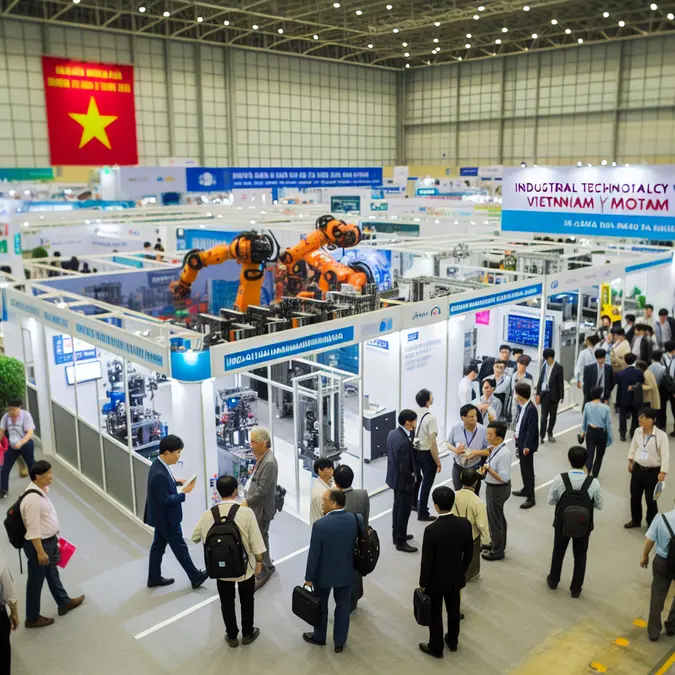
Against this backdrop, Industrial Technology World Asia Vietnam 2026 aims to serve as a central meeting point where technology providers, factory owners, system integrators, and policymakers can align around the next phase of industrial modernization in ASEAN. The surge in booth reservations signals strong confidence from global suppliers of automation, robotics, smart factory solutions, and industrial software who see Vietnam and its neighbors as the next long-term growth market.
Why Industrial Technology World Asia Vietnam 2026 Matters for Global Supply Chains
To understand the significance of Industrial Technology World Asia Vietnam 2026, we need to look at the pressures reshaping global supply chains. From pandemic disruptions to geopolitical tensions and rising labor costs in established manufacturing centers, decision-makers are actively rebalancing production footprints. Southeast Asia stands out as a key beneficiary of this rebalancing.
Vietnam’s emergence as a manufacturing powerhouse is part of a wider ASEAN story. Countries including Thailand, Indonesia, and Malaysia are also competing to attract investment in electronics, automotive parts, packaging, and advanced materials. What differentiates Vietnam is its combination of relatively low costs, political stability, participation in multiple free trade agreements, and a track record of executing large-scale export-led growth.
Events like Industrial Technology World Asia Vietnam 2026 accelerate this transition in three fundamental ways:
- Technology transfer: International exhibitors bring cutting-edge machinery, automation platforms, and digital tools that local manufacturers can evaluate and adopt.
- Network building: Buyers, suppliers, logistics providers, and investors meet face-to-face, shortening decision cycles and enabling cross-border partnerships.
- Policy alignment: Government agencies and industry associations use the event to showcase incentives, regulatory updates, and national strategies for industry 4.0.
For readers of Industry Insight, this convergence of technology, capital, and policy at a single venue makes Industrial Technology World Asia Vietnam 2026 a barometer for where regional manufacturing is heading over the next decade.
7 Critical Insights Shaping Industrial Technology World Asia Vietnam 2026
Booths filling quickly is the headline, but the deeper story lies in the themes driving interest in Industrial Technology World Asia Vietnam 2026. Let’s dive deeper into seven critical insights that will define the show and the broader ASEAN manufacturing boom.
1. Industrial Technology World Asia Vietnam 2026 and the Shift from Low-Cost to Smart Manufacturing
Contrary to the outdated narrative that Southeast Asia is only about low-cost labor, Vietnam is moving quickly into higher-value manufacturing. Companies in electronics assembly, automotive components, and precision engineering are investing in automation and digitalization to boost yields and meet global quality standards.
Industrial Technology World Asia Vietnam 2026 is expected to spotlight:
- Robotics and cobots for assembly, welding, and material handling.
- Industrial Internet of Things (IIoT) platforms for real-time monitoring.
- Manufacturing Execution Systems (MES) and advanced planning software.
This shift from purely cost-driven production to technology-enabled competitiveness is vital for ASEAN economies seeking to escape the middle-income trap. It also opens new opportunities for solution providers that can localize their offerings to the region’s specific needs.
2. Supply Chain Diversification and “China+1” Strategies
One of the most powerful forces drawing global attention to Industrial Technology World Asia Vietnam 2026 is the ongoing “China+1” strategy adopted by many multinational corporations. Instead of exiting China, they are adding alternative production bases in countries like Vietnam to mitigate risk and enhance resilience.
Research by organizations such as McKinsey & Company indicates that up to a quarter of global goods exports could shift to new locations over the coming years. Vietnam is already capturing a significant share of this flow, particularly in consumer electronics and apparel. Exhibitors at the show see this as a structural, not temporary, trend.
As supply chain executives walk the aisles of Industrial Technology World Asia Vietnam 2026, they will be evaluating which technologies can make new factories productive from day one, how to localize supplier networks, and what level of automation is required to offset wage inflation over the medium term.
3. Green Manufacturing and Energy Efficiency in Focus
Sustainability is no longer a peripheral topic; it is becoming a core selection criterion for where and how products are made. Global brands face increasing pressure from regulators, investors, and consumers to reduce carbon footprints and prove ethical sourcing.
We can expect Industrial Technology World Asia Vietnam 2026 to highlight energy-efficient machinery, low-emission industrial processes, and smart energy management systems designed for factories. For Vietnam, which is grappling with energy transition challenges and infrastructure bottlenecks, more efficient production technologies are not only good for the environment but also essential for long-term competitiveness.
Manufacturers attending the show will be asking practical questions: Which compressed air systems consume less energy? How can we optimize cooling and HVAC in tropical climates? What kind of data is needed to document emissions reductions for export markets? Exhibitors who can answer these questions convincingly are likely to see strong demand.
4. Digital Skills and Workforce Transformation
Technology adoption is only as successful as the workforce that operates it. One often overlooked dimension of Industrial Technology World Asia Vietnam 2026 is the role of training, upskilling, and human–machine collaboration.
As factories in Vietnam integrate robots, AI-based quality inspection, and cloud-connected monitoring systems, they need technicians, engineers, and line workers who understand both the physical equipment and the underlying software. Organizers and exhibitors are increasingly building training modules, live demonstrations, and knowledge-sharing sessions into the show’s agenda.
In the new industrial landscape, the most valuable factories are not just well-equipped; they are well-skilled. Vietnam’s long-term advantage will hinge on how quickly its workforce can adapt to advanced manufacturing technologies.
This human capital dimension is likely to feature prominently in conference tracks and side events during Industrial Technology World Asia Vietnam 2026, and it will be closely watched by education providers and policy planners.
5. The Rise of Regional Industrial Ecosystems
While Vietnam is at the center of this narrative, Industrial Technology World Asia Vietnam 2026 is very much an ASEAN story. Supply chains rarely stop at national borders. Components may be made in Vietnam, sub-assemblies in Thailand, and final products in Indonesia or exported via Singapore.
The show therefore serves as a platform for building regional industrial ecosystems. Tooling suppliers from Malaysia can meet electronics manufacturers from northern Vietnam. Logistics specialists can design cross-border transport and warehousing solutions. Automation integrators can pitch standardized solutions deployable across multiple factories in several countries.
Readers following our coverage in Manufacturing will recognize this trend as a shift from isolated production zones to networked, multi-country value chains. The conversations at Industrial Technology World Asia Vietnam 2026 will help define which ASEAN hubs specialize in which stages of production.
6. Government Policy, Incentives, and Infrastructure Commitments
Vietnam’s government has been proactive in courting manufacturing investment through industrial parks, tax incentives, and infrastructure expansion. At Industrial Technology World Asia Vietnam 2026, policymakers and investment promotion agencies will likely use the opportunity to publicize new zones, logistics corridors, and digital infrastructure plans.
These policy signals matter to investors weighing multi-million-dollar commitments. When they see strong participation at the show and clear commitments to roads, ports, energy supply, and digital connectivity, it reinforces confidence that Vietnam and its ASEAN neighbors can support complex, high-volume production for the long term.
In parallel, we should expect messaging about regulatory modernization, data protection, and standards harmonization—important for cross-border digital trade and integrated production systems.
7. Competition for Attention: Why Early Booth Demand Is a Telling Signal
The fact that booths for Industrial Technology World Asia Vietnam 2026 are filling fast is not a simple logistical detail; it is a market signal. Technology suppliers and service providers are effectively voting with their budgets, prioritizing this event over other opportunities worldwide.
Exhibitors understand that the next wave of factory investments in ASEAN will set standards and vendor relationships for years to come. Getting in front of decision-makers early—while they are still designing plants, specifying equipment, and planning digital architectures—can determine which brands and platforms become entrenched in the region’s industrial base.
For buyers, the dense concentration of exhibitors means they can survey global options in a single trip, benchmark competing technologies side-by-side, and negotiate favorable terms. This mutual intensity of interest is precisely why early booth uptake at Industrial Technology World Asia Vietnam 2026 is such a strong indicator of momentum in the ASEAN manufacturing boom.
Strategic Takeaways for Manufacturers and Investors
For manufacturers already operating in ASEAN, attending Industrial Technology World Asia Vietnam 2026 is less about trend-spotting and more about execution. The technologies on display—automation, analytics, energy management, and smart logistics—can directly address pain points such as labor shortages, quality variability, and rising input costs.
For investors and supply chain strategists, the show provides a real-time snapshot of where capital, technology, and talent are converging. By observing which technologies receive the most attention, which country pavilions are most active, and which sectors dominate the agenda, they can infer where the next growth clusters are likely to emerge.
Furthermore, the event offers a reality check against narratives that may be overly optimistic or pessimistic. On the ground, conversations with factory owners, equipment suppliers, and logistics operators reveal the practical constraints: land availability, power supply reliability, customs procedures, and local supplier capabilities. These insights help refine risk assessments and investment theses.
Conclusion: Industrial Technology World Asia Vietnam 2026 as a Barometer of ASEAN’s Industrial Future
As global supply chains continue to recalibrate, Industrial Technology World Asia Vietnam 2026 stands out as a critical barometer of how far and how fast ASEAN can climb the manufacturing value chain. Vietnam’s 22.2% year-on-year industrial surge sets the stage, but it is the strategic choices—about automation, sustainability, workforce skills, and regional integration—made at events like this that will determine the region’s long-term trajectory.
For readers, the message is clear: monitor Industrial Technology World Asia Vietnam 2026 not just as a trade show, but as a window into the evolving architecture of global production. The pace at which booths sell out, the types of technologies showcased, and the partnerships forged on the exhibition floor will all offer valuable clues about where the next decade of industrial growth will be anchored, and how ASEAN can secure its place as a resilient, technologically advanced manufacturing hub.