
 0
0
 0
0
www.tnsmi-cmag.com – The life and work of the late Australian republic campaigner Peter Consandine offer a rare, long-view window into one of Australia’s most enduring constitutional debates: whether a vibrant, independent nation should still share a foreign monarch as head of state.
Australian republic campaigner: Why Peter Consandine’s story matters now
For more than four decades, Peter Consandine stood at the front lines of Australian republicanism. While high-profile figures often dominated headlines during flashpoints such as the 1999 referendum, Consandine embodied a different, often under-reported dimension of the movement: the relentless grassroots organizer who believes national identity and constitutional structures must align.
According to historians of Australian political culture, republican ideas have circulated since colonial times, surfacing in eras of economic hardship, wartime sacrifice, and cultural self-assertion. Consandine tapped into this long tradition but updated it for modern Australia: multicultural, Asia-focused, and increasingly uncomfortable with the symbolic and practical implications of a British monarch at its apex.
His conviction was simple but profound: Australia is a unique, self-confident nation that deserves its own head of state—someone drawn from, and answerable to, the Australian people. From this belief flowed an entire life’s work of advocacy, campaigning, and education.
The long arc of Australian republicanism
To understand why an Australian republic campaigner like Consandine mattered, we must situate him within the broader history of republican thought in Australia. Republican sentiment is not a late-20th-century novelty; it has roots stretching back to the 19th century, when some colonists questioned the logic of distant imperial rule and called for fuller political autonomy.
By Federation in 1901, Australia became a self-governing dominion, yet it retained the British monarch as sovereign. Over time, as Australia fought in two world wars, endured economic shocks, and crafted its own cultural identity, the symbolic tie to the Crown began to feel increasingly anachronistic to many citizens. The Whitlam dismissal in 1975—where the governor-general, representing the monarch, controversially removed an elected prime minister—sharpened concerns over how vice-regal powers could be used in a constitutional crisis.
Historians and political scientists, including those writing in outlets like the Parliament of Australia, have long noted that such episodes fuelled the argument that an Australian, not a representative of a foreign monarch, should occupy the office of head of state. This is the context from which Consandine emerged as a consistent, sometimes stubborn, voice demanding structural change.
Australian republic campaigner in a monarchy-bound system
An Australian republic campaigner operates within a system that, on the surface, already appears thoroughly democratic. Australia conducts free and fair elections, has a robust party system, and enjoys a high level of civil liberties. Yet beneath this democratic architecture lies a monarchy-based constitutional framework in which ultimate executive authority is vested in the Crown.
Consandine’s core argument took aim at this disconnect. He contended that a democratic nation should not outsource its symbolic sovereignty to a foreign royal family, however benign or ceremonial the role appears. Instead, he believed Australia should evolve into a fully-fledged republic, with a head of state who is unambiguously Australian—chosen by Australians under rules negotiated and endorsed by Australians.
This distinction—between the everyday functioning of democracy and the deeper question of constitutional symbolism—often gets lost in public debate. Consandine repeatedly returned to it, reminding audiences that the question of a republic is not “mere symbolism.” It cuts to how a nation understands its story, its heroes, and its future.
Seven powerful lessons from Peter Consandine’s republican journey
Reflecting on Consandine’s career as an Australian republic campaigner reveals several enduring lessons for readers interested in constitutional reform, political communication, and movement-building.
1. Persistence outlasts political cycles
Consandine’s advocacy spanned more than forty years. Governments changed, referendums came and went, public interest rose and dipped—but his work continued. This kind of persistence is rare in modern politics, which often prizes short-term wins and media cycles.
His example suggests that constitutional change in a stable democracy is a marathon, not a sprint. Public opinion on complex issues tends to shift slowly, requiring sustained education, patient debate, and a willingness to accept partial setbacks without abandoning the core objective.
2. Grassroots organization matters as much as elite endorsement
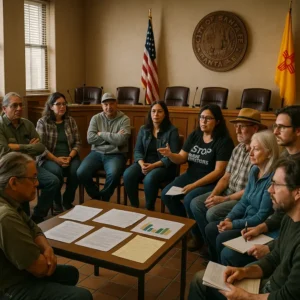
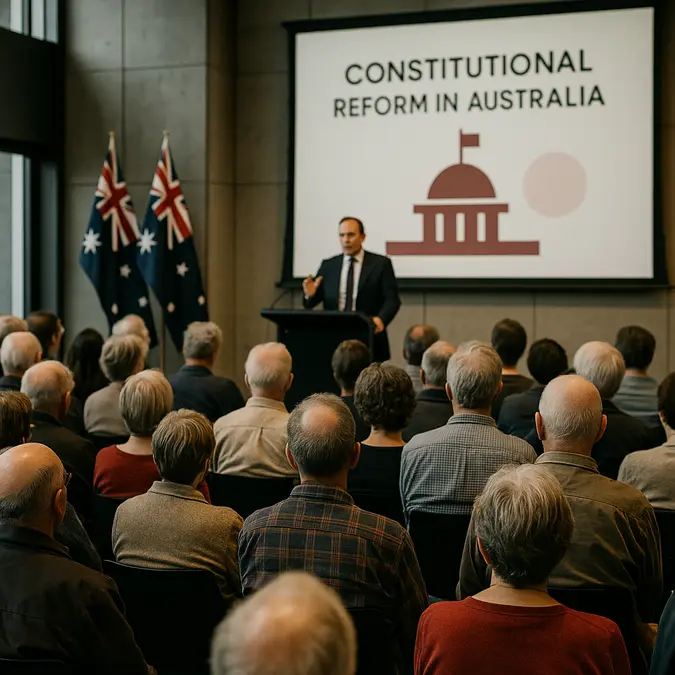
While prominent politicians, jurists, and celebrities played visible roles in republican campaigns, Consandine’s focus often rested at the grassroots level. He attended community meetings, wrote newsletters, organized public forums, and directly engaged citizens who had never read a constitutional law textbook.
In social-movement research, this is the difference between top-down and bottom-up advocacy. Elites can set agendas and attract coverage, but long-term legitimacy grows from community-level engagement. For an Australian republic campaigner, that meant explaining complex constitutional questions in clear language and linking them to everyday concerns about fairness, representation, and national identity.
3. National identity evolves—and campaigns must evolve with it
From the late 20th century onwards, Australia’s population became more diverse, more urban, and more globally connected. Consandine recognized that the old narratives of British heritage no longer resonated with many younger Australians or with citizens from migrant backgrounds who did not share emotional ties to the Crown.
He therefore framed the republic debate as part of a broader conversation about modern Australian identity: inclusive, multicultural, and regionally engaged in the Indo-Pacific. This strategy echoed broader global trends, where debates about monarchy and republicanism increasingly intersect with questions of post-colonial identity and social cohesion. Scholarly overviews, such as those found in Wikipedia’s entry on Republicanism in Australia, highlight how these identity shifts reshape the political calculus.
4. Constitutional literacy is a powerful, underused tool
Many citizens have only a vague understanding of how their constitution functions. Consandine tried to close this gap. He invested time in explaining how the governor-general’s reserve powers operate, why section 128 of the Constitution makes referendums hard to win, and how an Australian head of state might be chosen.
For an Australian republic campaigner, constitutional literacy is not an abstract academic hobby; it is the foundation of informed consent. A change as significant as moving from monarchy to republic must rest on voters who understand both the current system and the proposed alternative. Without that understanding, fear and misinformation can easily dominate referendum campaigns.
5. Defining the model is as important as winning the argument
The 1999 referendum did not simply ask Australians whether they wanted a republic. It asked them to endorse a specific model in which parliament would appoint the president, rather than direct election. Many republicans, including some activists at the time, opposed that model and campaigned for a “No” vote despite backing the ultimate goal of an Australian republic.
Consandine’s career underscores how crucial model design is. An Australian republic campaigner cannot just advocate for a broad concept; they must help shape and test models that balance democratic legitimacy, stability, and constitutional safeguards. The lessons of 1999 continue to inform debates today: should Australians directly elect a president, or should parliament select a largely ceremonial, non-partisan figure?
6. Symbolism and substance work together
Critics sometimes dismiss republicanism as purely symbolic. Yet symbolism has real effects. The head of state represents the nation domestically and abroad, presides over key civic rituals, and embodies the story a country tells about itself.
Consandine argued that symbolism and substance reinforce one another. A constitution that accurately reflects Australia’s independent, multicultural identity can strengthen civic pride and democratic culture. Equally, a symbolic change that leaves core power structures intact may still signal a decisive break with colonial hierarchies. For a serious Australian republic campaigner, both dimensions matter.
7. Civility and principle can coexist in public debate
Throughout his life, Consandine worked alongside, and sometimes in opposition to, people who sincerely believed Australia should retain the constitutional monarchy. While debates could be vigorous, he generally maintained a tone of civility and focused on principle rather than personal attack.
In an age of polarized, social media–driven politics, that style of advocacy is instructive. Major constitutional questions demand robust disagreement but also mutual respect. Reform that emerges from a process seen as fair and civil is more likely to endure, regardless of whether one is a monarchist or an Australian republic campaigner.
Media, message, and the modern republican movement
The media landscape transformed dramatically over the four decades of Consandine’s activism. Early campaigns relied on print leaflets, public rallies, and letters to the editor. By the 1990s, television and talkback radio shaped much of the public discourse. Today, digital platforms and social media dominate.
This evolution created both opportunities and challenges. On one hand, online tools allow an Australian republic campaigner to reach younger audiences, share explainer videos, and coordinate national campaigns with limited resources. On the other hand, digital echo chambers can entrench misinformation and reduce complex constitutional questions to simplistic slogans.
For readers interested in the broader communications dimension, legacy and digital media analysis—such as those explored in public policy publications and in-depth features on sites like Politics—show how framing, timing, and narrative structure can amplify or stifle reform efforts.
Internal fractures and strategic dilemmas
The republican movement itself has never been fully unified. Disagreements over the best path forward—particularly on whether a president should be directly elected or chosen by parliament—have sometimes weakened campaigns. Consandine navigated these fractures, occasionally taking positions that diverged from mainstream republican organizations.
This internal diversity is both a strength and a vulnerability. It demonstrates that republicanism, like any broad political idea, encompasses a spectrum of views. But it also makes it easier for opponents to portray the movement as confused or divided. The strategic challenge for any future Australian republic campaigner will be to foster robust internal debate while presenting a coherent, comprehensible proposal to the public.
Looking ahead: The future of Australia’s head of state debate
The passing of a veteran Australian republic campaigner like Peter Consandine inevitably prompts a forward-looking question: where does the movement go from here? Political leaders have hinted that the issue may re-emerge once current constitutional priorities—such as Indigenous recognition—receive full consideration. Demographic trends suggest that younger Australians are more open to change, particularly as the monarchy itself evolves.
At the same time, the hurdles remain significant. Section 128 requires a double majority—national and state-based—for any constitutional referendum to succeed. Past experience, including the failed 1999 vote, shows how difficult it is to win a national consensus on a detailed constitutional model.
Future campaigns will need to draw deeply on the lessons of Consandine’s life: sustained public education, a clear and democratically credible model, and a tone that respects disagreement while firmly making the case for an Australian head of state. Thoughtful analysis in arenas such as Democracy will likely play an increasing role in shaping informed discussion, ensuring that the debate does not reduce to personality politics or fleeting media controversies.
The enduring legacy of an Australian republic campaigner
Ultimately, Peter Consandine’s greatest contribution may be that he treated the question of a republic not as an elite preoccupation but as a civic conversation that belongs to every citizen. He believed that ordinary Australians, if given clear information and a genuine choice, could decide whether their nation should remain a constitutional monarchy or become a republic with its own head of state.
That faith in the public is itself a deeply republican impulse. It assumes that sovereignty, in both theory and practice, rests with the people—and that the constitution should reflect that reality as clearly as possible. In this sense, Consandine’s work exemplifies what it means to be an engaged, principled Australian republic campaigner in a mature democracy.
Conclusion: Why the Australian republic campaigner legacy still matters
As Australia reflects on the passing of Peter Consandine, it also confronts unresolved questions about identity, sovereignty, and constitutional design. The story of this tireless Australian republic campaigner reminds us that democratic systems are not static; they evolve through patient advocacy, informed debate, and the willingness of citizens to reimagine their institutions. Whether or not Australia ultimately chooses a republic, the arguments Consandine advanced—and the civic education he championed—will continue to shape how Australians think about who should speak for their nation at the highest level. In honoring his legacy, readers are invited to engage with the republic debate on its merits, recognizing that the future of Australia’s head of state is, and always should be, a decision made by Australians themselves.