
 0
0
 0
0
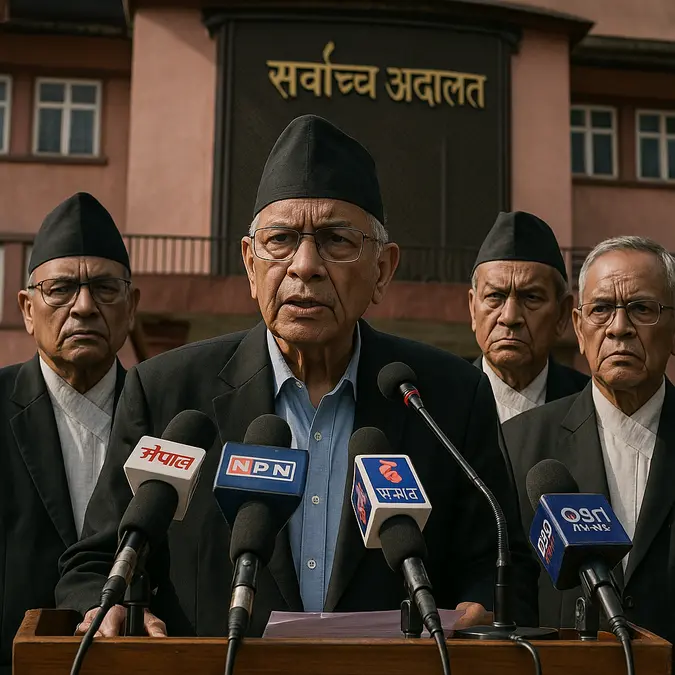
www.tnsmi-cmag.com – The growing debate over a controlled judiciary in Nepal has moved from quiet legal circles into the national spotlight after the Nepal Bar Association publicly protested the Supreme Court administration’s move to transfer key writ petitions through an internal administrative note. For readers who follow the health of democratic institutions, this development is far more than an internal court dispute; it is a stress test of judicial independence in a fragile constitutional democracy.
Controlled Judiciary: What the Nepal Bar’s Protest Really Signals
The controversy began when the Supreme Court administration in Kathmandu reportedly prepared an administrative note to transfer writ petitions challenging a government-formed commission of inquiry to the Constitutional Bench. On its surface, this may look like a technical allocation of cases. But the Nepal Bar Association, the umbrella body of legal professionals, has warned that such a mechanism could pave the way toward a controlled judiciary, where administrative or political pressure erodes the impartial exercise of judicial power.
Why does this matter? In any constitutional system, writ petitions play a pivotal role. They are the instruments citizens, civil society groups, and lawyers use to question the legality of executive decisions, the creation of commissions, and the exercise of public power. When the path these writs take is altered through non-transparent or extra-judicial procedures, trust in the courts can deteriorate rapidly.
Globally, organizations such as the Venice Commission and legal scholars refer to this phenomenon as “judicial capture” or “systemic interference” — tools used by governments to constrain courts without formally abolishing their independence. The Nepal Bar’s warning sits squarely within this global pattern.
Controlled Judiciary in Context: Nepal’s Constitutional Framework
Nepal’s 2015 Constitution envisions a robust separation of powers. The Supreme Court, High Courts, and subordinate courts are meant to act as a check on executive and legislative overreach. The Constitutional Bench, in particular, exists to adjudicate disputes of profound constitutional importance, such as questions about the division of powers, constitutional amendments, and the interpretation of fundamental rights.
Under this framework, the transfer of high-stakes writ petitions to the Constitutional Bench is not inherently problematic. It can, in fact, be appropriate when questions touch core constitutional provisions. The controversy arises from how this transfer is reportedly being attempted — via an administrative note and order from the court’s own bureaucracy rather than through open, judicial reasoning delivered in a court order.
The Nepal Bar Association argues that if administrative officials can determine where politically sensitive writs will be heard, the judiciary risks losing its independent character. The fear is not hypothetical. Numerous comparative experiences, from Poland to Hungary and beyond, show that the erosion of judicial independence often starts with procedural “adjustments” that appear technical but carry profound political consequences.
Controlled Judiciary and the Role of Commissions of Inquiry
The writ petitions at the center of this dispute reportedly challenge a commission of inquiry formed by the government. Commissions of inquiry can be vital instruments for truth-finding, accountability, and public reassurance. Yet history is replete with examples where such commissions have also been used to dilute responsibility or protect political figures from direct legal scrutiny.
In Nepal’s case, the heart of the legal question is whether the government acted within constitutional and statutory limits when it established the commission. When such a commission is challenged, an independent judiciary must be free to examine whether the executive has overstepped its boundaries. If the pathway for these challenges is steered administratively rather than judicially, it feeds the perception — and potentially the reality — of a controlled judiciary.
Seven Critical Warning Signs of a Controlled Judiciary Emerging
While the present controversy in Kathmandu revolves around writ transfers, it also illuminates broader warning signs that readers, policymakers, and legal professionals should watch carefully. Drawing on international standards and comparative examples, we can identify seven critical indicators that a controlled judiciary may be emerging:
- 1. Administrative, Not Judicial, Case Allocation: When clerks, registrars, or administrative officials decide where and how sensitive cases are heard — instead of judges acting transparently — the risk of manipulation rises significantly.
- 2. Centralization of Sensitive Cases: Channeling politically charged or high-profile constitutional cases into a single bench, without clear criteria, can be used to concentrate influence or pressure.
- 3. Informal Instructions and Notes: The reliance on informal notes, internal memos, or unwritten directives inside the court system often escapes public scrutiny and undermines accountability.
- 4. Politicized Appointments and Transfers: While not the central issue in this specific incident, the broader pattern of how judges are appointed, promoted, or transferred greatly affects whether courts can resist external control.
- 5. Retaliation Against Dissenting Lawyers or Judges: If bar associations, public interest litigators, or outspoken judges face harassment or professional consequences, the judiciary becomes more vulnerable to control.
- 6. Erosion of Transparency in Judicial Proceedings: Restrictions on public access to information, sealed orders without adequate reasons, and limited publication of judgments diminish public trust.
- 7. Normalization of Executive Interference: Perhaps the most dangerous sign is psychological — when society begins to accept executive influence over courts as routine or inevitable.
The dispute over writ petition transfers in Nepal touches several of these indicators: administrative case allocation, the use of internal notes, and the potential normalization of executive influence over sensitive disputes.
Why Judicial Independence Matters to Every Citizen
Judicial independence is not an abstract principle reserved for law textbooks. It is the backbone of individual rights, economic stability, and political accountability. When you challenge an unlawful arrest, protest unfair taxation, or contest an arbitrary administrative decision, you rely on judges to decide without fear or favor. A controlled judiciary breaks this promise.
For businesses and investors, predictable and independent courts reduce risk. International agencies regularly cite the rule of law as a key factor in investment decisions. For marginalized communities, independent courts are often the only venue where state power can be checked. If administrative notes can steer sensitive cases toward benches perceived as more deferential, all these constituencies lose.
In the South Asian context, where democratic institutions often carry the scars of political turbulence, the role of the bar is especially vital. The Nepal Bar Association’s statement, warning of the risks of a controlled judiciary, should therefore be read as an institutional alarm, not merely a procedural complaint.
Controlled Judiciary: Legal Community’s Responsibility and Options
The legal community in Nepal and beyond has a range of tools at its disposal to resist the drift toward a controlled judiciary. Bar associations can adopt clear resolutions, demand transparency in case allocation, and request that the Supreme Court publicly clarify the legal basis for any unusual administrative measures. Public interest litigation can challenge opaque practices within the judicial administration itself.
Legal academia and think tanks can play a monitoring role, tracking how many high-profile or politically sensitive cases are shifted through administrative processes and analyzing whether such transfers align with constitutional norms. Regional networks of lawyers, including those in South Asia, can offer comparative insights and solidarity when domestic actors face pressure.
Readers interested in the broader regional implications can explore our analyses under Politics and cross-border governance issues under International Relations, where we regularly examine how institutional checks and balances are evolving.
Transparency, Procedure, and the Path Forward
How, then, can Nepal’s judiciary and legal community respond constructively to concerns about a controlled judiciary?
First, the Supreme Court can reaffirm that any decision to transfer writ petitions to the Constitutional Bench must rest on clear, publicly available criteria grounded in the Constitution and relevant procedural rules. Written judicial orders, rather than internal administrative notes, should explain why a particular case belongs before a particular bench.
Second, the Court’s administrative wing should adopt a transparent case management policy. Many jurisdictions publish case allocation rules and maintain digital case tracking systems that allow litigants and the public to see how files move through the system. This reduces suspicion and demonstrates that no litigant enjoys special treatment.
Third, open dialogue between the judiciary and the bar can ease tensions. While courts must preserve their institutional independence, they also benefit from listening to the profession that appears before them daily. Structured consultations can help identify bottlenecks and clarify misunderstandings before they escalate into public confrontations.
Fourth, civil society and the media have a duty to report accurately and responsibly on such issues. Sensationalism may generate short-term clicks but can undermine the long-term legitimacy of both the courts and the press. Rigorous, evidence-based reporting helps citizens understand why procedural details matter to their daily rights.
Global Lessons on Avoiding a Controlled Judiciary
Comparative experience offers powerful lessons on how to avoid or reverse the slide toward a controlled judiciary. In some democracies, constitutional courts have asserted their autonomy by striking down executive attempts to control case allocation or judicial appointments. In others, sustained pressure from civil society and the bar has forced governments to roll back measures that undermined judicial independence.
International norms, including those promoted by bodies such as the UN Basic Principles on the Independence of the Judiciary, emphasize several recurring themes: security of tenure for judges, transparent appointment processes, freedom from undue administrative interference, and adequate resources to perform judicial functions. Nepal, as a member of the international community, has both moral and practical incentives to align with these principles.
Furthermore, Nepal’s own political history — from monarchical rule to a decade-long conflict and eventual federal democratic republic — underscores why institutional checks matter. Each phase of transition has tested whether courts can stand up to powerful actors. The current debate over administrative notes and writ transfers is simply the latest chapter in this ongoing story.
Conclusion: Guarding Against a Controlled Judiciary in a Fragile Democracy
The Nepal Bar Association’s warning is not a mere legal technicality; it is a call to defend the constitutional promise that courts will remain impartial guardians of the law. When administrative practices around writ petitions appear to tilt sensitive disputes in one direction, the specter of a controlled judiciary looms large. For Nepal and for any democracy navigating political volatility, the lesson is clear: judicial independence lives or dies in the details of everyday procedure.
If the judiciary, the bar, civil society, and the media can work together to ensure transparent case allocation, reasoned judicial orders, and respect for constitutional boundaries, they will not only avert the risk of a controlled judiciary but also strengthen public trust in the rule of law itself. Readers, policymakers, and legal professionals alike should watch this space closely — because the way Nepal resolves this dispute will send a powerful signal about the resilience of its democratic institutions.