
 0
0
 0
0
www.tnsmi-cmag.com – The Valceresio housing crisis is coming into sharp focus in Bisuschio, a small municipality near the Swiss border that now relies on just two municipal apartments and a single newly opened procedure to provide temporary shelter for families without a home in a territory where demand keeps rising.
While the headline story unfolds in a corner of Lombardy, its implications reach far beyond one valley. The situation in Bisuschio and the broader Valceresio area mirrors mounting pressure on affordable housing systems across Italy and much of Europe: growing demand, inadequate public stock, and local authorities scrambling to invent temporary solutions that were never meant to carry the full weight of structural poverty and social exclusion.
Valceresio housing crisis: how a local emergency reveals a national challenge
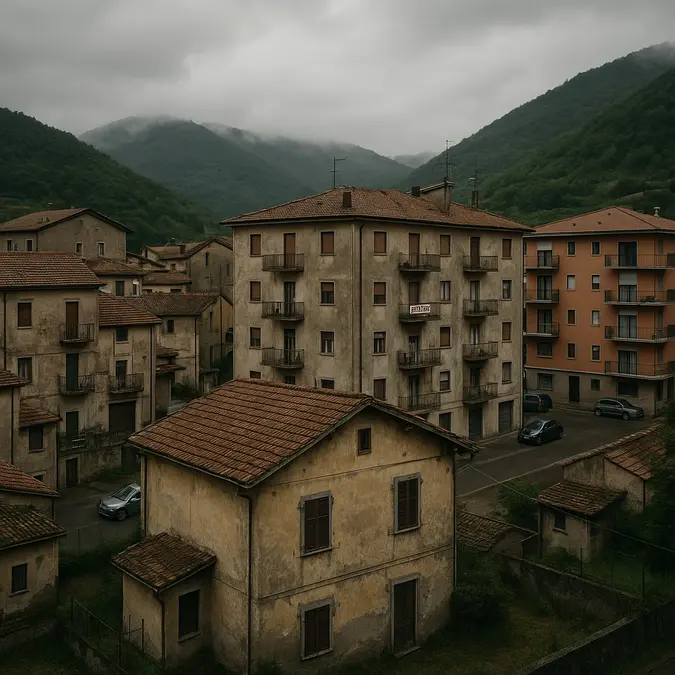
Valceresio is a small, picturesque area in the province of Varese, near the Italian–Swiss border. But behind the postcard scenery, a quieter emergency is unfolding. Municipal authorities in Bisuschio, one of the valley’s key towns, have made just two public apartments available and launched a new procedure to allocate temporary accommodation to unhoused families. This is intended as a short-term answer in a territory where applications for public housing far exceed the units available.
Readers should not underestimate what these dry figures signal. When a municipality talks about “two apartments” and “one procedure,” it is essentially saying that the institutional safety net has shrunk to the point of improvisation. Temporary solutions are standing in for long-term policy. Waiting lists are stretching, and families who lose their homes—often because of job loss, separation, or rising rents—have nowhere stable to go.
According to Eurostat and national statistics agencies, housing cost overburden and the risk of poverty have been trending upward in many regions of Italy over the past decade, particularly in areas where wages remain modest while costs of living, including rents, follow a different trajectory. The global debate on affordable housing helps frame the Valceresio housing crisis as part of a wider pattern: local systems designed for past demographics and economic realities are now struggling to cope with today’s vulnerabilities.
At the same time, cross-border dynamics complicate the picture. Many residents work in nearby Switzerland, where salaries are higher, but so are housing prices. Pressure can spill back into Italian border municipalities as demand for rental homes rises, including from cross-border commuters, investors, or short-term rental platforms. For families already on the margins, this can mean one thing: displacement.
Five critical lessons the Valceresio housing crisis teaches policymakers
The story emerging from Bisuschio and Valceresio offers at least five critical lessons that policymakers, urban planners, and social services across Europe should study closely. Each lesson challenges assumptions about how resilient local housing safety nets really are.
1. The Valceresio housing crisis shows that “temporary” housing is becoming permanent
The new procedure launched by Bisuschio aims to provide temporary shelter to homeless families using a tiny stock of municipal flats. Yet in many European towns, what starts as temporary often drifts into long-term occupancy without a clear path toward stable housing. When only two apartments are available and demand is “in crescita” (growing), the risk is obvious: rotation slows, new emergencies cannot be accommodated, and temporary schemes calcify.
Experts in social housing policy warn against relying too heavily on ad hoc, emergency-oriented tools. Instead, they advocate for clear pathways: from emergency shelter to intermediate housing to stable, long-term accommodation. In practice, this requires predictable investment, regional coordination, and data-driven planning, all of which are often missing in small municipalities caught between tight budgets and strong expectations from residents.
“Temporary housing can only work if it is embedded in a structured continuum of care. Without that, it becomes a holding pattern that serves neither families nor municipalities effectively.”
— Housing policy specialist, commentary based on European practice
2. Small municipalities bear disproportionate responsibility without matching resources
Unlike major metropolitan areas, small towns such as Bisuschio usually manage social housing with very limited administrative capacity. Nevertheless, they face increasingly complex issues: cross-border economic pressures, population ageing, fragmented families, and the wave of precarious employment. The Valceresio housing crisis makes this imbalance visible.
Municipalities are typically the first institutional contact point when a family loses their home. Social workers conduct assessments, search for immediate solutions, and mediate between landlords, regional authorities, and charities. Yet their toolbox is frequently restricted to a handful of apartments, emergency hostel beds, and cooperation with local NGOs. Structural investments—new social housing units, urban regeneration projects, or incentives for landlords to rent at controlled prices—require multi-level coordination that small towns cannot secure alone.
In this sense, Valceresio functions as a microcosm of broader Italian and European challenges. The European Commission, for instance, has repeatedly underlined the need to strengthen local welfare systems while supplying them with financing and know-how. Without such support, municipalities may be forced to “triage” social needs, prioritizing the most dramatic emergencies and leaving many “hidden homeless”—those who sleep on couches, in cars, or with relatives—outside official statistics.
3. Demographic change and cross-border labor intensify the Valceresio housing crisis
Valceresio sits in a border region shaped by migration, commuting, and demographic shifts. Younger workers may leave for cities or for Switzerland, while older residents remain in place, often in under-occupied homes. New families without historic ties to the area face steep entry barriers, especially when rental stock is limited and homeowners prefer long-term, secure tenants.
Furthermore, cross-border employment creates a dual-market effect. Some households can afford higher rents thanks to Swiss salaries, while others are locked into local wage levels that do not match rising housing costs. As a result, displacement falls disproportionately on the least protected segments: single parents, low-wage workers, migrants, and people with disabilities. The Valceresio housing crisis emerges from this uneven playing field, not simply from a lack of physical buildings.
This pattern echoes broader research on housing in border regions, where local housing markets are particularly sensitive to external shocks. According to analyses on European labor mobility available through institutions such as Eurostat, border areas often show higher volatility in prices and demand. For policymakers, that volatility demands flexible but long-range planning, rather than short-lived pilot projects that expire before they can stabilize the system.
4. Data transparency and public debate lag behind reality on the ground
One of the most striking aspects of the Valceresio housing crisis lies in how little granular, public data exists about local demand, waiting lists, and the real extent of homelessness. The phrase “fame di case”—literally “hunger for homes”—captures a rising sense of scarcity, but it is still more poetic than empirical. For evidence-based policy, municipalities and regions must generate, share, and regularly update data on:
- Number of families applying for public housing in Valceresio each year
- Average waiting time for an allocation
- Number of evictions, both judicial and informal
- Use rates and turnover for municipal apartments like those in Bisuschio
- Profiles of those most at risk—age, employment status, household type
Transparent data would allow residents, journalists, and civil society to evaluate whether newly announced procedures actually make a significant dent in the problem or simply manage optics. It also encourages regional and national actors to treat local housing emergencies not as isolated anecdotes but as indicators of systemic imbalance.
For readers interested in broader European context, the European Federation of National Organisations Working with the Homeless (FEANTSA) offers in-depth reports on how housing shortages and homelessness intersect across member states. Valceresio may not feature by name, but its dynamics align with patterns FEANTSA regularly documents: rising shortfalls in affordable housing and increased reliance on emergency accommodation.
5. Community-level innovation can complement, but not replace, structural housing policy
In many Italian towns, charitable organizations, parishes, and volunteer networks step in when formal housing policies fall short. They provide food, basic goods, and sometimes even temporary rooms for people in crisis. Valceresio is no exception. However, while community efforts are essential, they cannot substitute for a robust, long-term housing strategy.
The small scale of the Valceresio housing crisis might tempt some observers to say: “Two apartments today, maybe a few more tomorrow—local solidarity will handle it.” But this view underestimates how quickly vulnerabilities can compound. A modest increase in evictions due to economic slowdown, or a surge in energy costs, can send dozens of additional families to municipal offices. Without a clear framework for expanding stock, regulating rents where necessary, and supporting tenants in distress, even strong community networks are soon overwhelmed.
Successful examples from other European regions suggest a three-pillar approach:
- Prevention: Rental mediation, support with arrears, and legal assistance to avoid evictions.
- Rapid rehousing: Quickly moving families from emergency shelters to stable, albeit modest, apartments.
- Long-term supply: Construction or renovation of public housing, incentives for landlords to join affordable rental schemes, and use of vacant buildings for social purposes.
Bisuschio’s new procedure and its two municipal apartments could become part of such a strategy—provided they are not treated as a self-contained solution but as a starting point for more ambitious planning across the entire valley.
How the Valceresio housing crisis fits into Italy’s broader housing landscape
To fully understand the Valceresio housing crisis, readers should situate it within a national context. Italy has historically relied on a high rate of homeownership, with families acting as the primary welfare providers. Intergenerational transfers—parents helping children acquire homes—have served as an informal but powerful buffer against housing insecurity.
Yet this traditional model is weakening. Younger generations face unstable work, higher entry-level housing costs, and a reduced capacity for savings. Meanwhile, the rental sector remains relatively underdeveloped and often poorly regulated compared with some northern European countries. Public housing, once a significant pillar in major urban areas, has suffered from underinvestment, leading to deterioration of existing stock and insufficient construction of new units.
In this context, a valley like Valceresio—with its mix of cross-border commuters, ageing populations, and fragile local labor markets—cannot rely solely on homeownership and family networks to catch those who fall out of the system. Municipal apartments and temporary housing procedures are vital, but they operate against a macro backdrop of national policies that have not yet fully adapted to the post-crisis, post-pandemic reality.
Readers interested in regional policy trends can explore analyses on Reuters and similar outlets, which frequently report on Italy’s struggle to balance fiscal constraints with social investment. Housing sits at the intersection of these debates: it is both a social right and a long-term financial commitment, particularly in smaller territories where each new unit represents a significant budgetary decision.
Valceresio housing crisis and the media’s role in shaping public awareness
Coverage by local outlets such as La Prealpina plays a central role in making residents aware of how acute the situation has become. By highlighting that only two municipal apartments are currently available and that a formal procedure is just now being activated, journalists help transform private suffering into public knowledge.
For professional readers and policy analysts, such stories offer an indispensable, ground-level complement to national statistics. They remind us that the Valceresio housing crisis is not an abstract concept, but a daily reality for families who may be sleeping in overcrowded conditions, relying on relatives, or fearing imminent eviction.
For broader context on social and economic trends that influence housing, readers can explore thematic analyses under tags such as Economia and Società on our platform, which examine how labor markets, welfare policies, and demographic shifts interact in shaping local realities.
What comes next: turning the Valceresio housing crisis into an opportunity for reform
Despite the worrying signals, the Valceresio housing crisis can still become a catalyst for constructive change. Municipal leaders in Bisuschio have at least recognized the urgency of the problem by setting aside public apartments and formalizing a procedure to manage demand. The next step is to embed these actions in a coherent, valley-wide strategy that aligns local, provincial, and regional resources.
Such a strategy could include:
- Mapping existing stock: Identifying vacant or underutilized buildings that could be converted into social or affordable housing, possibly through public–private partnerships.
- Coordinated regional planning: Working with neighboring municipalities in Valceresio to share data, pool resources, and avoid competition over scarce funds.
- Tenant support programs: Offering structured assistance with rent, energy bills, and legal counseling to prevent avoidable evictions.
- Monitoring outcomes: Tracking how many families move through temporary housing into stable arrangements, and adjusting policy accordingly.
- Engaging citizens: Inviting residents, NGOs, and local businesses into a transparent conversation about priorities for housing investment in the valley.
For readers outside Italy, Valceresio’s experience underscores a universal lesson: housing policy cannot be an afterthought or a purely technical matter. It is a central axis of social cohesion, economic resilience, and territorial balance. When even a small valley speaks of “hunger for homes,” it signals that the social contract requires careful renewal.
As we monitor developments in Bisuschio and the broader valley, one conclusion stands out. The Valceresio housing crisis is both a warning and a window of opportunity. If policymakers, administrators, and communities treat it merely as a local emergency, they will miss the chance to redesign a more equitable, sustainable housing system. If, however, they use this moment to rethink how temporary solutions connect to long-term strategies, Valceresio could yet become a model—proving that even small territories can respond decisively to one of the defining social challenges of our time.