
 0
0
 0
0
www.tnsmi-cmag.com – A recent Caribbean court decision placing a steel importer on the hook for almost US$95,000 in unpaid duties and taxes has thrust the Customs post-clearance audit process into the spotlight, underscoring just how far Customs authorities can lawfully go to revisit, reassess, and recover revenue long after goods have been cleared.
Customs post-clearance audit and the $95,000 steel import ruling
Although the detailed judgment remains behind a paywall, the case facts that have emerged are clear enough to carry powerful implications for every trading business. Following a Customs post-clearance audit, the Customs and Excise Division concluded that a steel importer had underpaid duties and taxes. Customs then issued an assessment claiming approximately US$95,000 in additional revenue. The importer challenged Customs’ authority to do this, but the Appeal Court ultimately sided with the state, validating the recovery effort.
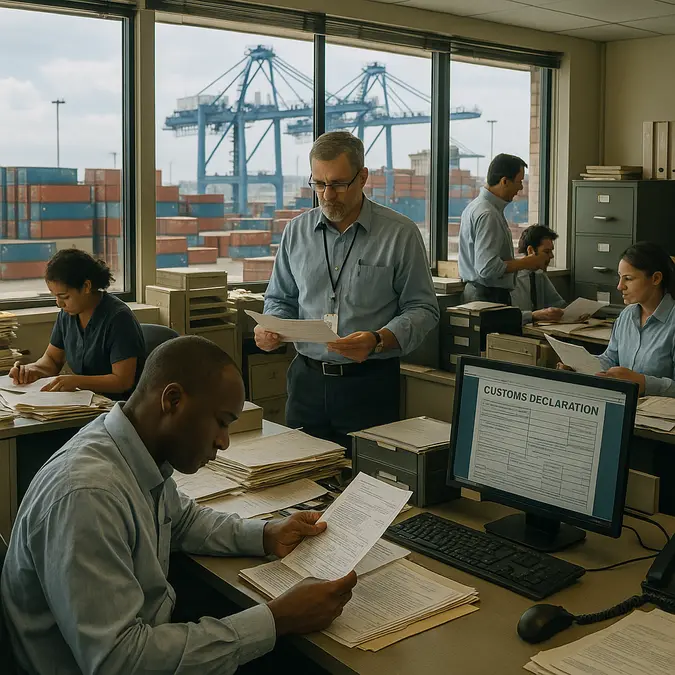
This dispute did not arise at the port gate. The goods had already been released, the importer had moved on to commercial activities, and the transactions were long past the initial clearance point. Yet Customs returned to the file, examined the documentation and valuation, and determined that more revenue was owed. That is the essence of a Customs post-clearance audit: a systematic review of import or export transactions after release, using risk-based methods and extensive documentation checks.
For readers in Trinidad and Tobago and across the wider Caribbean, the decision signals a firm judicial endorsement of Customs’ evolving role as both border regulator and revenue protector. It also serves as a stark reminder that compliance does not end when a container leaves the port.
Why Customs post-clearance audit powers are expanding
Across the globe, Customs authorities have been modernizing their compliance strategies. Traditional, physical inspections at the border are gradually giving way to intelligence-led reviews conducted after clearance. The World Customs Organization (WCO) has long promoted post-clearance audits as a central tool for balancing trade facilitation with revenue protection.
In practice, this means that importers may enjoy faster border processing, but they face deeper scrutiny later. Data analytics, cross-agency information sharing, and digital declarations make it easier for Customs to spot anomalies in valuation, classification, country of origin, or use of tariff concessions. A Customs post-clearance audit provides the legal and procedural framework to revisit declarations and correct underpayments.
Furthermore, governments under fiscal pressure increasingly rely on Customs revenue. According to the International Monetary Fund, trade taxes still account for a significant share of state income in many developing and emerging economies. It is therefore unsurprising that courts tend to uphold clearly framed statutory powers that allow Customs to protect this revenue stream, provided due process is observed.
Five critical lessons importers must learn from this ruling
The Appeal Court’s endorsement of the Customs post-clearance audit in the steel importer case offers at least five important lessons for CEOs, finance directors, and compliance teams engaged in international trade.
1. Customs post-clearance audit means clearance is not the end of risk
Many importers operate under a dangerous assumption: once Customs releases a shipment, the regulatory risk disappears. This ruling destroys that illusion. A Customs post-clearance audit allows authorities to re-open files months or even years later, depending on local law. If underpayment is detected, companies may face additional duties, taxes, penalties, and interest.
From a risk management perspective, this extends the compliance lifecycle. Traders must now treat every import declaration as a record that could be placed under forensic examination long after the physical goods have been sold or transformed. Strong internal controls, document retention policies, and periodic self-reviews become essential rather than optional.
2. Documentation quality can decide a $95,000 outcome
The amount in dispute in the steel case – nearly US$95,000 – might represent a profit margin for a single contract, or the thin line between solvency and loss for a smaller business. Whether Customs’ claim stands or falls often turns on documentation.
- Contracts and purchase orders must clearly outline pricing, rebates, and conditions.
- Commercial invoices must accurately reflect the transaction value and align with Incoterms.
- Freight, insurance, and related costs must be correctly allocated for customs valuation.
- Certificates of origin and tariff classification rulings must be properly maintained.
In any Customs post-clearance audit, inconsistent or incomplete records invite adverse inferences. To mitigate this, companies should implement centralised digital archives, clear naming conventions, and defined retention periods that match or exceed statutory time limits.
3. Valuation and classification remain high-risk zones
Globally, two of the most litigated customs issues are valuation and tariff classification. The core international rules come from the WTO Customs Valuation Agreement and the Harmonized System (HS) nomenclature, but the application of these rules in real-life transactions is rarely straightforward.
For steel imports, even small shifts in product description or HS code can radically change the duty rate. Discounts, related-party pricing, bundled charges, and post-importation adjustments all complicate the valuation analysis. A Customs post-clearance audit typically zooms in on these elements because they present the greatest revenue risk – and the greatest room for error.
Importers that trade in complex product lines should consider periodic external classification reviews and transfer pricing alignment exercises, especially where related-party transactions or long-term supply agreements are involved.
4. Legal challenges are possible but not guaranteed to succeed
The steel importer took the dispute all the way to the Appeal Court, arguing in essence that Customs had overstepped its authority or misapplied the law. The court, however, upheld Customs’ right to pursue the additional US$95,000. This outcome highlights a tough reality: while traders may challenge assessments, the courts will normally respect clearly expressed statutory powers, especially where public revenue is concerned.
Contrary to popular belief, litigation is not a guaranteed shield against Customs assessments. It is a high-stakes, resource-intensive route that demands strong factual and legal foundations.
Before contesting the outcome of a Customs post-clearance audit, businesses should carry out an honest internal review, consult specialised customs counsel, and assess whether negotiation or voluntary correction offers a better cost–benefit outcome.
5. Compliance culture is now a strategic business asset
The steel case paints a vivid picture: one Customs challenge tied to a Customs post-clearance audit can generate headlines, legal fees, and financial exposures approaching six figures. In such an environment, a robust compliance culture is not merely defensive; it can become a source of competitive advantage.
Companies that proactively manage customs risk tend to enjoy fewer disruptions, more predictable landed costs, and stronger relationships with regulators. In many jurisdictions, they may also qualify for trusted trader or Authorized Economic Operator (AEO) programs, which bring tangible benefits such as reduced inspections and priority treatment.
Readers exploring governance and regulatory themes can find related analysis in our Business coverage and deeper financial perspectives under Economy.
How a Customs post-clearance audit actually works
Understanding the mechanics of a Customs post-clearance audit helps demystify the process and equips companies to respond with confidence. Although procedures differ across jurisdictions, most systems follow a similar structure:
- Risk selection: Customs uses data analysis, sector intelligence, and sometimes whistleblower tips to select companies or transactions for review.
- Notification: The importer receives written notice of the audit scope, time frame, and information required.
- Document review: Auditors examine declarations, invoices, contracts, transport documents, and accounting records.
- Interviews and site visits: In-depth audits may include visits to company premises and interviews with finance, logistics, or procurement staff.
- Preliminary findings: Customs typically issues draft findings to which the importer can respond with clarifications or additional evidence.
- Final assessment: If discrepancies remain, Customs issues a formal assessment for additional duties, taxes, and potentially penalties and interest.
For businesses, the key is preparation. When a notice of Customs post-clearance audit arrives, the company should immediately assemble a cross-functional team including finance, logistics, legal, and, where necessary, external advisers. Establishing a clear communication channel with auditors, responding within stated deadlines, and maintaining a factual, non-confrontational tone can significantly influence the final outcome.
Strategic steps to protect your business
In light of the court ruling and the growing prominence of the Customs post-clearance audit model, forward-looking companies should consider a structured roadmap to strengthen their customs posture.
Build an internal Customs post-clearance audit capability
One of the most effective responses is to develop an internal mirror process – an in-house Customs post-clearance audit function that periodically reviews past imports using the same risk criteria Customs is likely to apply. This can involve:
- Sampling recent declarations for valuation, classification, and origin accuracy.
- Cross-checking customs values against accounting entries and transfer pricing records.
- Verifying that all permits, licenses, and certificates are properly filed and valid.
- Documenting findings and corrective actions in a structured report.
Such internal audits not only uncover weaknesses before regulators do, they also create evidence of due diligence that may be valuable if penalties are later contested.
Invest in training and digital tools
Customs rules evolve rapidly, and misinterpretation remains a leading cause of disputes. Regular, targeted training for staff involved in procurement, finance, and logistics can sharply reduce errors that might surface in a Customs post-clearance audit. At the same time, modern trade compliance software can automate HS classification suggestions, flag anomalies in declared values, and maintain centralized records for quick retrieval during audits.
Engage early with Customs authorities
Contrary to the adversarial image many businesses hold, customs administrations increasingly emphasize partnership approaches. Advance rulings on classification and origin, pre-clearance consultations, and post-audit dialogue mechanisms are becoming more common. When approached constructively, these tools can reduce uncertainty and prevent disputes from spiraling into multi-year, high-cost litigation such as the steel importer case.
The broader policy signal of the Appeal Court decision
Beyond the specific steel dispute, the Appeal Court’s endorsement of a robust Customs post-clearance audit framework sends a broader policy message. Caribbean governments are making it clear that they intend to harness modern audit-based customs control as a core instrument of fiscal and trade policy. Businesses that align with this reality – by elevating customs compliance from a back-office routine to a board-level concern – will be better positioned to thrive in a scrutinized, data-rich trading environment.
As international supply chains grow more complex and geopolitical tensions reshape trade flows, the stakes will only rise. Those who rely on outdated assumptions about what Customs can and cannot do after clearance may find themselves, like the steel importer, confronting unexpected six-figure liabilities and precedent-setting judgments.
Ultimately, the message is unambiguous: in a world defined by transparency, analytics, and enforcement, the Customs post-clearance audit is here to stay – and it rewards preparation far more than improvisation.