
 0
0
 0
0
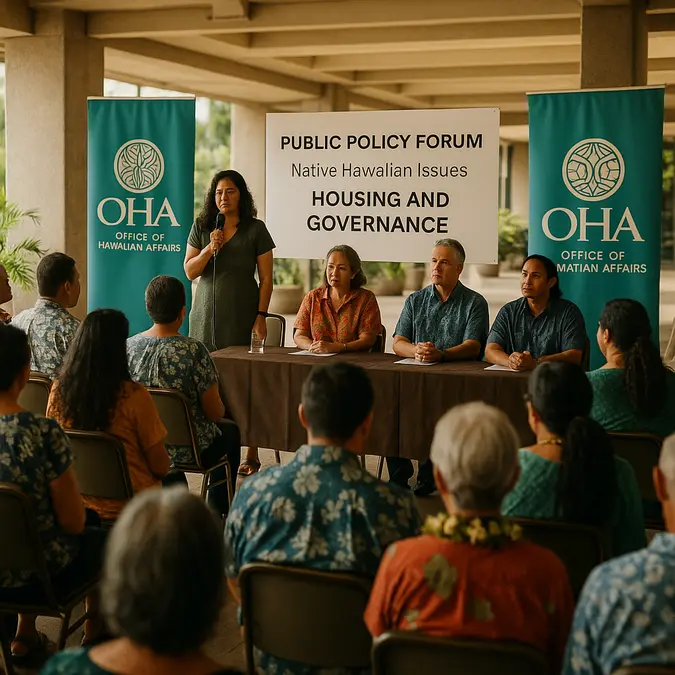
www.tnsmi-cmag.com – The Office of Hawaiian Affairs at-large trustee race featuring candidate Brendon Kaleiʻāina Lee highlights a deeper debate over how Native Hawaiian institutions should address housing, land stewardship, and self-determination in the 21st century.
Office of Hawaiian Affairs and the Evolving Role of Native Hawaiian Governance
The Office of Hawaiian Affairs (OHA) is not simply another state agency; it is a unique, semi-autonomous public trust created to improve the well-being of Native Hawaiians. Established in 1978 following Hawaii's Constitutional Convention, OHA administers resources derived in part from the so-called "ceded lands" — former crown and government lands of the Hawaiian Kingdom that passed to the United States and then to the State of Hawaii. According to historical overviews on Wikipedia, OHA's mandate focuses on health, education, economic self-sufficiency, and cultural preservation for Native Hawaiians.
Brendon Kaleiʻāina Lee's recent comments in a candidate Q&A — particularly his view that, "While I believe OHA should be doing more for housing of Native Hawaiians, it is not OHA's responsibility to help fund DHHL" — crystallize long-running tensions within Hawaiian political life. At stake is a fundamental question: What exactly should OHA do, and where do its responsibilities end when other Native Hawaiian-serving institutions exist, such as the Department of Hawaiian Home Lands (DHHL)?
For readers and voters, understanding this distinction matters. It shapes expectations around what trustees can realistically deliver, how OHA's budget should be allocated, and how different Hawaiian institutions should work together to tackle generational challenges like housing, land rights, and cultural survival.
Office of Hawaiian Affairs at the Center of Native Hawaiian Policy
To fully grasp the significance of the at-large trustee race, we must first understand how the Office of Hawaiian Affairs functions within Hawaii's broader governance landscape. OHA's trustees are elected statewide, including at-large positions, meaning they are accountable to all registered voters in Hawaii, not only to beneficiaries of Hawaiian ancestry. Yet OHA's beneficiaries — Native Hawaiians — form the core constituency whose socio-economic and cultural interests the trust is intended to serve.
OHA's revenue base comes from several sources, including returns from its investment portfolio and a share of income from ceded lands. This last element remains politically and legally sensitive, as the size and management of those revenues have been the subject of legislative negotiations and lawsuits for decades. The agency's annual budget, typically in the tens of millions of dollars, is allocated across programs covering housing assistance, scholarships, legal services, cultural initiatives, and community grants.
Because resources are limited compared to the scale of Native Hawaiian needs, OHA trustees must constantly prioritize. That reality lies behind Lee's statement about DHHL: if OHA tries to fill every gap left by other agencies, it may dilute its impact and drift away from its core mission. Conversely, if it holds too rigidly to institutional boundaries, beneficiaries may see it as unresponsive to urgent crises — particularly in housing, where DHHL's waiting lists and funding constraints have created a long-standing emergency.
Housing, DHHL, and the Debate Over Institutional Responsibility
Lee's assertion that OHA should not be responsible for funding DHHL deserves close examination. The Department of Hawaiian Home Lands administers homestead leases on roughly 200,000 acres set aside under the Hawaiian Homes Commission Act of 1920. Its primary duty is to place eligible Native Hawaiians on homestead lands for residential, agricultural, or pastoral use. Decades of underfunding, bureaucratic delays, and land management challenges have left thousands of Native Hawaiians waiting for homestead awards.
Given DHHL's struggles, many leaders and community members have argued that OHA should step in more aggressively — whether through direct funding transfers, partnerships, or complementary housing programs. Lee offers a nuanced middle ground: OHA, he says, must do more for Native Hawaiian housing, but that does not automatically translate into filling DHHL's budget gaps. Instead, OHA might choose to:
- Expand down payment assistance and rent support programs tailored to Native Hawaiian families.
- Invest in community-driven housing cooperatives or land trusts focusing on affordability and cultural integrity.
- Use its influence to advocate for stronger public funding for DHHL from the state legislature.
- Support legal and policy efforts to streamline DHHL processes without assuming responsibility for its core budget.
This approach reframes the question from "Should OHA pay for DHHL?" to "How can OHA strategically deploy its resources to expand housing options for Native Hawaiians while preserving its independent mandate?"
Office of Hawaiian Affairs at-Large Trustees: Why This Seat Matters
The statewide nature of at-large trustee positions gives them outsized visibility and influence. Trustees help set OHA's strategic priorities, approve major investments, and guide the agency's advocacy on issues ranging from water rights to education to economic development. When an at-large candidate like Brendon Kaleiʻāina Lee draws a line on a hot-button issue like DHHL funding, it signals how he might approach OHA's broader mission.
Readers should weigh several core responsibilities when evaluating an at-large candidate:
- Fiscal stewardship: How carefully will the trustee manage OHA's trust assets and operating budget?
- Policy vision: Does the candidate offer a coherent long-term strategy for Native Hawaiian well-being instead of scattered short-term projects?
- Community accountability: How will the trustee remain in dialogue with Native Hawaiian communities, especially those on the margins?
- Collaboration: Can the candidate work productively with state agencies, federal partners, and community organizations without compromising OHA's independence?
Lee's comments on housing and DHHL can be read as an attempt to clarify those boundaries: OHA should lead in areas where it has unique leverage and legal standing while pressing other institutions to fulfill their own mandates more effectively.
Office of Hawaiian Affairs and the Historical Context of Native Hawaiian Claims
Any contemporary race for the Office of Hawaiian Affairs unfolds against a backdrop of historical injustice and political contestation. The 1893 overthrow of the Hawaiian Kingdom and subsequent annexation to the United States set in motion more than a century of legal disputes and activism over land, sovereignty, and reparations. OHA emerged in part as a state-level response to these unresolved claims.
According to analyses by historians and legal scholars, including material accessible through Encyclopedia Britannica, Native Hawaiians experienced significant land loss, cultural suppression, and socio-economic marginalization throughout the 20th century. Institutions like OHA and DHHL represent partial and imperfect attempts to address those harms.
Therefore, debates over whether OHA should fund DHHL are not merely about bureaucratic jurisdictions. They are about how limited trust resources should be deployed to remedy systemic inequities while protecting future generations' rights. Voters evaluating candidates like Lee must consider not only what is politically expedient today but what safeguards and strategies will build long-term resilience for Hawaiian communities.
7 Critical Insights From the Brendon Kaleiʻāina Lee Candidacy
From the limited but revealing public comments, readers can extract several key insights about the future direction of the Office of Hawaiian Affairs and the broader Native Hawaiian policy landscape:
- Clear differentiation of mandates: Lee emphasizes that OHA and DHHL have distinct legal responsibilities. That clarity can help avoid mission drift and ensure each institution is held accountable for its core functions.
- Housing as a non-negotiable priority: Despite drawing a line on DHHL funding, Lee openly acknowledges that OHA must do more in the housing arena. This signals potential support for innovative OHA-led housing programs.
- Strategic use of limited funds: By resisting a simple transfer of OHA money to DHHL, Lee implicitly advocates for a more targeted, outcomes-based use of OHA resources.
- Institutional independence: Protecting OHA's autonomy may position it more effectively as a watchdog and advocate, rather than a mere funding source for other agencies.
- Expectation management with beneficiaries: Lee's position encourages beneficiaries and voters to understand what OHA can and cannot do, reducing the risk of overpromising and underdelivering.
- Room for partnership without subsidy: Rejecting direct DHHL funding does not rule out collaborative projects, shared data, or joint advocacy between OHA and DHHL.
- Signal of governance philosophy: Overall, Lee's stance suggests a trustee approach grounded in fiduciary caution, institutional clarity, and targeted intervention rather than broad, open-ended commitments.
Office of Hawaiian Affairs, Public Trust, and the Need for Transparency
Public trust is the lifeblood of the Office of Hawaiian Affairs. For years, OHA has faced scrutiny over its spending practices, board dynamics, and the tangible outcomes of its grants and programs. That scrutiny is not inherently negative; it reflects the high expectations Native Hawaiians and the broader public have for how trust assets are used.
Transparent communication on issues like DHHL funding is a critical step toward rebuilding and sustaining that trust. When a candidate like Lee clearly outlines the limits of what OHA should be tasked with, he invites a more honest conversation about trade-offs, budget priorities, and measurable impacts. Voters should evaluate whether his explanations are backed by data, a realistic understanding of OHA's balance sheet, and a firm commitment to public reporting.
Readers who follow governance issues may also want to explore related perspectives on indigenous rights, governance reforms, and community-driven policy innovation. Coverage in sections such as Politik and Kebijakan Publik offers useful parallels and comparative insights from other regions navigating complex questions of identity, autonomy, and state power.
Office of Hawaiian Affairs and the Future of Native Hawaiian Self-Determination
Beyond immediate policy debates, the at-large trustee race touches on a larger conversation about self-determination. For some Native Hawaiians, OHA is a stepping stone toward broader forms of political recognition and self-governance. For others, it is an imperfect but vital mechanism for delivering services, preserving culture, and asserting rights within the current state framework.
Lee's position on DHHL funding hints at a philosophy of self-determination grounded in institutional strength and clarity. By insisting that each Native Hawaiian-serving institution fulfill its specific obligations, he may be aiming to build a more robust ecosystem where OHA, DHHL, nonprofit organizations, and community groups all function at higher capacity rather than overlapping ineffectively.
However, the true test of any trustee's commitment to self-determination goes beyond statements in a Q&A. It shows up in budget votes, policy initiatives, and day-to-day engagement with beneficiaries. Voters should look for concrete proposals: How will the candidate strengthen Native Hawaiian control over land and resources? How will OHA support language revitalization, traditional practices, and new economic models that align with Hawaiian values?
Conclusion: Office of Hawaiian Affairs at a Crossroads
The candidacy of Brendon Kaleiʻāina Lee for an at-large trustee position underscores how the Office of Hawaiian Affairs sits at a crossroads. Pressured by urgent housing needs and long waiting lists at DHHL, OHA faces intense expectations to intervene on multiple fronts. Yet its resources and legal mandate are finite. Lee's message — that OHA must do more for Native Hawaiian housing while stopping short of directly funding DHHL — encapsulates a broader debate over strategy, accountability, and institutional design.
As voters scrutinize the at-large trustee race, they are not just selecting an individual; they are shaping the future trajectory of a key Native Hawaiian institution. The choices made today about how OHA collaborates, where it invests, and how it draws boundaries will echo across generations. In that sense, the discussion around Lee's comments is an invitation for all of us — beneficiaries, allies, and observers alike — to think more deeply about what justice, equity, and self-determination should look like in Hawaii's evolving political landscape, and how the Office of Hawaiian Affairs can most effectively advance that vision.