
 0
0
 0
0
www.tnsmi-cmag.com – ANZAC Day 2026 drew thousands of people across Australia into dawn services, marches, and quiet moments of reflection, while Croatian representatives stood alongside Australian and New Zealand leaders in a solemn act of shared remembrance. From the stillness of Martin Place in Sydney to the ceremonial gravitas of Canberra, the commemorations underscored how history, sacrifice, and modern diplomacy intersect on one of the country’s most sacred national days.
ANZAC Day 2026 and the Enduring Power of Shared Remembrance
ANZAC Day 2026 did more than remember the fallen at Gallipoli and subsequent conflicts; it also highlighted the evolving international significance of the date. By welcoming Croatian representatives into key commemorative events, Australia demonstrated how remembrance can operate as a form of soft power, cultural bridge-building, and mutual recognition of sacrifice.
Every year on 25 April, Australians and New Zealanders pause to honour members of the Australian and New Zealand Army Corps (ANZAC) who served in the First World War and in later conflicts. The day has become a defining moment in the national calendars of both countries, comparable in symbolic weight to national independence or constitution days in other nations. According to the Australian War Memorial, more than 416,000 Australians enlisted in the First World War, with over 60,000 never returning home, a toll that reshaped society and politics for generations.[1]
In 2026, this historical memory was complemented by a contemporary geopolitical message: that remembrance is not confined within national borders. Croatian participation in Australian ANZAC Day events symbolised both the contributions of Croatian migrants and their descendants to Australian society and the ongoing relevance of shared military experiences, from two world wars to modern peacekeeping.
ANZAC Day 2026: Sydney Dawn Service and National Commemorations
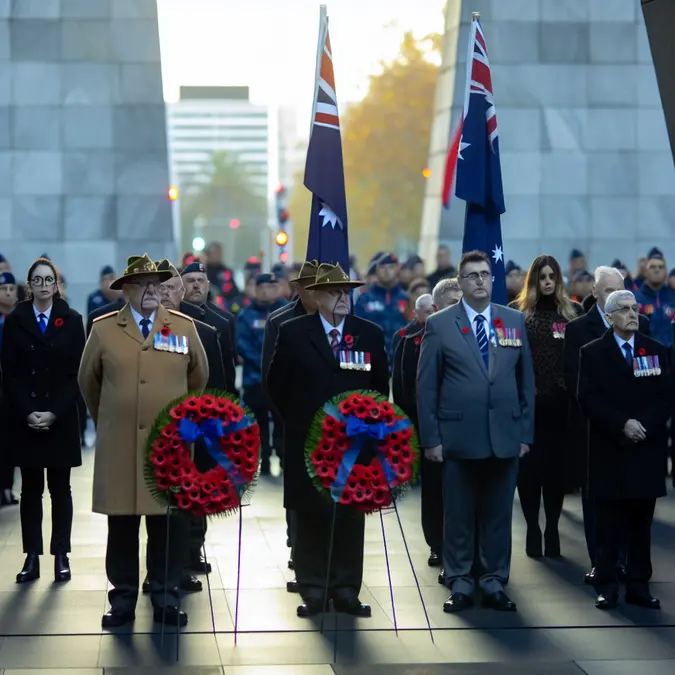
The Sydney dawn service has long been regarded as one of the emotional centres of ANZAC observance. On ANZAC Day 2026, thousands gathered in near-silence in the city’s heart as the first light touched the cenotaph. Veterans stood shoulder to shoulder with serving personnel, school students, community leaders, and international guests, including Croatian representatives, who paid their respects in a visibly solemn and respectful manner.
While the raw news report highlights Sydney and Canberra, similar patterns unfolded nationwide: small coastal towns held intimate ceremonies by local war memorials, suburban communities organised marches featuring descendants carrying photographs of their relatives, and major cities hosted large-scale official events. In each context, ANZAC Day 2026 reaffirmed the centrality of collective memory to civic identity.
In Canberra, the nation’s political and symbolic capital, the Australian War Memorial served as the focal point for official commemorations. Leaders laid wreaths, military bands played the Last Post, and the Ode of Remembrance was recited, linking the present with a century-old tradition of honouring the fallen. Croatian diplomatic and community representatives participated alongside other invited nations, reinforcing the message that sacrifice in war is a universal human experience, not an exclusively national one.
ANZAC Day 2026, Croatian Representatives, and the Message to the World
By visibly including Croatian representatives in ANZAC Day 2026 ceremonies, Australian organisers sent a layered message. First, they acknowledged the large Croatian diaspora community in Australia, which has contributed significantly to the country’s cultural, economic, and political life. Second, they recognised Croatia’s own complex history of conflict, remembrance, and post-war reconstruction.
For Croatian officials, participation conveyed respect for Australia as a partner and for the ANZAC story as part of a wider global narrative of the 20th and 21st centuries. Many Croatians served in different armies during the world wars and experienced their own traumas during the conflicts associated with the breakup of Yugoslavia. Shared remembrance, therefore, becomes a mutual recognition of suffering and resilience. Readers who follow our coverage of defence and diplomacy on Security will recognise how symbolic gestures of this kind often precede deeper cooperation in areas such as peacekeeping, veterans’ welfare, and cultural exchange.
Seven Powerful Ways ANZAC Day 2026 Demonstrated the Unity of Nations
Beyond ceremony and protocol, ANZAC Day 2026 illustrated at least seven concrete ways in which remembrance can unite nations and communities:
- 1. Shared Ceremonial Space: The presence of Croatian representatives at major Australian services signalled that national memorials can also serve as international spaces of respect. Invited dignitaries stand not as spectators, but as partners in remembrance.
- 2. Recognition of Migrant Contributions: Croatian Australians have served in the Australian Defence Force (ADF) across decades. Their presence at ANZAC Day 2026, both as officials and as families in the crowd, underscored how migration histories are entwined with national military narratives.
- 3. Education and Historical Literacy: Each year, schools across Australia use ANZAC Day to teach history and civic values. In 2026, the involvement of Croatian guests gave educators a tangible example of global interconnectedness, encouraging students to ask how Europe’s wars, Balkan conflicts, and Pacific campaigns are historically linked.
- 4. Soft Power and Diplomacy: Participation in remembrance events is a classic form of soft diplomacy, as recognised by international relations scholars and institutions like the Lowy Institute.[2] By playing a visible yet respectful role in ANZAC Day 2026, Croatia strengthened its image as a thoughtful, historically aware partner.
- 5. Veteran-to-Veteran Solidarity: Informal conversations between Australian veterans and Croatian guests, many of whom have their own national stories of service, created space for peer solidarity that transcends language and nationality.
- 6. Community Bridge-Building: Local Croatian associations and cultural organisations often participate in ANZAC events at the suburb or town level. In 2026, this community-level engagement added depth to official high-level participation.
- 7. Reaffirming Liberal Democratic Values: Commemorations like ANZAC Day 2026 do not glorify war; rather, they tend to reaffirm commitments to peace, democracy, and rule-based international order. The participation of European Union member state representatives, such as Croatia’s, adds an extra layer of normative support for these values.
Historical Context: From Gallipoli to a Global Commemorative Network
To fully understand the significance of ANZAC Day 2026, we need to place it within more than a century of historical development. The first ANZAC Day services were held in 1916, only a year after troops landed at Gallipoli on 25 April 1915. What began as a day of mourning rapidly evolved into a broader national ritual, often described as a cornerstone of the Australian and New Zealand identities.
Over time, ANZAC Day expanded beyond Gallipoli to encompass all theatres of conflict in which Australians and New Zealanders served: the Western Front, North Africa, the Pacific, Korea, Vietnam, Afghanistan, Iraq, and multiple peacekeeping missions. It also grew beyond the confines of the two founding nations. Ceremonies are now held in major cities across the world, including London, Paris, and Washington, and at battlefields and cemeteries from Turkey to the Western Front in France and Belgium.
Croatian participation in ANZAC Day 2026 must be read against this broader trend: remembrance has gone transnational. Countries increasingly attend each other’s memorial days, visit foreign war cemeteries, and host joint ceremonies. On a practical level, this helps maintain war graves, share archival materials, and support veteran welfare. Symbolically, it affirms that the lessons of past conflicts should be learned collectively, not in isolation.
ANZAC Day 2026, Croatian Engagement, and Diaspora Diplomacy
Another crucial dimension of ANZAC Day 2026 is diaspora diplomacy. Australia is home to one of the world’s more diverse populations, with communities from Europe, Asia, the Middle East, the Pacific, and Africa. According to Australia’s Bureau of Statistics, roughly one in three residents was born overseas or has a parent born abroad. Croatian Australians form a visible part of this mosaic.
The presence of Croatian representatives at ANZAC Day 2026 thus also recognised the importance of diaspora communities as connectors between countries. Croatian Australians engage in business, cultural exchange, sport, and education that link the two nations on a daily basis. When Croatian dignitaries stand at Australian cenotaphs, they are also acknowledging those communities’ contributions to both societies.
For readers tracking multicultural and social cohesion trends in our Society coverage, ANZAC Day 2026 offers an instructive case study. It demonstrates how inclusive commemoration can strengthen a shared sense of belonging without erasing distinct cultural identities.
The Emotional Architecture of ANZAC Day 2026
What distinguishes ANZAC Day from many other national days is its emotional architecture. The tone is not triumphant, but reflective. The rituals are structured around silence, lament, and the promise to remember. ANZAC Day 2026 followed this established pattern, reinforcing its solemn, almost liturgical character.
Typical elements include:
- Dawn Services: Symbolising the pre-dawn landings at Gallipoli and invoking a sense of vulnerability and hope.
- The Last Post: A bugle call that traditionally signals the end of a soldier’s day and, in commemorative contexts, honours those who have died.
- The Ode: Lines from Laurence Binyon’s 1914 poem For the Fallen, particularly the stanza beginning, “They shall grow not old, as we that are left grow old.”
- Two Minutes’ Silence: Providing personal space within a public ritual for grief, gratitude, and contemplation.
- Wreath-Laying: A visual representation of respect and continuity, especially when performed by representatives from different nations.
ANZAC Day 2026 integrated Croatian representatives into these rituals in a way that respected long-standing tradition. They did not alter the core narrative of Gallipoli and Australian-New Zealand service. Instead, they added an additional layer of meaning: the recognition that sacrifice resonates across borders and across generations.
Media, Memory, and the Digital Dimension of ANZAC Day 2026
Another defining feature of ANZAC Day 2026 was the extensive digital coverage and social media engagement. News outlets, including community-focused publications such as Hrvatski Vjesnik, amplified the story of Croatian participation, ensuring that both Australian and Croatian audiences understood the symbolism behind the images of joint wreath-laying and shared silence.
Digital platforms now create a parallel commemorative space. Livestreams of dawn services allow veterans who are elderly or living abroad to participate from home. Social media campaigns honour individual service members by name and photograph, moving away from anonymous mass memory toward personalised stories. For diaspora communities, this digital layer is especially important, as it enables participation in ceremonies from thousands of miles away.
For policymakers and cultural institutions, the ANZAC Day 2026 experience underscores the need to curate online memory with the same care given to physical memorials. Accuracy, respect, and contextualisation are essential if digital remembrance is to preserve, rather than distort, historical understanding.
What ANZAC Day 2026 Tells Us About the Future of Commemoration
Looking beyond the events of a single day, ANZAC Day 2026 offers several insights into how remembrance practices are likely to evolve:
- More International Participation: We can expect increased attendance by foreign diplomats and military personnel at ANZAC ceremonies, particularly from countries with strong diaspora communities in Australia and New Zealand.
- Broader Historical Scope: The narrative will continue expanding from Gallipoli to encompass a more complete picture of 20th and 21st century conflict, including peacekeeping and humanitarian operations.
- Inclusive Storytelling: Stories of Indigenous service members, women in the armed forces, and migrant veterans will gain greater visibility, reflecting the diversity of those who have served.
- Hybrid Physical-Digital Rituals: Commemorations will blend in-person ceremonies with sophisticated digital experiences, from virtual tours of battlefields to interactive archives.
- Deeper Educational Integration: Schools and universities will likely use days like ANZAC Day 2026 as anchors for broader curricula on global conflict, ethics, and citizenship.
Conclusion: Why ANZAC Day 2026 Matters Beyond a Single Morning
ANZAC Day 2026 was more than a date on the calendar or a one-off headline about Croatian representatives joining Australian ceremonies. It was a vivid demonstration of how remembrance can evolve without losing its core integrity. By drawing together veterans, families, schoolchildren, diplomats, and diaspora communities, ANZAC Day 2026 reaffirmed the continuing relevance of the ANZAC legacy in a rapidly changing world.
For readers, the lesson is clear: commemorations like ANZAC Day 2026 are not backward-looking rituals frozen in time. They are living, adaptable practices that can incorporate new partners, acknowledge previously marginalised stories, and reinforce democratic values in the present. In this sense, ANZAC Day 2026 stands as a powerful example of how nations can honour the past while building bridges for the future, ensuring that the sacrifices of those who served continue to inform our choices in war, peace, and international cooperation.