
 0
0
 0
0
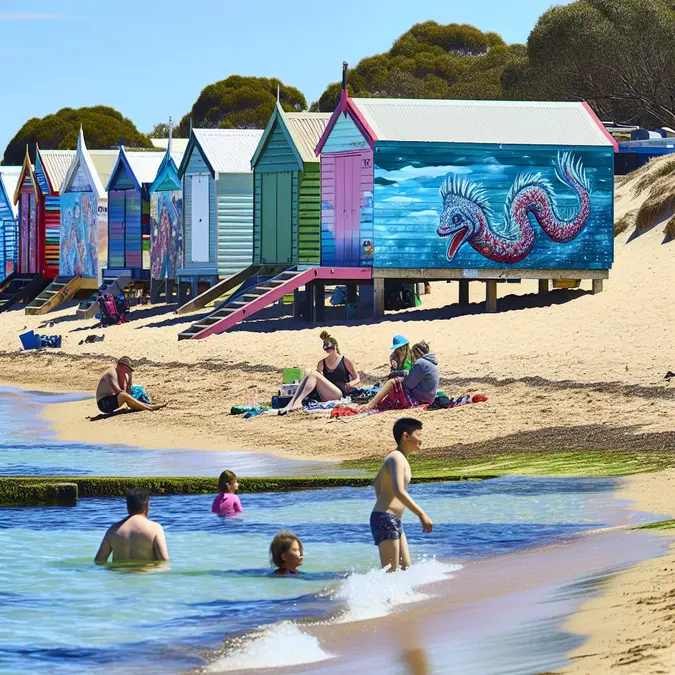
www.tnsmi-cmag.com – A Mornington beach box painted with a striking water dragon mural has just hit the market with an eye-watering price tag, underscoring how these tiny timber sheds on Victoria’s Mornington Peninsula have become some of the most coveted – and controversial – slices of coastal real estate in Australia.
Mornington beach box: why a tiny shed can command a huge price
A casual visitor might see nothing more than rows of colorful timber huts dotting the sand. Yet, for many buyers, a single Mornington beach box represents prestige, exclusivity, and a permanent ticket to one of the most picturesque stretches of coastline in the country.
The latest listing, made famous by its dramatic water dragon artwork, brings together three powerful drivers of demand: limited supply, prime absolute beachfront position, and strong lifestyle appeal. When those factors collide on the Mornington Peninsula, price becomes almost secondary to the emotional pull.
Contrary to popular belief, these boxes are not primitive homes or Airbnb cabins. They usually lack electricity, plumbing, and basic services. They cannot be lived in. Yet they routinely fetch prices that would buy substantial houses in regional Australia. Understanding this paradox requires looking at social trends, local planning rules, and the evolution of coastal prestige assets.
Mornington beach box market: 7 essential insights shaping values
To decode why this particular water-dragon-themed Mornington beach box – and many of its neighbors – attracts such intense interest, we can break the story into seven key insights that matter to buyers, investors, and policymakers.
1. Mornington beach box scarcity is engineered by planning controls
Across Victoria, and especially on the Mornington Peninsula, local councils strictly control new beach box construction. Most boxes date back decades, and new approvals are rare. This creates a structurally constrained market. Economically, it is a textbook case of limited supply meeting enduring demand.
Councils balance heritage, environmental protection, and visual amenity. On many foreshore reserves, boxes occupy land leased from council or managed via long-standing license arrangements. Authorities view the coastline as a public asset, which means any decision to add, remove, or modify boxes triggers community debate.
Because the number of boxes is effectively capped, each individual Mornington beach box becomes a quasi-collectible asset. When one comes to market – especially a visually distinctive example like the water dragon mural box – competitive bidding can push prices to new benchmarks.
2. Lifestyle and status: the emotional premium behind the price
Economists describe demand in terms of utility; sociologists describe it in terms of status, identity, and belonging. Beach boxes sit squarely at this intersection. They offer practical benefits – secure storage for boards, umbrellas, and kayaks; shade and shelter close to the water – but much of the price tag reflects intangible value.
Owning a Mornington beach box often signals that a family has deep roots on the Peninsula. It becomes a generational hub where grandparents, children, and friends converge summer after summer. Buyers are willing to pay for certainty – their personal patch of sand, uninterrupted by the scramble for car parks or prime spots on busy days.
Psychologically, the boxes also serve as a visible marker of success. From the water, rows of painted doors read like a gallery of personal brands. The water dragon mural box exemplifies this: a bold, instantly recognizable piece of coastal art that says something about the owner’s taste and identity.
3. Artwork, design, and the rise of the Instagram effect
In the era of social media, visually unique beach boxes have become minor celebrities in their own right. Iconic huts on Brighton Beach, for example, feature across tourism campaigns and Wikipedia entries about Melbourne’s seaside culture. Mornington’s boxes are following the same trajectory.
A Mornington beach box with a distinctive mural – in this case, a vibrant water dragon – attracts organic publicity each time it appears in a travel blog, real estate feature, or Instagram reel. This multiplies its brand recognition and can subtly lift perceived value. Prospective buyers are not just purchasing timber and paint; they are acquiring a small cultural landmark.
Furthermore, as short-form video platforms push coastal imagery into global feeds, visually striking real estate becomes a marketing asset for the destination itself. Mornington’s tourism and hospitality sectors indirectly benefit, reinforcing the feedback loop between art, attention, and premium coastal property.
4. Regulation, ownership, and what buyers really acquire
One of the most misunderstood aspects of a Mornington beach box is the nature of ownership. In many cases, buyers purchase the structure and the right to occupy a specific foreshore site, subject to a license or lease. The underlying land remains controlled by council or a committee of management.
These arrangements come with conditions: restrictions on size, materials, colors, and even the content of murals, depending on the foreshore management plan. Owners pay annual fees and must comply with maintenance and insurance requirements. They cannot typically rent out the box as short-stay accommodation, and commercial use is often tightly constrained.
For buyers accustomed to freehold house-and-land packages, this hybrid ownership model can be complex. Due diligence is essential: understanding license terms, succession rules, and the implications of any future policy changes. High-profile sales, like the water dragon box, remind readers that purchasing prestige coastal assets requires careful legal and financial advice.
5. Beach boxes as alternative lifestyle investments
While beach boxes rarely generate traditional rental income, they function as alternative lifestyle investments. They offer capital growth potential, inflation protection, and lifestyle dividends in the form of summer enjoyment. In hot markets, resale gains can be significant, though not guaranteed.
Analysts often compare them to classic cars, art, or rare wine: niche assets where value is driven by scarcity, story, and sentiment. A unique Mornington beach box with strong visual identity and prime positioning may appreciate faster than a more generic shed in a less-known bay.
However, readers should recognize the risks. Market sentiment can shift if regulations tighten, coastal erosion accelerates, or broader economic conditions dampen discretionary spending. That is why professional investors tend to treat beach boxes as part of a diversified portfolio, not a standalone strategy.
6. Climate risk and coastal resilience: the long-term question
Any serious analysis of coastal property now must address climate risk. Rising sea levels, more intense storm surges, and erosion can all affect the practical lifespan and policy settings around beach boxes. The Mornington Peninsula, like many global coastal regions, sits within active climate adaptation planning.
Local and state authorities face a difficult balance: protecting public coastal assets, respecting historic use, and responding to scientific projections. For the owner of a Mornington beach box, the question is not just, “What is it worth now?” but “How resilient is this asset over the next 20–30 years?”
Readers can explore climate projections for coastal Victoria via resources from the CSIRO and state government. A prudent buyer evaluates flood risk, shoreline management strategies, and any foreshore realignment proposals, rather than relying solely on past capital growth trends.
7. Culture, heritage, and the politics of the foreshore
The debate around beach boxes extends beyond economics. Community groups, environmental advocates, and long-time locals all have strong views about who should access the foreshore and how it should look. Some argue that private huts on public land symbolize exclusivity and privilege. Others see them as cherished heritage structures that animate the coastline.
The water dragon mural Mornington beach box showcases how these huts have become part of local storytelling. They frame childhood memories, feature in tourism brochures, and anchor neighborhood identity. Councils increasingly acknowledge this cultural layer in heritage and planning documents.
For policymakers, the challenge is to preserve that sense of place while ensuring equity of access to the beach for all residents and visitors. High-profile, high-priced sales sharpen the conversation: do rising values enhance appreciation of local heritage, or deepen perceptions of coastal inequality?
How the Mornington beach box market compares with other iconic huts
Australia has several pockets of iconic beach huts – from Brighton’s candy-colored boxes near Melbourne to historic bathing sheds in South Australia and Western Australia. Typically, prices correlate with proximity to major cities, transport links, and existing tourism demand.
On the Mornington Peninsula, many buyers come from Melbourne’s affluent suburbs, seeking an extension of their city lifestyle by the sea. This injects substantial metropolitan capital into what was once a modest holiday-home region. As a result, the Mornington beach box market now competes, in price-per-square-metre terms, with inner-urban apartments and premium townhouses.
Internationally, similar patterns appear in the United Kingdom, where some English seaside huts command six-figure prices despite lacking utilities. The phenomenon underscores a broader trend: in a service-based, experience-driven economy, people pay heavily for curated, repeatable leisure experiences in highly constrained locations.
What prospective buyers should evaluate before bidding
For readers considering a purchase, especially one as distinctive as the water dragon mural box, a checklist-driven approach is vital. Emotion may trigger interest, but due diligence must guide the final decision.
- Legal structure: Clarify whether you are buying a license, leasehold interest, or transferable right over a specific site. Confirm transfer rules.
- Financial obligations: Understand annual license fees, council charges, maintenance expectations, and insurance requirements.
- Condition and compliance: Commission a building inspection to check for rot, structural movement, or non-compliant extensions.
- Planning controls: Review local planning overlays and foreshore management plans that may affect repainting, rebuilding, or resale.
- Climate and erosion risk: Investigate any coastal hazard assessments relevant to the specific bay.
- Resale liquidity: Examine past sales of comparable Mornington beach box properties to gauge realistic resale timeframes and price ranges.
Engaging a local agent with deep experience in coastal and foreshore transactions is essential. Readers can also explore broader property and lifestyle trends via analysis pieces in sections like Real Estate and Lifestyle to understand how niche assets fit into the national housing conversation.
The media’s role: from quirky curiosity to serious asset class
Each time a visually striking Mornington beach box lists with a record or near-record guide price, national media outlets spotlight the sale. What began years ago as a quirky “can you believe this?” real estate story has evolved into a recurring barometer of coastal demand and inequality.
Beach box prices tell us not only what people will pay for shade on the sand, but how they value identity, tradition, and guaranteed access to nature in an increasingly crowded world.
Real estate platforms such as realestate.com.au have professionalized coverage, layering in sales histories, suburb data, and trend analysis. For informed readers, these stories offer more than entertainment; they provide insight into how non-traditional assets are reshaping the outer edges of the housing market.
Mornington beach box outlook: will prices keep climbing?
Forecasting future prices is inherently uncertain, but a few structural forces are clear. Demand for coastal leisure space remains robust, especially among higher-income households seeking lifestyle diversification. Supply is constrained by policy and geography. Strong tourism branding of the Mornington Peninsula reinforces the desirability of owning a Mornington beach box.
Countervailing pressures include higher interest rates, cost-of-living concerns, and evolving climate policy. If regulators deem certain foreshore stretches too vulnerable, they may phase out or relocate boxes over time. Technological shifts, such as the growing appeal of remote regional work and inland lifestyle towns, could also redistribute discretionary spending.
Still, as long as these colorful huts continue to symbolize summer freedom and family continuity, buyers with sufficient means are likely to compete fiercely when standout boxes, such as the water dragon mural, arrive on the market.
Conclusion: what the Mornington beach box tells us about modern coastal living
The story of the water dragon mural Mornington beach box is more than a headline about an eye-watering price tag. It encapsulates a broader shift in how Australians think about property, prestige, and place. Tiny, service-free sheds on public foreshore have become multi-layered assets – blending heritage, lifestyle, investment, and identity in a single, tightly held commodity.
For readers, the lesson is twofold. First, do not underestimate the economic power of scarcity, story, and emotion in real estate markets. Second, approach any purchase – whether a suburban family home or a painted coastal hut – with clear eyes, detailed due diligence, and an understanding of long-term environmental and policy trends. If you choose to pursue a Mornington beach box, you are not just buying timber on sand; you are buying a chapter in Australia’s evolving narrative of coastal living.