
 0
0
 0
0
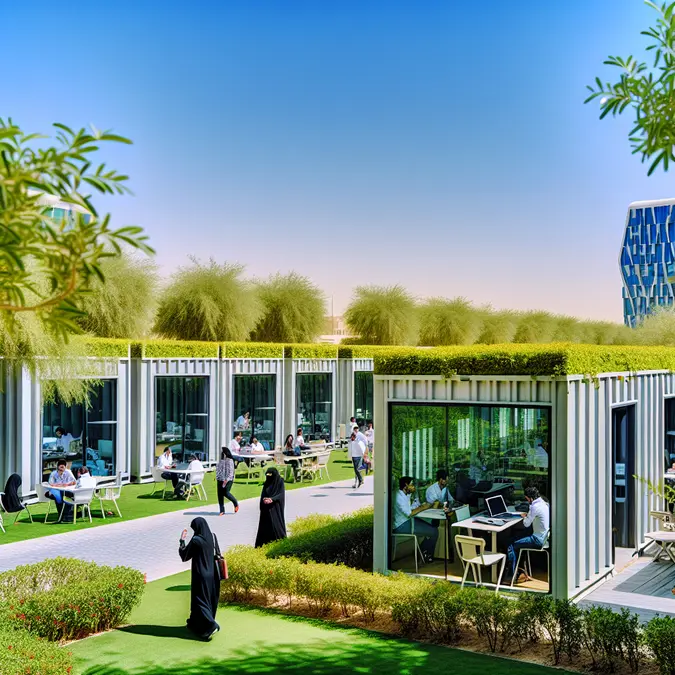
www.tnsmi-cmag.com – Dubai park workspace is the latest bold experiment in how cities can support hybrid work, with Al Barsha’s new park-based hub offering air-conditioned cabins, bookable meeting rooms and a café that turns green public space into a functional open-air office.
Dubai park workspace: A new frontier for hybrid work in public spaces
Dubai has never shied away from reimagining urban life, but the launch of its first Dubai park workspace in Al Barsha marks a particularly notable shift. Instead of confining productivity to high-rise towers and corporate campuses, the city is extending work infrastructure into a public park, pairing greenery with high-spec, climate-controlled facilities.
At its core, this concept responds to a clear global trend: hybrid and flexible work are no longer fringe arrangements. According to a widely cited 2023 study by McKinsey & Company, employees who can work remotely expect that flexibility to continue, and employers are rethinking real estate and workspace strategies accordingly. Dubai’s move brings this evolution directly into the urban fabric, creating a park workspace that feels as much like a civic amenity as a commercial solution.
Furthermore, this initiative suggests a future where parks are not just recreational spaces, but multifunctional zones supporting work, wellness and community interaction. It is a development that urban planners, corporate leaders and digital workers across the Gulf and beyond will be watching closely.
What the Dubai park workspace in Al Barsha actually offers
While the vision is ambitious, the success of the Dubai park workspace in Al Barsha will depend on its practical features. Based on the public details released so far, the facility is designed to feel like a professional-grade coworking space thoughtfully inserted into a park environment.
Dubai park workspace facilities: AC cabins, meeting rooms and café
Three main components define the user experience at the Al Barsha park workspace:
- Air-conditioned work cabins: Individual or small-group cabins provide a quiet, temperature-controlled environment – a non-negotiable in Dubai’s climate. These cabins are expected to include power outlets, comfortable seating and stable Wi-Fi, turning a park bench into a private productivity zone.
- Meeting rooms: For teams or client-facing professionals, bookable meeting rooms offer more formality. These spaces likely feature displays or screens for presentations, video-conferencing capabilities and adjustable lighting – core elements for hybrid meetings where some participants are online and others on-site.
- Café and social area: A café on-site supports both casual meetings and individual workers seeking a more relaxed setting. This adds a hospitality layer to the workspace, transforming it from a purely functional area into a lifestyle destination.
Unlike traditional indoor coworking hubs, the Dubai park workspace spreads these facilities across a lush park backdrop. Users can step out of a meeting cabin straight into walking paths, shaded seating areas and open lawns – a literal breath of fresh air between calls.
Design choices tailored to Dubai’s climate and culture
Building any kind of workspace in a park in Dubai demands careful response to heat, light and seasonal patterns. Air-conditioning in the cabins and meeting rooms is not a luxury; it is what makes the space usable for large parts of the year.
Beyond cooling, design is likely to include:
- Shading structures that reduce direct exposure to sun while maintaining visibility and openness.
- Acoustic insulation within cabins so that park noise does not infiltrate video calls or negotiations.
- Night-time usability with safe, well-planned lighting for after-work or late-evening sessions, aligned with Dubai’s vibrant evening culture.
This marriage of local climate realities with global workplace expectations is what makes the Al Barsha project a pioneering model rather than a simple park upgrade.
Why the Dubai park workspace matters for the future of hybrid work
The significance of the Dubai park workspace goes far beyond its physical facilities. It embodies a wider transformation in how we think about work, cities and public goods.
From office towers to distributed, human-centric work hubs
Until recently, office work revolved almost entirely around centralized corporate spaces. The rise of remote work, accelerated dramatically by the COVID-19 pandemic, changed that equation. According to research on remote work, employees increasingly expect location flexibility and a better balance between productivity and personal well-being.
Dubai’s park-based workspace concept builds on this shift by:
- Distributing workspaces across the city, closer to residential neighborhoods like Al Barsha, reducing commutes and improving quality of life.
- Normalizing work in public space, where professionals share parks with families, runners and students rather than only with colleagues.
- Making green surroundings part of work life, which studies often link to better mental health, focus and creativity.
For employers, these types of spaces can complement, or in some cases substitute, traditional leased offices. For city authorities, they represent a strategic investment in human capital and innovation ecosystems.
Economic and social implications for Dubai and the wider region
Dubai has long positioned itself as a hub for global business, tourism and entrepreneurship. The Dubai park workspace strategy aligns with this vision by enhancing the city’s appeal to mobile professionals, freelancers, digital nomads and startups.
Key implications include:
- Supporting SME and startup ecosystems: Early-stage companies can operate without committing to full office leases, combining home, cafés and park workspaces as needed.
- Attracting international talent: For remote-first companies and independent experts, the quality of a city’s everyday spaces – parks, cafés, transit and digital infrastructure – now matters as much as corporate headquarters.
- Reinforcing Dubai’s innovation narrative: Embedding workspaces in parks shows that the city treats liveability and productivity as mutually reinforcing goals, not trade-offs.
For readers interested in broader innovation and development themes, related coverage and analysis can be explored under our Economy and Technology tags, where we examine how infrastructure and digital advances reshape daily life and business decisions.
How professionals and businesses can use the Dubai park workspace
Concepts like the Dubai park workspace only deliver real value when individuals and organizations integrate them into their routines. For hybrid workers, this Al Barsha hub offers several concrete use cases.
For freelancers, consultants and solo entrepreneurs
Independent professionals stand to benefit immediately. Many rely on home offices and cafés, each with disadvantages: isolation on one hand and noise or limited privacy on the other. The Al Barsha park workspace adds a third, more balanced option.
- Client meetings with a difference: Meeting rooms in the park can project professionalism while still feeling relaxed and approachable.
- Structured workdays: Reserving cabins for specific time blocks encourages focused, distraction-free sprints, with park walks as built-in breaks.
- Networking opportunities: Regular use of a shared, visible workspace can organically lead to encounters and collaborations with other professionals.
For corporate teams and HR leaders
Large employers exploring hybrid models can treat the Dubai park workspace as an extension of their real estate portfolio without long-term commitments.
Possible strategies include:
- Off-site days: Instead of traditional off-site retreats at hotels, teams can reserve park meeting rooms for strategy sessions followed by outdoor activities.
- Flexible zone-based work: Staff living near Al Barsha could use the park hub on specific days, reducing pressure on central offices while preserving structure.
- Well-being programs: HR departments can encourage teams to blend focused work with walks, outdoor stretching sessions or mindfulness breaks in the park.
Management’s willingness to incorporate such spaces into formal work policies sends a strong signal: productivity and employee well-being are not in conflict but can be designed together.
Comparing Dubai’s park workspace with global trends
Internationally, urban innovators have experimented with outdoor offices and park-based coworking, particularly in cities that prioritise livable, mixed-use neighborhoods. What sets the Dubai park workspace apart is its combination of climate adaptation, scale and alignment with a wider smart-city agenda.
Lessons from other cities – and what Dubai adds
In parts of Europe and North America, pop-up outdoor coworking areas emerged during the pandemic, sometimes using public Wi-Fi areas, modular shelters or repurposed plazas. However, many of these experiments remained seasonal or small in scope.
Dubai’s approach introduces several distinctive elements:
- Year-round usability through robust air-conditioning and weather-adapted design, something many temperate cities did not need to consider to the same extent.
- Integration into long-term planning instead of treating park workspaces as temporary pilots.
- Branding and positioning the Al Barsha hub as part of Dubai’s identity as a future-oriented metropolis, not simply as local urban furniture.
For global readers, this underscores that the future of work is not only a corporate strategy issue but also a question of how cities invest in public infrastructure and shared environments.
Opportunities and challenges facing the Dubai park workspace
No innovation is without trade-offs. While the Dubai park workspace offers compelling benefits, city authorities and operators should navigate several practical and policy questions to ensure the model is sustainable and inclusive.
Key benefits shaping Dubai’s urban future
The potential upside is substantial:
- Enhanced park utilization: Parks become active throughout the working day, not only mornings and evenings, making public investments more efficient.
- Healthier work habits: Access to greenery and outdoor spaces encourages movement, sunlight exposure and stress relief between tasks.
- Stronger community fabric: When work, leisure and family time share the same physical environment, residents may feel more rooted in their neighborhoods.
Addressing privacy, access and environmental impact
On the other hand, decision-makers should focus on:
- Privacy and security: Design must assure professionals handling sensitive information that their work is protected, from screen visibility to data security on public networks.
- Equitable access: Pricing and booking systems will influence whether the Dubai park workspace feels like a public good or an exclusive club. Clear policies can ensure broad access without compromising quality.
- Environmental footprint: While AC cabins are essential, integrating energy-efficient systems, renewable power where possible and responsible materials will help align the concept with sustainability goals.
Public feedback during the first months of operation in Al Barsha will be critical. Authorities can refine the model, scale to other parks or adapt the mix of facilities based on how residents and workers actually use the space.
By bringing climate-controlled cabins, formal meeting rooms and a café into a public park, Dubai is effectively turning greenery into a strategic productivity asset – not just a scenic backdrop.
What readers should watch next as Dubai’s park workspace expands
The launch of the Dubai park workspace in Al Barsha is likely only the first step. If demand proves strong, we can expect variations of this model to appear in other districts, each tailored to local demographics and park layouts.
Readers and business leaders should monitor several indicators:
- Occupancy rates and booking patterns: High utilization across weekdays and seasons will signal that this is more than a novelty.
- User satisfaction: Feedback from freelancers, remote employees, startups and larger firms will reveal whether facilities match professional expectations.
- Policy integration: Future urban plans, economic development strategies and smart-city initiatives may explicitly reference park workspaces as standard infrastructure.
As these trends unfold, coverage on TNSMI-CMAG will continue to examine how physical spaces, digital tools and regulatory frameworks intersect to shape the evolving work landscape – in Dubai and in other global cities undergoing similar transitions.
In conclusion, the Dubai park workspace in Al Barsha represents a critical proof of concept for hybrid work in the public realm. By blending air-conditioned cabins, formal meeting rooms and café culture into a park setting, Dubai is testing a model that could reshape not only how we work, but how we experience our cities day to day. If it succeeds, we may soon view parks not just as places to disconnect from work, but as thoughtfully designed environments where productivity, community and well-being coexist.