
 0
0
 0
0
www.tnsmi-cmag.com – Sainsbury’s £5bn investment in long-term contracts with 2,500 British and Irish farms marks one of the most significant retailer-backed commitments to domestic agriculture in recent years, reshaping how food supply chains, sustainability strategies and farm incomes will evolve through 2027 and beyond.
Sainsbury’s £5bn investment and the new age of long-term farm partnerships
When a major supermarket chain commits more than £5 billion to multi-year agreements with thousands of farms, it sends a powerful signal to the entire food system. Sainsbury’s has expanded its long-term partnership model to 62 British berry farms, securing five new five-year contracts with leading suppliers Angus Soft Fruit, Chambers, Soft Fruits Direct, J.O. Sims and Dyson Farming. This expansion builds on similar frameworks already operating in pork, poultry and dairy, and will help secure 3.1 million tonnes of homegrown fresh food by 2027.
For readers following the evolution of responsible supply chains and resilient food systems, these deals are not just about berries on shelves. They are about risk-sharing between retailers and farmers, encouraging investment in technology and sustainability, and protecting domestic food security in a period of intense pressure from climate change, inflation, and geopolitical disruption.
Why Sainsbury’s £5bn investment matters for British and Irish farmers
At the heart of this strategy lies a straightforward idea: if farmers can see their income streams more clearly over several years, they can plan, borrow, and invest more confidently. Multi-year contracts create that visibility. Instead of negotiating prices and volumes season by season, growers can work within an agreed framework that smooths some of the volatility that typically defines agricultural markets.
Sainsbury’s states that by 2027, more than 2,500 100% British farms will be supported by these long-term agreements. The retailer’s model reflects a broader trend documented by institutions such as the UK’s Department for Environment, Food & Rural Affairs (DEFRA), which has repeatedly highlighted the importance of stable contracts in supporting farm resilience. While details of specific price formulas remain commercially confidential, the shift from short-term purchasing to long-term partnering is a structural change.
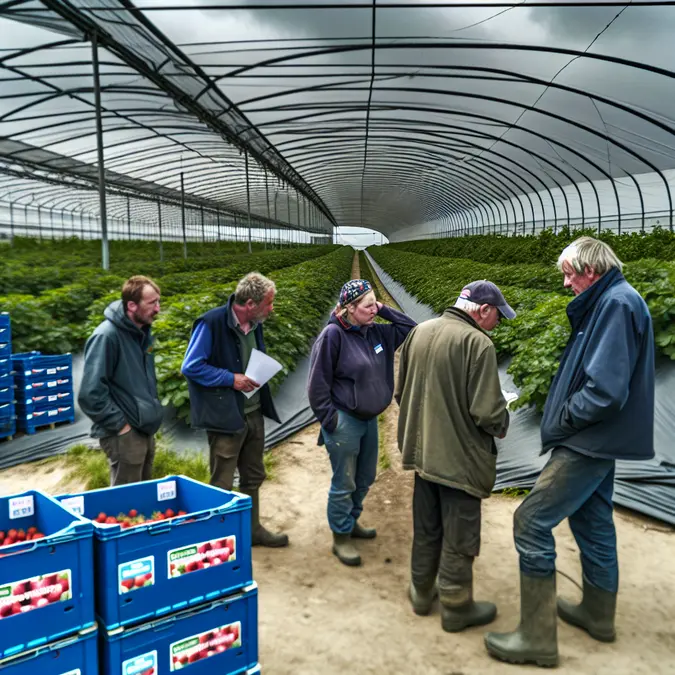
For berry growers, who face high upfront costs in plant stock, irrigation infrastructure and labor, five-year contracts can be transformative. They can underpin investment in protective cropping systems, new varieties, and automation. That, in turn, supports more consistent yields and quality for shoppers.
How Sainsbury’s £5bn investment reduces risk and volatility
Agricultural producers live with a unique combination of risks: weather extremes, disease pressures, commodity price swings, and shifting demand patterns. Traditional transactional relationships between supermarkets and farms leave much of that risk on the producer’s shoulders. In contrast, a long-term model can distribute risk more evenly across the value chain.
By working over five-year terms, Sainsbury’s and its partner farms can jointly plan volumes, variety mixes and quality specifications. They can also co-design sustainability targets. The retailer gains more secure access to British-grown produce at a time when global supply lines are vulnerable, while farmers gain predictable outlets for their crop. This model stands in line with emerging best practice identified by organizations such as the OECD, which has called for stronger vertical cooperation in food chains.
Inside the berry contracts: what 62 farms and five key partners mean
The berry extension of Sainsbury’s £5bn investment centers on five named partners: Angus Soft Fruit, Chambers, Soft Fruits Direct, J.O. Sims and Dyson Farming. These businesses act as pivotal aggregators and coordinators for a network of 62 British berry farms. While their structures differ, they all bridge the gap between individual growers and the demands of a national supermarket chain.
Long-term berry supply is complex. Growers must match peak production windows with retailer promotions, align packaging and quality standards, and adapt quickly to consumer preferences for varieties such as blueberries, raspberries, strawberries and blackberries. Locking these flows into five-year frameworks allows investment in better cold-chain infrastructure, smarter harvest management and research into varieties that deliver both flavor and resilience to climate stress.
For readers tracking sustainable sourcing and retailer accountability, this development adds a fresh-produce dimension to Sainsbury’s established long-term positions in meat and dairy. It indicates an intent to make long-termism the default approach across core fresh food categories, rather than an exception.
Seven critical shifts triggered by Sainsbury’s £5bn investment
To understand the full strategic impact of Sainsbury’s £5bn investment, it helps to break it down into the concrete shifts it could trigger for farmers, retailers, and consumers.
1. From transactional buying to strategic partnerships
Historically, supermarket procurement often focused on driving down unit costs through short-term tenders. Long-term contracts represent a pivot towards partnership. Sainsbury’s is, in effect, betting that tighter collaboration with 2,500 farms will deliver not only price stability but also higher quality, innovation and shared environmental gains.
This approach resonates with broader sustainability and ethical sourcing agendas, where retailers seek to show that they are not squeezing suppliers but co-creating value with them. Readers can see parallels with long-term coffee and cocoa sourcing programs highlighted regularly on Sustainability focused pages, but now applied to domestic fresh produce.
2. Stronger foundations for food security
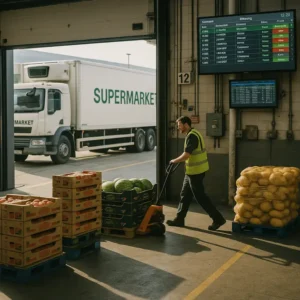
The UK imports a significant proportion of its fruit and vegetables, leaving supplies vulnerable to logistics disruptions and climate impacts in producer countries. By anchoring 3.1 million tonnes of homegrown fresh food in long-term deals, Sainsbury’s contributes to a more robust domestic supply base.
Food security is not simply about caloric availability. It is about reliable access to nutritious, diverse, safe food. Supporting British and Irish farmers through multi-year commitments bolsters local production capacity, protects skills in rural communities, and reduces exposure to external shocks. In times of crisis, supermarkets with secured domestic supply lines will be better positioned to maintain consistency on shelves.
3. Unlocking investment in technology and sustainability
Farmers can only justify sizable investments in technology—such as precision irrigation, robotics, and climate-smart infrastructure—if they have a reasonable expectation of return over several years. Long-term contracts provide that line of sight.
In the berry sector, this might mean new substrate systems, energy-efficient greenhouses, or AI-driven monitoring of crop health. These investments can cut waste, increase resource efficiency, and reduce emissions—central elements of most retailers’ net-zero roadmaps. The alignment of commercial security with sustainability goals is one of the most promising aspects of Sainsbury’s £5bn investment.
4. Encouraging data sharing and supply chain transparency
Multi-year relationships are ideal environments for deeper data collaboration. Retailers increasingly want real-time visibility into farm practices, yields and environmental indicators. Farmers, meanwhile, benefit from data on consumer trends, demand forecasts and category performance.
By working with a stable group of 2,500 farms, Sainsbury’s can roll out standardized reporting frameworks, traceability tools, and digital platforms that would be harder to implement under constantly shifting supplier lists. Over time, this can support more credible sustainability reporting, which in turn can be showcased for readers across Corporate Social Responsibility initiatives.
5. Potential ripple effects across the UK retail sector
When a leading supermarket scales up long-term contracts, competitors take notice. Other UK grocers have already experimented with similar models in milk, bread and livestock sectors. However, the breadth and value of Sainsbury’s £5bn investment, covering thousands of farms and multiple categories, could accelerate a “new normal” in retailer–farmer relations.
Farm businesses with mixed retail portfolios may begin to favor customers offering multi-year stability, pushing more supermarkets to adopt comparable frameworks. Over time, this could reduce the share of agricultural output sold on spot markets, especially in perishable fresh categories.
6. Rising consumer expectations around provenance and ethics
Consumers increasingly want to know where their food comes from and under what conditions it is produced. Initiatives that highlight long-term commitments to British and Irish farms create a clear narrative: buying from this retailer supports local jobs, domestic food security, and more predictable livelihoods for farmers.
If Sainsbury’s effectively communicates the scope of its commitments in stores and digital channels, shoppers may start to view long-term contracts as a marker of ethical sourcing in the same way they have come to recognize labels such as Fairtrade or organic. That, in turn, can boost brand loyalty and differentiate the retailer in a crowded marketplace.
7. New pressures and responsibilities for participating farms
Long-term contracts are not a one-way benefit. They come with expectations and performance obligations. Farmers who sign five-year deals must deliver consistently on quality, safety and volume. They will likely face stricter audits, environmental benchmarks, and traceability standards.
While this can raise costs and operational complexity, it can also drive professionalization across the sector. Producers that adapt quickly may gain a competitive edge and access to additional innovation funding or collaborative pilots with Sainsbury’s and other partners.
The broader context: climate, inflation and policy uncertainty
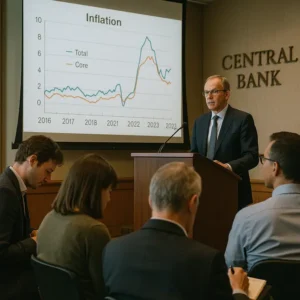
Sainsbury’s £5bn investment does not occur in a vacuum. British agriculture is under pressure from climate volatility, rising input costs, labor shortages and evolving post-Brexit trade rules. Many farm businesses have seen margins squeezed as energy, fertilizer and feed prices surged, while consumers have simultaneously faced higher food bills.
In this environment, long-term agreements can act as a stabilizing force. They cannot eliminate global shocks, but they can give farmers a degree of security to navigate them. Moreover, as governments refine agricultural support schemes and environmental land management policies, having a guaranteed commercial outlet gives producers more flexibility to participate in new public incentive programs without jeopardizing core income.
What readers should watch next
For professionals tracking the intersection of retail strategy, sustainability and agricultural policy, several questions will define the real impact of Sainsbury’s £5bn investment over the coming years:
- Contract transparency: How much detail will emerge about pricing mechanisms, risk-sharing arrangements and sustainability clauses?
- Measurable sustainability outcomes: Will the contracts lead to verifiable reductions in emissions, water use and waste across the 2,500 farms?
- Consumer communication: How effectively will Sainsbury’s translate this complex back-end strategy into clear messages for shoppers?
- Competitive response: Will rival supermarkets adopt similar or even more ambitious long-term models with their own supplier bases?
- Farmer sentiment: Over time, will participating farmers report higher resilience, profitability and capacity to invest?
The answers will determine whether this initiative becomes a benchmark in retailer–farmer collaboration, or remains a high-profile but isolated program.
“Long-term contracts will not solve every challenge facing British farming, but they change the conversation. Instead of haggling over next season’s prices, retailers and farmers can plan together for the next decade of food security and sustainability.”
Conclusion: Sainsbury’s £5bn investment as a blueprint for resilient food systems
As the food industry confronts the intertwined crises of climate change, supply chain fragility and cost-of-living pressures, the structure of relationships between supermarkets and farmers matters more than ever. Sainsbury’s £5bn investment in multi-year agreements with 2,500 British and Irish farms offers a concrete blueprint for a more stable and collaborative model.
By expanding long-term contracts across berries, pork, poultry and dairy, Sainsbury’s is betting that security for farmers can coexist with competitive pricing for consumers and credible progress on sustainability. If this approach delivers the promised 3.1 million tonnes of homegrown fresh food while enabling farms to invest, innovate and decarbonize, it will stand as a powerful example for the wider sector.
For readers of tnsmi-cmag.com, the key takeaway is clear: the future of responsible food retail will depend not just on what appears on the shelf, but on how retailers design the long-term frameworks that support producers behind the scenes. Sainsbury’s £5bn investment may be one of the first large-scale tests of that future.