
 0
0
 0
0
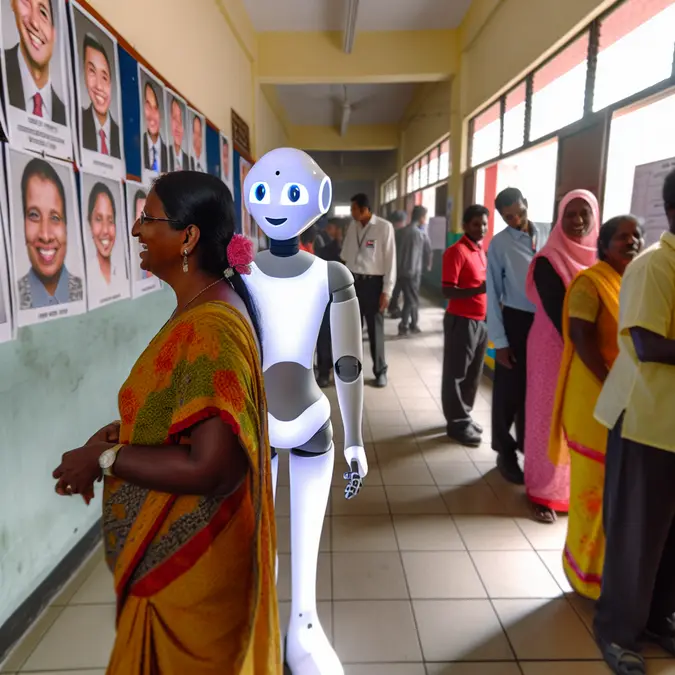
www.tnsmi-cmag.com – Nila the Robot greeting voters at a Puducherry polling station during the 2026 Assembly elections is more than a novelty story; it is a vivid signal of how artificial intelligence and robotics are beginning to reshape the experience of democratic participation across India and beyond.
Nila the Robot and the Dawn of AI-Assisted Voting Experiences
At the VOC Government School in Puducherry, Nila the Robot welcomed citizens as they arrived to cast their ballots, guiding them through entry points and basic procedures. On the surface, it looked like a charming, futuristic gesture. At a deeper level, it represents a crucial test case: can humanoid or service robots enhance trust, efficiency, and accessibility at polling stations without undermining the integrity or neutrality of the electoral process?
This moment fits within a broader global trend. Governments and election bodies are cautiously exploring how digital tools, from biometric verification systems to AI-driven logistics, can support the complex task of running large-scale, secure elections. India, which already operates one of the world’s largest democratic exercises, has become an important laboratory for such innovations.
For readers following developments in Technology and governance, Nila’s appearance is not an isolated curiosity. It is a case study in how human-centered design, robotics, and public policy intersect at the polling booth.
Why Nila the Robot Matters for India’s Democratic Infrastructure
To understand why Nila the Robot captured attention, we need to recognize how sensitive and complex election management has become. Modern elections demand:
- Secure and verifiable processes.
- Efficient handling of large voter volumes.
- Inclusive access for people with disabilities, the elderly, and first-time voters.
- Clear, trustworthy communication in multiple languages and literacy levels.
A robot at a polling station can theoretically contribute to several of these objectives, especially in terms of information delivery, crowd management, and accessible guidance. At VOC Government School, Nila greeted voters and offered directions, easing confusion and reducing pressure on human polling staff. That may sound modest, but in tightly timed election logistics, even small efficiency gains matter.
Furthermore, India’s Election Commission has consistently explored technological enhancements, from electronic voting machines (EVMs) to the use of voter-verifiable paper audit trails (VVPATs). In that context, Nila’s deployment looks like the next step in a gradual evolution rather than a radical leap.
Nila the Robot: 7 Powerful Shifts in Voter Experience
What does Nila the Robot practically change for voters walking into a polling station? While the specific deployment in Puducherry was limited in scope, it helps us map out seven powerful shifts in how voters may experience elections in the near future.
1. Nila the Robot as a Friendly Interface to Reduce Anxiety
Many voters, especially first-timers or elderly citizens, feel intimidated by formal institutions. Security personnel, long queues, and procedural instructions can create anxiety. A humanoid or service robot with a friendly voice and structured instructions can reduce that psychological barrier.
In Puducherry, Nila reportedly greeted voters and guided them toward the correct entry points. This kind of interaction can:
- Make the environment feel more welcoming.
- Encourage hesitant voters to ask basic procedural questions.
- Normalize the act of voting as a modern, accessible civic duty.
Internationally, we have already seen similar roles for customer-service robots in airports and shopping centers, where they handle repetitive inquiries and directions. By adapting these lessons to the electoral context, India is cautiously testing whether robots can create a calmer, more user-friendly voting environment.
2. Streamlining Polling Station Flow and Reducing Bottlenecks
One of the chronic challenges in elections is crowd management. Poorly organized queues and unclear signage can suppress turnout by frustrating voters who cannot afford long waits. Nila the Robot addresses this challenge by acting as a dynamic guide.
Instead of static posters or overworked staff shouting instructions, a robot can offer step-by-step guidance in multiple languages, adjusting its responses to voter questions. That may include:
- Directing voters to the correct queue based on their polling number or list.
- Explaining the sequence: identification, verification, ballot casting, and exit.
- Reminding voters to keep ID documents ready, reducing delays at the verification desk.
In a high-turnout setting like a national or state election, even a modest improvement in throughput per hour can reduce congestion and potential conflict in crowded polling centers.
3. Enhancing Accessibility for Voters with Special Needs
Accessibility is not merely a convenience; it is a legal and ethical requirement. Democracies must ensure that people with disabilities, reduced mobility, or cognitive challenges can participate fully. Here, Nila the Robot hints at a significant opportunity.
Robots can be programmed to:
- Offer spoken instructions for visually impaired voters.
- Provide simplified, step-by-step guidance for those with cognitive difficulties.
- Point out or call staff to provide physical assistance where needed.
According to global standards discussed by organizations such as the United Nations Department of Economic and Social Affairs, inclusive participation is central to sustainable democracies. Intelligent, responsive tools like Nila can help bring these standards to life inside the polling booth.
4. Building Digital Literacy and Trust in Election Technology
Public trust is the cornerstone of elections. Technology can either strengthen or weaken that trust depending on how it is introduced and explained. Nila the Robot contributes by making technology visible, approachable, and clearly limited in function.
Nila does not count votes, alter results, or access voter choices. Instead, it serves as a digital usher — a transparent, visible assistant that helps people navigate analog and digital election processes.
This distinction matters. By interacting with a robot that helps with directions and information but not with ballot handling, voters can become more comfortable with the presence of technology at polling stations without fearing manipulation. Over time, this comfort can translate into more open attitudes toward secure digital tools that support, but do not replace, human oversight.
5. Showcasing India’s Innovation Capacity on the Global Stage
From the outside, Nila the Robot doubles as a soft-power story. It demonstrates that Indian institutions are not merely adopting global technologies but experimenting with localized, culturally relevant deployments.
India already attracts global attention for the scale of its elections. According to public data on elections in India, hundreds of millions of voters participate across diverse linguistic and geographic contexts. A robot stationed at a government school in Puducherry may appear symbolic, but symbolism matters. It sends a message that the world’s largest democracy is ready to explore responsible innovation in civic infrastructure.
6. Freeing Human Staff for High-Value, Sensitive Tasks
Polling personnel often juggle routine, repetitive tasks (answering the same directional questions, managing queues) and highly sensitive duties (identity verification, ballot handling, incident reporting). When a system like Nila the Robot takes on part of the routine workload, human staff can focus on oversight, dispute resolution, and legal compliance.
This shift has several advantages:
- Reduced cognitive load on polling staff, lowering the risk of human error.
- Faster resolution of complaints or confusion.
- More attentive supervision of ballot boxes and EVMs, where human judgment is irreplaceable.
By treating robots as support tools rather than replacements, election authorities can build hybrid human–machine systems that are more resilient than either alone.
7. Creating a Blueprint for Future Smart Polling Stations
Perhaps the most important impact of Nila the Robot lies in what comes next. Once election officials observe how voters respond to a robot, they can refine technical specifications, ethical guidelines, and deployment protocols for future elections.
Potential evolutions include:
- Standardized robot scripts vetted by election commissions to ensure neutrality.
- Integration with real-time crowd data to redirect voters to less busy times or booths.
- Special modules for civic education, explaining the importance of voting while maintaining strict neutrality among parties and candidates.
In effect, Nila serves as a live pilot project. It helps administrators understand not only what is technologically possible, but also what is socially acceptable and operationally practical.
Ethical and Practical Challenges: Where We Must Draw the Line
While the deployment of Nila the Robot is promising, it raises important questions that policymakers and technologists must address directly.
Guarding Against Perceived Bias and Manipulation
Any entity present inside or near a polling station, whether human or machine, must appear politically neutral. Even subtle design choices — such as color schemes, voice tonality, or phrasing — could be misinterpreted as favoring one party or ideology.
Therefore, future iterations of robots like Nila will need:
- Strict oversight by election regulators on dialogue scripts and behaviors.
- Regular audits to ensure no data collection beyond basic interaction metrics.
- Clear, public communication that the robot cannot see, record, or infer voters’ choices.
Independent monitoring — by accredited observers, civil society groups, or academic researchers — can further strengthen trust and accountability.
Data Privacy and Cybersecurity
Even if Nila the Robot performs only simple tasks today, future versions may integrate with networked systems that manage voter flow or logistics. This raises data protection and cybersecurity issues.
Best practices, aligned with global frameworks such as those discussed by OECD digital policy reports, would require:
- Minimal data collection, strictly limited to operational needs.
- Offline or highly secured modes during active polling to reduce cyber risk.
- Transparent disclosure of what data, if any, is stored, for how long, and by whom.
Without robust safeguards, the presence of intelligent devices could inadvertently introduce vulnerabilities that undermine the very trust they are meant to enhance.
Closing the Digital Divide
Robots at polling booths may inspire enthusiasm among urban, tech-savvy voters, but they could also intimidate people with limited digital exposure. Election authorities must therefore:
- Complement robots with human assistants, especially for those uncomfortable with technology.
- Ensure that all critical instructions remain available in analog formats — posters, printed guides, and face-to-face explanations.
- Test robot interfaces with diverse demographic groups before wide deployment.
Inclusivity demands that innovation never becomes a barrier to participation.
India’s Broader Journey Toward Smart Civic Infrastructure
Nila the Robot sits within a larger national story of integrating advanced technologies into public services. From digital identity systems to real-time dashboards tracking public welfare schemes, India has invested heavily in digital public infrastructure. Elections, as one of the most visible democratic processes, have naturally become part of that ecosystem.
For readers who follow governance, policy, and Innovation, Nila’s Puducherry deployment demonstrates how experimental pilots can yield valuable insights even when they are small in scale.
If designed and governed carefully, robots in civic spaces could eventually:
- Support multilingual information delivery in linguistically diverse regions.
- Assist in emergency communication and crowd safety during unexpected incidents.
- Provide neutral, standardized procedural information that reduces the risk of human miscommunication.
Each of these functions aligns with the long-term goal of making democratic participation more accessible, transparent, and resilient.
Conclusion: Nila the Robot and the Future of Human–Machine Democracy
The appearance of Nila the Robot at the VOC Government School polling station in Puducherry may seem like a small chapter in the vast story of India’s elections, yet it captures a pivotal transition. As governments worldwide experiment with AI and robotics, the real question is not whether technology will enter democratic spaces, but how it will do so — under what rules, with what oversight, and to what end.
Handled responsibly, Nila shows that robots can make voting more intuitive, more inclusive, and more efficient, while leaving core democratic decisions firmly in human hands. Handled carelessly, the same technologies could erode trust and fuel fears of manipulation. The difference will lie in transparent governance, ethical design, and constant public scrutiny.
For now, Nila the Robot stands as a striking symbol of a possible future: one where citizens are still at the center of democracy, but are welcomed, guided, and supported by intelligent tools that make the act of voting simpler, safer, and more dignified.