
 0
0
 0
0
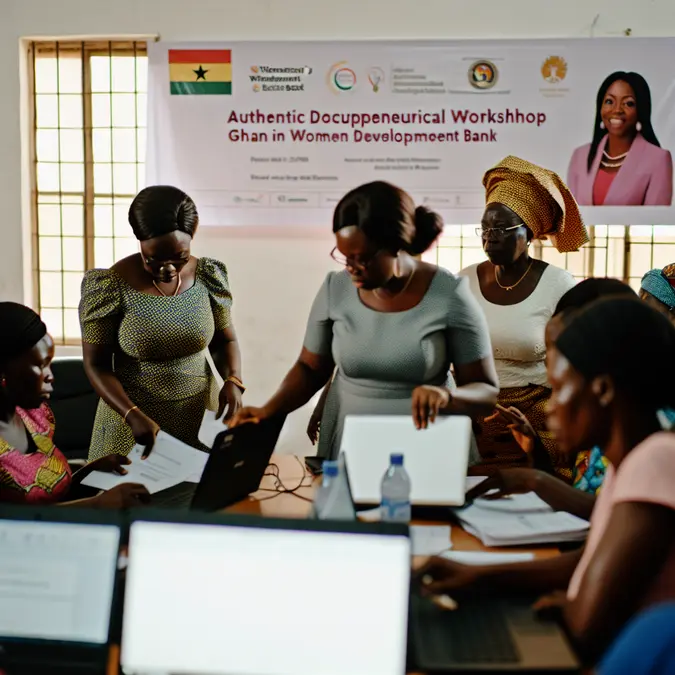
www.tnsmi-cmag.com – The planned Women’s Development Bank in Ghana is rapidly becoming a flagship symbol of the country’s ambition to anchor economic recovery on inclusive, gender-responsive growth, as Vice President Prof. Naana Jane Opoku-Agyemang reiterates government’s commitment to launch the institution.
Women’s Development Bank and Ghana’s New Economic Vision
The Women’s Development Bank is not just another state-backed financial institution. It forms part of a broader effort to redesign Ghana’s economic model so that women-owned businesses, community enterprises, and informal sector players gain a fair share of credit, markets, and opportunity. According to international research by bodies such as the World Bank, women remain significantly underserved by traditional banking systems, despite their proven repayment discipline and central role in household welfare.
When Prof. Naana Jane Opoku-Agyemang speaks about the Women’s Development Bank, she is tapping into a global policy trend: governments are acknowledging that inclusive finance is both a social justice imperative and a sound economic strategy. For Ghana, facing fiscal constraints and inflationary pressure, unlocking the productive potential of women-led enterprises is a critical lever for resilience.
Readers should see this initiative not as a niche project, but as a structural policy tool designed to address deep-seated gaps in access to capital, financial literacy, and market participation for women. If properly implemented, the Women’s Development Bank could help reshape credit allocation, support formalization of informal businesses, and strengthen social protection from the ground up.
Why the Women’s Development Bank Matters Now
The timing of the Women’s Development Bank is particularly significant. Ghana, like many emerging economies, is contending with high borrowing costs, a weakened currency, and constrained fiscal space. In such an environment, directing scarce resources toward a Women’s Development Bank sends a deliberate policy signal: gender equality and economic efficiency are being treated as mutually reinforcing priorities.
Furthermore, the COVID-19 pandemic exposed the vulnerabilities of women entrepreneurs, especially those in the informal sector and micro, small, and medium-sized enterprises (MSMEs). Many women-owned businesses faced sharp revenue declines, limited access to stimulus packages, and higher household care burdens. A dedicated Women’s Development Bank provides a structured channel for tailor-made instruments such as:
- Low-interest working capital loans for micro and small enterprises.
- Credit lines combined with financial literacy and business training.
- Guarantee schemes that de-risk lending by commercial banks to women-owned firms.
- Digital savings and micro-insurance products aligned with women’s income patterns.
As international examples from institutions like India’s Bharatiya Mahila Bank and other gender-focused funds show, such specialized institutions can significantly narrow the finance gap if paired with robust governance and performance monitoring.
Women’s Development Bank: 7 Critical Insights Shaping the Project
To unpack the strategic weight of this initiative, we outline seven critical insights that will determine whether the Women’s Development Bank becomes a transformative engine for inclusive growth or a missed opportunity.
1. The Policy Anchor: Economic Empowerment, Not Symbolism
First, the Women’s Development Bank must be understood as a policy anchor for economic empowerment, not merely a symbolic gesture. The Vice President’s update underscores that government sees the bank as a cornerstone of its empowerment agenda. That means success will be judged less by the grandness of its launch and more by:
- The volume and quality of credit extended to women-owned enterprises.
- The number of women integrated into formal banking for the first time.
- Improvements in household income, job creation, and local value addition.
For policymakers, this demands tight alignment between the bank’s mandate and national development strategies, including industrial policy, agriculture modernization, and youth employment programs. For readers tracking Ghana’s policy evolution, this alignment will be a key indicator of seriousness.
2. Governance of the Women’s Development Bank Will Make or Break It
Contrary to popular belief, capital alone does not guarantee a successful development bank. Governance, risk management, and operational independence are decisive. The Women’s Development Bank will need a board and management team with deep experience in development finance, gender-sensitive programming, and digital banking.
To preserve credibility, the institution must maintain clear lending criteria, transparent reporting, and robust safeguards against political interference in credit decisions. Independent audits, public performance dashboards, and parliamentary oversight can reinforce public trust and reassure both domestic and international partners.
Readers familiar with development banking in Africa know that weak governance has undermined otherwise noble initiatives in the past. The Women’s Development Bank has an opportunity to set a new benchmark for accountability and results-oriented management in Ghana’s public financial institutions.
3. Designing Products Around Women’s Real Needs
Effective product design will define how relevant the Women’s Development Bank becomes to its core clients. Women often manage irregular cash flows, combine multiple income streams, and shoulder disproportionate unpaid care responsibilities. As a result, rigid collateral requirements and inflexible repayment schedules can exclude them from traditional financing.
The Women’s Development Bank can differentiate itself by:
- Accepting alternative forms of collateral, such as group guarantees, purchase orders, or digital transaction histories.
- Offering flexible repayment cycles aligned with agricultural seasons or market trading patterns.
- Bundling credit with mentorship, bookkeeping tools, and market access platforms.
In addition, the institution should prioritize sectors where women already have strong presence—agri-processing, retail trade, textiles, hospitality, and creative industries—while encouraging diversification into higher value-added sectors such as technology, renewable energy, and professional services.
4. Digitalization: Reaching Women Beyond Urban Centers
Another critical insight is the role of digitalization. Many women entrepreneurs operate in smaller towns and rural communities where physical bank branches are scarce. To prevent the Women’s Development Bank from becoming an urban-centric institution, a digital-first strategy is essential.
This could include mobile banking applications with low data requirements, USSD-based services for feature phones, and partnerships with fintechs and mobile money operators. By leveraging Ghana’s high mobile penetration, the bank can expand reach, reduce transaction costs, and gather valuable data on client behavior.
Digital identity, e-KYC (electronic know-your-customer), and remote onboarding will be particularly important in integrating women who lack formal documentation or proof of address. If executed well, these tools can shorten the distance between policy ambition and day-to-day financial inclusion.
5. Integrating the Bank into a Wider Ecosystem
Readers should also consider how the Women’s Development Bank fits into Ghana’s broader financial and policy ecosystem. No single institution can close the gender finance gap alone. Collaboration with commercial banks, microfinance institutions, cooperatives, and NGOs will be essential.
Strategic partnerships could include:
- Co-lending programs where commercial banks provide funding while the Women’s Development Bank shares risk and technical support.
- Capacity-building alliances with business development service providers that coach women entrepreneurs from idea stage to growth phase.
- Joint programs with ministries responsible for trade, agriculture, and education to align finance with sector-specific priorities.
On the policy front, the success of the Women’s Development Bank will hinge on complementary reforms—simplifying business registration, improving land titling for women, and enforcing anti-discrimination provisions in lending practices. Without these, finance alone may not translate into structural empowerment.
6. Measuring Impact: From Inputs to Transformative Outcomes
To justify ongoing budgetary support and attract external funding, the Women’s Development Bank must demonstrate clear, measurable impact. Prof. Naana Jane Opoku-Agyemang’s public update suggests that government understands the need for accountability, but the details will matter.
Key performance indicators might include:
- Number and value of loans disbursed to first-time women borrowers.
- Survival and growth rates of funded enterprises over three to five years.
- Jobs created or sustained, disaggregated by gender and age.
- Increases in tax compliance and formalization among supported businesses.
Beyond numbers, qualitative assessments—case studies, client satisfaction surveys, and independent evaluations—will help policymakers understand how the Women’s Development Bank is changing lives on the ground. This evidence can also inform improvements over time.
For deeper context on how development banks measure their results, readers can explore international frameworks referenced by institutions such as the OECD, which emphasize transparency, sustainability, and alignment with the Sustainable Development Goals (SDGs).
7. Building Public Confidence and Political Continuity
Finally, any long-term financial institution requires stability across political cycles. The Women’s Development Bank will succeed only if successive governments recognize its strategic value and shield it from abrupt policy shifts or patronage pressures.
To secure this continuity, the founding legal framework should clearly define the bank’s mandate, capital structure, and governance principles. Public engagement—through regular updates, media briefings, and open data on performance—can also build citizen ownership and reduce the risk that the project is seen as partisan.
In this context, the Vice President’s update is more than a routine statement; it is part of a broader effort to assure stakeholders that the Women’s Development Bank is moving from concept to execution. Clear timelines, published implementation milestones, and transparent stakeholder consultations will further strengthen credibility.
Regional and Global Lessons for the Women’s Development Bank
Ghana is not operating in isolation. Regional experiences offer both inspiration and caution. Across Africa, gender-targeted credit schemes, women’s funds, and dedicated financial institutions have produced mixed results. Where governance has been strong and product design carefully tailored, impact has been substantial. Where institutions have been undercapitalized, politicized, or poorly supervised, outcomes have been disappointing.
Global best practice suggests that the Women’s Development Bank should adopt a hybrid model: combining development banking discipline with social policy objectives. It can lend directly to promising enterprises while also financing intermediaries that specialize in last-mile outreach. It can serve urban growth firms and rural cooperatives alike, provided risk is managed prudently.
Readers who follow Business and economic policy will recognize that this model requires patience. The full benefits of a development bank rarely materialize within a single electoral cycle. However, when anchored in strong institutions, they can reshape an economy’s trajectory for decades.
Opportunities for Stakeholders: From Entrepreneurs to Investors
The emerging Women’s Development Bank ecosystem opens concrete opportunities for multiple stakeholders:
- Women entrepreneurs can prepare to leverage new financing windows by strengthening their business plans, improving record-keeping, and seeking training in digital tools.
- Private investors and impact funds may find co-investment opportunities in sectors where the bank provides early-stage de-risking.
- Business associations and civil society can play a watchdog role, advocating for fair access and monitoring implementation.
- Academia and think tanks have a role in generating data and policy analysis to refine the bank’s strategy over time.
For readers of Politics and governance, the Women’s Development Bank also offers a lens into how public institutions can be redesigned to serve groups historically left at the margins of formal finance.
Conclusion: Women’s Development Bank as a Test of Policy Credibility
The Women’s Development Bank stands at the intersection of economic necessity and social justice. In reaffirming the government’s commitment to its launch, Prof. Naana Jane Opoku-Agyemang has raised expectations among women entrepreneurs, policy analysts, and international observers alike. Whether these expectations are met will depend on the rigor of implementation, the strength of governance, and the depth of collaboration with the wider financial ecosystem.
If Ghana succeeds, the Women’s Development Bank could become a model for inclusive finance in West Africa—demonstrating that a well-designed, well-governed public institution can crowd in private capital, expand opportunity, and support sustainable growth. For readers tracking the future of inclusive development, the evolution of the Women’s Development Bank will remain a critical story to watch.