
 0
0
 0
0
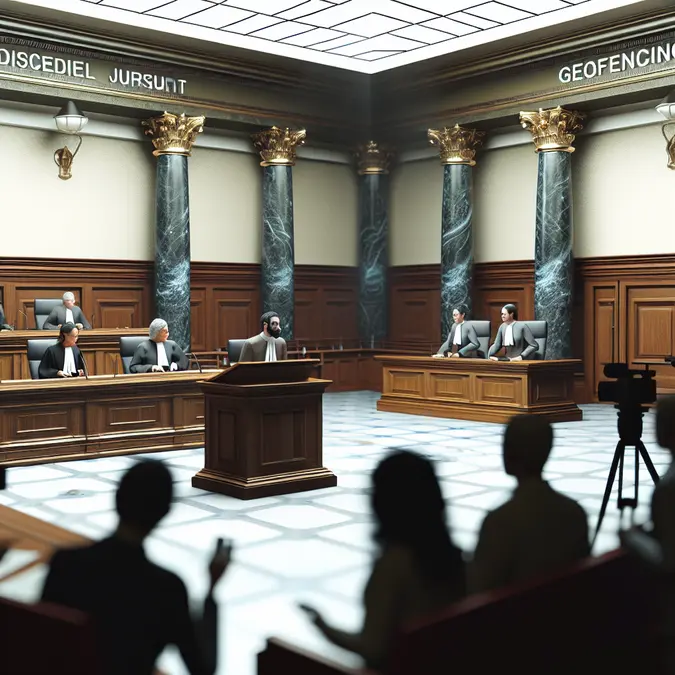
www.tnsmi-cmag.com – Geofencing warrants sit at the center of a fast‑escalating constitutional clash, as the New Civil Liberties Alliance (NCLA) asks the U.S. Supreme Court to rule that these digital dragnet searches violate the Fourth Amendment in the case of Okello T. Chatrie v. United States.
Geofencing Warrants and the Fourth Amendment: Why This Case Matters Now
In recent years, law enforcement agencies across the United States have quietly adopted geofencing warrants as a powerful new investigative tool. By compelling technology companies such as Google to reveal location data on every device within a defined geographic area during a specific time window, police can rapidly generate lists of potential suspects, witnesses, or bystanders.
Supporters argue that this technology helps solve serious crimes in a data‑driven era. Critics counter that it turns everyone carrying a smartphone into a potential suspect and shatters the core Fourth Amendment protection against unreasonable searches and seizures. That conflict is now coming to a head in Okello T. Chatrie v. United States, where NCLA has urged the Supreme Court to step in and declare that such warrants are unconstitutional.
The outcome could reshape how law enforcement uses digital location data, much as the Court’s landmark decisions in Carpenter v. United States (cell-site location data) and Riley v. California (smartphone searches) rewrote the rules for the mobile age.
What Are Geofencing Warrants?
At their core, geofencing warrants require a technology provider to search its massive databases of historical location information and identify all devices that were present within a virtual perimeter—or “geofence”—around a crime scene during a particular time frame.
Typically, the process unfolds in three escalating stages:
- Step 1 – Initial Sweep: Police define a geographic radius and time window. The provider returns anonymized identifiers for every device that crossed that geofence.
- Step 2 – Narrowing the List: Investigators ask for additional movement data to see where those devices went before and after the incident, helping to narrow the pool.
- Step 3 – De‑anonymization: For the devices of greatest interest, police request subscriber identities and full user information.
Unlike traditional warrants, which must describe with particularity the person or place to be searched, geofencing warrants start from the opposite direction: they target an entire area first and then work backward to figure out who might be involved. This reversal is precisely what civil libertarians say collides with centuries of Fourth Amendment doctrine.
Okello T. Chatrie v. United States: A Crucial Test Case
The Chatrie case arises from an armed robbery at a bank in Virginia. Lacking a named suspect, police turned to Google for help, seeking location data for every device near the bank at the time of the crime. That request, issued as a geofencing warrant, ultimately led investigators to Okello T. Chatrie, who was later convicted.
NCLA now contends that the entire investigative chain was constitutionally tainted because the initial warrant amounted to a digital general search. According to the alliance, the government demanded information on dozens or even hundreds of uninvolved individuals who happened to be near the bank—people going about ordinary activities like visiting ATMs, driving past the branch, or working nearby.
For readers following the evolving relationship between technology and civil liberties, the stakes are high. If the Supreme Court agrees to hear the case and rules that geofencing warrants are unconstitutional, it could sharply limit one of law enforcement’s most aggressive data‑driven tools. If the Court declines to intervene, lower courts may continue to diverge, creating a patchwork of standards across the country.
How Geofencing Warrants Challenge Traditional Fourth Amendment Principles
The Fourth Amendment protects “the right of the people to be secure in their persons, houses, papers, and effects, against unreasonable searches and seizures” and requires that warrants particularly describe the place to be searched and the persons or things to be seized. Legal scholars argue that geofencing warrants threaten at least three core pillars of that protection.
Geofencing Warrants and the Ban on General Warrants
American constitutional history is deeply shaped by the rebellion against “general warrants” and “writs of assistance” used by British authorities in the 18th century. Those broad orders allowed indiscriminate searches, which the Framers responded to with strict particularity requirements.
Opponents of geofencing warrants contend that digital dragnets reintroduce the very practices the Fourth Amendment was designed to prevent, only now at unprecedented scale and precision. Instead of searching one home or one person, authorities can effectively search the movements of an entire neighborhood with a few keystrokes.
The Reasonable Expectation of Privacy in Location Data
Another key question centers on whether individuals retain a reasonable expectation of privacy in the historical location data stored by private companies. In Carpenter, the Supreme Court held that accessing seven days of cell‑site location information constitutes a search under the Fourth Amendment, requiring a warrant.
Geofencing warrants go further. They often sweep up data on every device in the area, without any individualized suspicion. Critics say this makes the search far more invasive than the narrow, person‑specific records at issue in Carpenter. Because location data can reveal intimate details about religion, health, political activity, and personal relationships, mass access to such information raises profound privacy concerns.
Particularity and Probable Cause in the Digital Age
Traditional warrants rely on a direct link between probable cause and a particular suspect or place. In contrast, geofencing warrants typically begin with a crime and an area, not a known suspect. The government then casts a wide net, hoping that one of the captured devices belongs to the perpetrator.
That inversion raises two critical doctrinal problems:
- Probable Cause: Instead of probable cause for each device searched, law enforcement often relies on a generalized theory that the real suspect must be somewhere within the geofence.
- Particularity: Warrants may lack precise limits on whose data will be seized, leading to the collection of information on wholly innocent people with no connection to the alleged crime.
NCLA and other advocates argue that allowing such warrants would erode the very notion of individualized suspicion and transform the Fourth Amendment into a mere formality in the era of mass data collection.
Law Enforcement’s Case for Geofencing Warrants
Supporters of geofencing warrants stress their effectiveness in solving complex cases, particularly when there are no eyewitnesses and few leads. For investigators, the technology offers a powerful bridge between the physical world of crime scenes and the digital footprints that most people leave behind.
Police and prosecutors frame geofencing as a modern counterpart to canvassing a neighborhood or asking nearby businesses for surveillance footage. They argue that with judicial oversight and careful minimization procedures, these warrants can be tailored to reduce unnecessary exposure of bystanders’ data while still enabling vital investigative work.
Some courts have been receptive to these arguments, especially where law enforcement narrowed the geofences and followed staged review processes that limited the pool of de‑anonymized users. Others have expressed deep misgivings, underscoring why Supreme Court guidance is increasingly sought.
Tech Companies, Transparency, and User Trust
Another powerful force in the debate over geofencing warrants is the role of technology companies, especially Google, which maintains one of the world’s largest repositories of historical location data through products like Android, Google Maps, and Location History.
Public reporting and transparency reports have revealed a sharp increase in these warrants over the past decade. As awareness grows, so does concern among users who did not fully realize that detailed records of their daily movements might be stored and later shared under court order.
For readers following the business and policy side of the tech industry, this tension feeds into broader questions about data minimization, default privacy settings, and how companies communicate risks. It also connects directly to ongoing debates about regulation and civil liberties, similar to issues explored in our coverage of Cyber Security and digital rights.
Broader Civil Liberties Implications
The Chatrie case is not only about one defendant or one bank robbery. It is about how far the state may reach into the vast troves of behavioral data that define modern life. As geofencing warrants become more common, their use could extend beyond violent crimes into areas such as protest monitoring, immigration enforcement, or minor offenses.
Civil liberties groups warn that if left unchecked, geofencing could chill lawful activities. People may fear attending political rallies, visiting sensitive locations such as clinics or houses of worship, or meeting sources and clients, knowing that their mere presence in a digital dragnet might later draw scrutiny.
This debate resonates strongly with wider themes addressed in our technology and policy reporting, and parallels concerns raised in other contexts where pervasive surveillance has been normalized. For further background on how legal standards evolve alongside innovation, readers may find our analyses in Economie relevant, especially where regulation impacts business models and consumer behavior.
What the Supreme Court Could Decide
If the Supreme Court grants review in Okello T. Chatrie v. United States, several possible outcomes could define the future of geofencing warrants:
- Bright-Line Ban: The Court could hold that geofencing warrants are categorically unconstitutional as modern analogues of general warrants.
- Strict Limits: The Court might allow their use only under narrow, highly specific conditions, such as sharply limited time windows, minimal geographic radius, and strong minimization protocols.
- Case‑by‑Case Approach: The Justices could set high‑level guidelines but leave much discretion to lower courts to evaluate individual warrants.
- Deference to Law Enforcement: Alternatively, the Court could uphold existing practices, emphasizing investigative necessity and judicial oversight.
Each outcome would carry significant implications, not just for criminal procedure, but also for the broader ecosystem of data‑driven services, user expectations of privacy, and the development of new investigative technologies.
How Readers and Institutions Should Prepare
Regardless of how the immediate litigation unfolds, organizations that handle sensitive location data, from app developers to financial institutions and healthcare providers, should closely watch the trajectory of geofencing warrants. Anticipating legal change is often less costly than reacting to it after the fact.
Key steps include:
- Data Minimization: Collect and retain only the location data that is genuinely necessary for service delivery.
- Clear User Disclosures: Ensure that privacy policies plainly explain what is stored, for how long, and under what legal conditions it may be shared.
- Law Enforcement Guidelines: Establish internal protocols for assessing and responding to warrant requests, including mechanisms to push back against overbroad demands.
- Cross‑Functional Governance: Involve legal, compliance, security, and product teams in evaluating the risks and responsibilities associated with location‑based features.
For individual users, understanding how and where their devices store location histories, and what control settings exist, is an increasingly important component of digital literacy.
Conclusion: Geofencing Warrants and the Future of Constitutional Privacy
As NCLA presses the Supreme Court to rule in Okello T. Chatrie v. United States, the debate over geofencing warrants encapsulates a central challenge of our time: how to preserve enduring constitutional protections in a world where every movement can be logged, stored, and analyzed. Whether the Court ultimately imposes strict limits, carves out narrow allowances, or defers to evolving practices, its response will signal how far the Fourth Amendment reaches into the data‑saturated realities of modern life.
For readers, policymakers, and businesses alike, the coming decisions will help define not just what the government may do in the name of public safety, but also what privacy and anonymity mean in an era where smartphones rarely leave our hands. However the Court rules, geofencing warrants will remain a touchstone in the ongoing struggle to balance security, innovation, and the fundamental freedoms that anchor democratic societies.