
 0
0
 0
0
www.tnsmi-cmag.com – The West Bengal supplementary voters list set for publication today has become far more than a routine electoral update; it is a decisive test of India’s institutional capacity to protect voting rights, manage social anxieties, and maintain law and order in one of the country’s most politically sensitive states.
West Bengal supplementary voters list and why it matters now
The Election Commission of India (ECI) will publish the first West Bengal supplementary voters list under the Special Summary Revision (SSR) and Special Intensive Revision (SIR) of the electoral rolls. On paper, this is an administrative step. In reality, it carries extraordinary political and social weight.
According to multiple national dailies, today’s list will help determine the electoral future of approximately 27.2 lakh voters, while nearly 60 lakh residents across rural Bengal anxiously await the outcome of objections and adjudications on their eligibility. For about 8.6% of the state’s electorate, as reported by The Times of India, this supplementary roll is not just data; it is the line that separates full citizenship participation from disenfranchisement.
To handle the expected volume of appeals, the ECI has reportedly constituted 19 appellate tribunals in West Bengal, creating a structured mechanism to review complaints, corrections, and alleged wrongful inclusions or deletions in the rolls. At the same time, the Commission has flagged a policy of "zero tolerance" for unrest around the publication, while a bandh call in some areas has further raised security concerns.
For readers seeking a broader context on Indian elections, the institutional framework and the conduct of polls are documented in detail on Wikipedia's Election Commission of India entry, which underscores why each revision of rolls is so closely watched.
How the West Bengal supplementary voters list process works
To understand why today’s development is so consequential, it helps to break down how the West Bengal supplementary voters list is prepared and what checks exist to protect voters.
West Bengal supplementary voters list and the revision framework
India’s electoral rolls are living documents. They are periodically revised to:
- Add new voters reaching the age of 18.
- Delete names of the deceased or people who have permanently relocated.
- Correct errors in names, addresses, and demographic details.
- Address objections to alleged bogus or duplicate entries.
In West Bengal, the current exercise is happening under a Special Intensive Revision (SIR), which generally involves deeper field verification and more extensive door-to-door checks than a routine summary revision. That is why the roll update has triggered heightened attention and anxiety in villages and semi-urban pockets where documentation is often fragmented and families’ residential histories are complex.
For additional background on how civic data and citizens’ rights intersect in India, readers can explore our coverage under Politics and long-form explainers in the Governance section.
The role of 19 appellate tribunals
One of the most significant institutional responses to the tensions around the list has been the formation of 19 appellate tribunals in West Bengal. These bodies serve several crucial functions:
- Independent review of decisions made by local electoral registration officers.
- Legal recourse for voters whose names were deleted or not included despite filing proper forms.
- Structured adjudication of objections raised by political parties or citizens about allegedly ineligible voters.
- Time-bound resolution to ensure the final roll is ready well before the next major electoral event.
These tribunals, typically presided over by senior administrative or judicial officers, form a critical buffer between grassroots administrative actions and the constitutional guarantee of universal adult suffrage. Their existence reflects both the scale of disputes and the state’s attempt to provide due process.
Anxiety in Bengal's villages: Documentation, identity and fear
Parallel to the technical process of compiling the West Bengal supplementary voters list runs a more human narrative documented by several national newspapers: anxiety, confusion, and in some cases, deep fear.
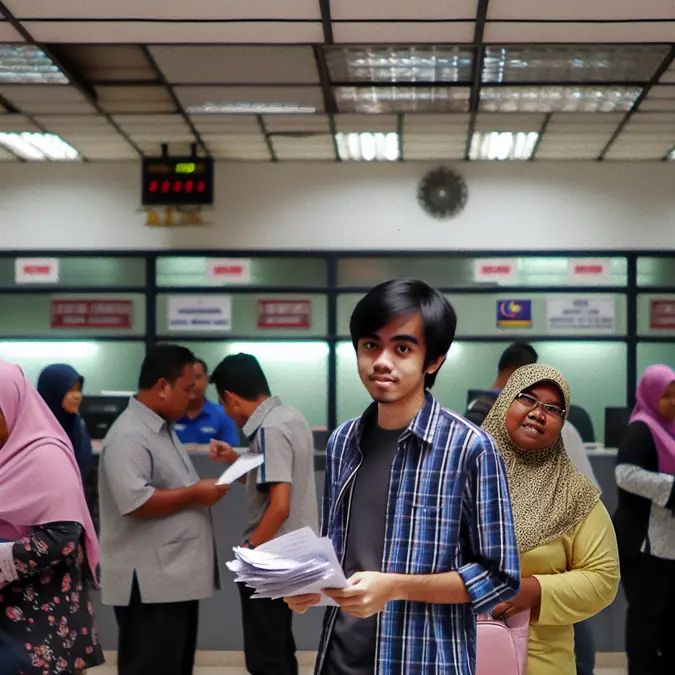
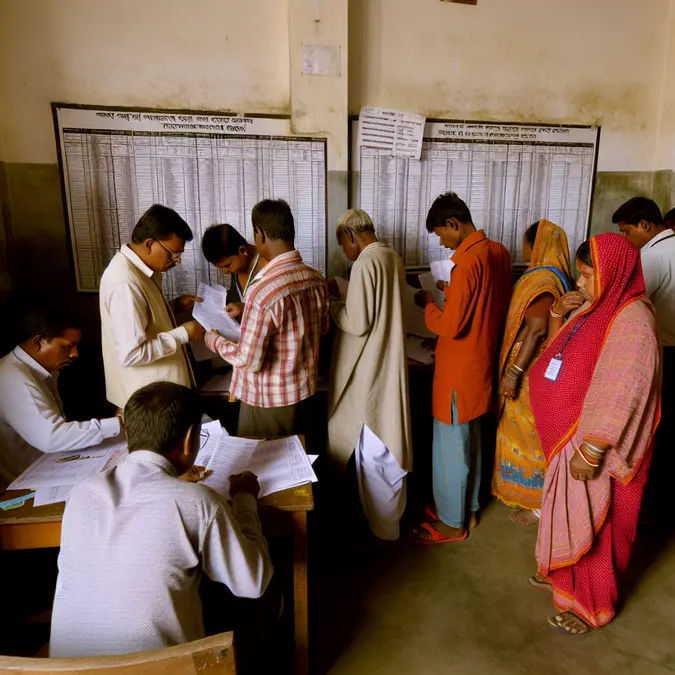
Reports from rural districts describe families queueing up at local offices with tattered voter ID cards, ration cards, Aadhaar numbers scribbled on scraps of paper, and school certificates, every document pressed into service to prove that they belong. One widely quoted question resonates across villages: "What will happen to us?"
Why 60 lakh people are still waiting
The figure of 60 lakh "awaiting adjudication" does not necessarily mean that all are at risk of losing their voting rights. Many are involved in routine correction, migration and duplication issues. However, the sheer scale means that even a small percentage of adverse decisions could translate into tens of thousands of disenfranchised individuals.
Several factors amplify the fear:
- Historical marginalization of certain communities, including linguistic and religious minorities, who already feel vulnerable.
- Low documentation literacy, making it difficult for people to track forms, deadlines, and procedural requirements.
- Rumors and misinformation spreading through social networks and messaging apps, magnifying every instance of deletion into a perceived pattern.
- Past controversies around citizenship and register-of-citizens debates in neighboring regions, which have left a long shadow of suspicion.
For many households, the voter ID card is not just a document of democratic participation; it is a gateway to identity, dignity and, in some cases, access to welfare schemes and services. Losing it can feel like erasure.
Zero tolerance for unrest: Security, bandh and political temperature
The ECI’s warning of "zero tolerance" for unrest underscores how politically charged the West Bengal supplementary voters list has become. West Bengal has a long history of intense electoral competition, frequent protests, and at times, violent clashes between party cadres.
Local reports indicate a bandh call in some pockets coinciding with the publication of the list, raising concerns about road blockades, shutdowns of public offices, and potential attempts to intimidate voters or officials. In response, the administration has reportedly deployed additional security forces and set up quick-response protocols.
Contrary to popular belief, electoral rolls are not just technical spreadsheets tucked away in government servers. In a politically polarized environment, they can become flashpoints for mobilization, protest and counter-protest. Allegations of "vote-bank deletions," "ghost voters," or "outsider inflows" quickly take on a partisan color.
Balancing law and order with democratic openness
The challenge for authorities today is to strike a delicate balance:
- Ensuring peace so that officials can work without fear or intimidation.
- Allowing scrutiny so parties, civil society and citizens can examine the list and flag genuine anomalies.
- Preventing collective panic by providing clear, accessible information on appeal mechanisms.
When institutions fail to communicate transparently, information vacuums are quickly filled by speculation. That is why the publication of the West Bengal supplementary voters list must be accompanied by proactive public information campaigns—through local radio, panchayat offices, citizen helplines, and multilingual notices.
Voter rights, due process and the rule of law
At its core, today’s development raises fundamental questions of democratic theory and practice: Who gets to vote? On what basis can the state remove a person from the rolls? And how quickly can mistakes be corrected?
The right to vote is not explicitly listed as a fundamental right in India’s Constitution, but the Supreme Court has repeatedly held that free and fair elections are part of the basic structure of the Constitution. A credible, inclusive electoral roll is the bedrock of that promise.
The current churn around the West Bengal supplementary voters list will test how effectively three key principles are upheld:
- Transparency: Are additions and deletions documented, explained and made open to public inspection?
- Accountability: Do electoral officials face consequences for systematic errors, bias or negligence?
- Accessibility: Can ordinary citizens, regardless of literacy levels, navigate the appeal and correction mechanisms?
Appeals, corrections and citizens' next steps
For voters in West Bengal, the days and weeks following the publication of the supplementary list are critical. Experts and election monitors typically recommend a simple but essential checklist:
- Check your name: Visit designated government websites, local election offices, or published ward-level rolls to confirm inclusion.
- Verify details: Ensure your name, age, address and gender details are accurate to avoid complications later.
- File corrections promptly: Use prescribed forms for additions, corrections or objections, keeping photocopies and receipts.
- Escalate if needed: If local officials do not respond, approach the designated appellate tribunal with documentation.
Internationally, the importance of clean and inclusive voter rolls is widely recognized. Organizations such as International IDEA and the United Nations have long emphasized robust voter registration systems as a prerequisite for credible elections.
Political narratives vs ground realities
Unsurprisingly, the West Bengal supplementary voters list has already entered the political vocabulary of the state’s parties. Competing narratives are likely to crystallize around a few recurring themes:
- Allegations of partisan bias in deletions and inclusions.
- Claims of "illegal voters" or "outsider influx" to justify demands for stricter verification.
- Accusations of state harassment aimed at specific communities.
Yet, ground reporting from villages and small towns often tells a more nuanced story. Many errors appear bureaucratic rather than ideological: misspelled names, unrecorded deaths, unprocessed migration forms, or simple data-entry mistakes. The danger lies in how these technical flaws can be weaponized in public discourse.
For a professional readership, two questions are paramount:
- Can the ECI and state administration demonstrate that errors are random and correctable, not systematic and targeted?
- Can civil society, media and political parties distinguish between genuine structural issues and isolated anomalies?
Media responsibility and fact-checking
Today’s coverage of the West Bengal supplementary voters list will also test the resilience of India’s media ecosystem. Responsible reporting will require:
- Contextualizing numbers: Distinguishing normal churn in the rolls from abnormal spikes in deletions or additions.
- Verifying claims: Cross-checking allegations from all sides against official records and tribunal data.
- Giving voice to the affected: Not just quoting politicians, but documenting the experiences of ordinary voters.
- Explaining processes: Using simple language to guide citizens on how to protect their voting rights.
Readers of TNSMI-CMAG expect not just headlines, but clarity. In the coming weeks, those expectations will be central as the story around the voter list evolves.
What today signals for India’s democratic future
The publication of the first West Bengal supplementary voters list under the current revision exercise is, in one sense, a state-specific administrative milestone. But its implications ripple far beyond Bengal’s borders.
Other states are watching closely. If West Bengal manages to conduct a high-stakes roll revision amid political contestation—while preserving peace, transparency and citizen trust—it could serve as a template. If, on the other hand, the process descends into protracted controversy, street unrest, and unaddressed grievances, it will add to nationwide concerns about how robust India's electoral infrastructure remains under stress.
For India's democratic project, three lessons stand out:
- Precision matters: In a country of over a billion people, "minor" errors quickly become national problems.
- Process is perception: Even a technically sound list can lose legitimacy if voters feel unheard or afraid.
- Institutions must communicate: Silence and opacity are the fastest routes to distrust.
As the numbers settle and the tribunals begin their work, one fact remains constant: an electoral roll is not merely a tool for managing polling booths. It is an index of who counts, whose voice matters, and how seriously the state takes its obligation to include every eligible citizen.
In that sense, the West Bengal supplementary voters list published today is not just a list—it is a live audit of India’s commitment to democratic inclusion.