
 0
0
 0
0
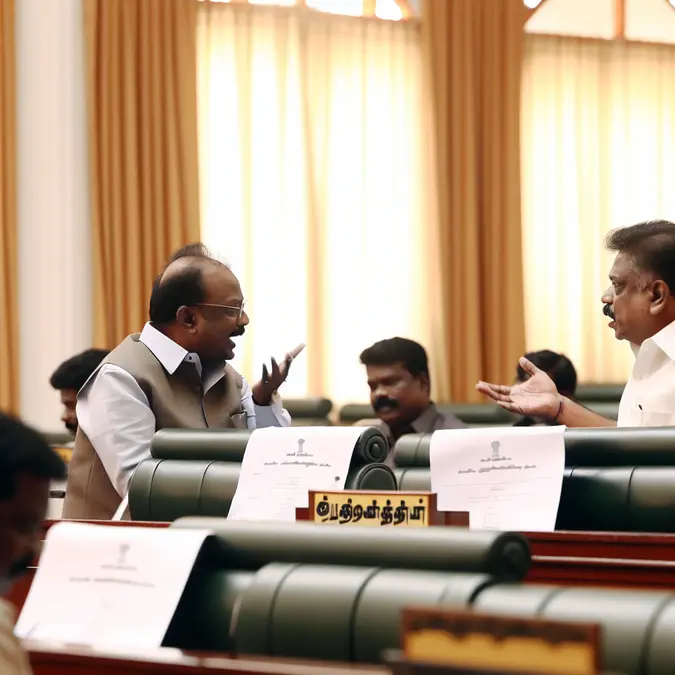
www.tnsmi-cmag.com – The debate over a so‑called Tamil Nadu debt trap has exploded into the centre of the state’s political narrative, with AIADMK leader Edappadi K. Palaniswami accusing the DMK government of pushing the state toward financial ruin while allegedly “stealing credit” for schemes funded through extensive borrowing.
Tamil Nadu debt trap and the new phase of fiscal politics
In recent days, the phrase Tamil Nadu debt trap has moved from technocratic circles into mainstream political rhetoric. Edappadi K. Palaniswami (EPS), former Chief Minister and current AIADMK leader of Opposition, has charged that the DMK regime is burdening future generations with unsustainable liabilities. On the other side, senior DMK leaders, including Finance Minister Thangam Thennarasu, insist that the state’s borrowing remains within constitutional and prudential limits, especially in the context of what they describe as inadequate fiscal devolution from the Union government.
This clash is not merely about numbers. It reflects a deeper struggle over who gets credit for welfare schemes, how states fund development, and where the line lies between productive borrowing and structural over‑indebtedness. As readers, you are witnessing a classic Indian federalism fault line: a state government caught between ambitious promises, political competition, and central resource constraints.
How the Tamil Nadu debt trap narrative took shape
The immediate trigger for the Tamil Nadu debt trap discussion was EPS’s criticism that the DMK is “stealing credits” for schemes that rely heavily on borrowed money, while simultaneously driving the state toward a fiscal cliff. His statement came against the backdrop of ongoing debates around the state’s debt‑to‑GSDP ratio, revenue deficits, and rising committed expenditure.
In response, Finance Minister Thangam Thennarasu reportedly argued that Tamil Nadu’s borrowing remains within statutory limits as defined by the Fiscal Responsibility and Budget Management (FRBM) framework and that the government’s fiscal space has been constrained further because the Union government has allegedly not followed the Finance Commission’s recommended sharing of Rs 3.17 lakh crore with Tamil Nadu over a defined period.
To understand the stakes, it helps to look at the broad architecture of state finances in India. Under the Constitution, states depend significantly on tax devolution recommended by the Finance Commission and on centrally sponsored schemes. According to public finance analyses from sources like the Finance Commission and Reserve Bank of India, many states have seen their revenue buoyancy weaken post‑GST even as social sector commitments continue to grow. This structural squeeze has made the politics of debt both sharper and more complex.
Tamil Nadu’s borrowing: limits, laws, and political optics
One of the DMK government’s main counter‑arguments to the Tamil Nadu debt trap charge is that it borrows strictly within legally permitted thresholds. The FRBM framework, coupled with annual borrowing permissions from the Union Finance Ministry, sets an upper ceiling on how much a state can raise through market loans.
Thangam Thennarasu’s assertion that borrowing is “within limits” is significant because it implicitly invokes this institutional framework. If true, it means two things:
- The state is operating within the fiscal deficit and debt boundaries vetted by the Centre and Reserve Bank of India.
- The question is less about legality and more about the quality and prudence of spending.
From a governance perspective, borrowing to fund capital expenditure—such as roads, public transport, irrigation, and digital infrastructure—can be justified if it catalyzes long‑term growth and higher tax revenue. What alarms critics, including EPS, is the suspicion that a rising portion of debt finances recurring expenditure and populist giveaways that do not create durable assets or productivity gains.
This is where the charge of a “debt trap” becomes politically potent: it implies that Tamil Nadu might soon need to borrow simply to service existing liabilities, reducing fiscal autonomy and squeezing funds for development. Yet, available national data show that many Indian states face similar pressures. A recent RBI study on state finances flagged several states for high debt and rising guarantees but also underlined that not all debt is equal—its sustainability hinges on growth, interest rates, and tax performance.
Tamil Nadu debt trap vs Centre–State fiscal friction
Central to Thangam Thennarasu’s rebuttal is the allegation that the Union government has not adhered fully to a Finance Commission recommendation involving Rs 3.17 lakh crore in transfers or devolution to Tamil Nadu. While exact figures and timelines require access to detailed budget documents, the broader point is clear: the state argues that a shortfall in expected central resources has forced it to rely more on borrowing.
For readers who follow Indian politics, this fits into a larger pattern where multiple opposition‑ruled states claim that reductions in tax devolution, changes in cess and surcharge structures, and tighter controls on borrowing collectively reduce their fiscal space. In Tamil Nadu’s case, this narrative dovetails with historic demands for greater state autonomy and a more equitable federal financial architecture.
To explore these constitutional and federal dimensions in greater depth, readers can follow our governance coverage under Politics and related analysis. The present debate around a Tamil Nadu debt trap is inseparable from this federal context: who controls resources, who designs welfare, and who answers to voters when finances tighten?
Five critical claims at the heart of the Tamil Nadu debt trap debate
Let’s unpack five critical claims that define the current controversy and shape how citizens evaluate competing political narratives.
1. The claim that DMK is “stealing credit” for borrowed‑funded schemes
EPS accuses the DMK of claiming ownership of programmes whose funding is heavily underwritten by market borrowings and central assistance. In other words, he suggests that the ruling party presents benefits as if they emerged from efficient governance, when in reality they rest on expanded liabilities.
From a fiscal transparency standpoint, this raises a valid question: Do citizens fully understand how their welfare schemes are financed? Best practices in public finance recommend that budgets clearly separate revenue‑funded schemes from those backed by loans, so that voters can judge whether today’s benefits are worth tomorrow’s obligations.
2. The claim that Tamil Nadu is on an unsustainable debt path
The heart of the Tamil Nadu debt trap allegation is sustainability. Debt becomes problematic when interest costs rise faster than revenue and when new borrowing primarily serves to roll over old liabilities or pay salaries and subsidies.
Key indicators to watch include:
- Debt‑to‑GSDP ratio: How total debt compares to the state’s economic output.
- Interest payments as a share of revenue: A growing share reduces flexibility for development spending.
- Revenue deficit: Persistent revenue deficits suggest that the state is borrowing even for routine expenditure.
While precise current numbers require official budget documents, the political rhetoric on both sides acknowledges that debt has increased over multiple administrations, including both AIADMK and DMK regimes. This suggests that long‑term structural factors—such as large social sector commitments, legacy subsidies, and limited tax handles post‑GST—also drive borrowing, beyond any single government’s choices.
3. The claim that borrowing remains within statutory and prudential limits
The DMK government’s strongest technical defense is that it complies with FRBM norms and borrowing caps set in consultation with the Union Finance Ministry. Staying within these limits does not automatically negate the Tamil Nadu debt trap worry, but it does mean that both state and central authorities have, at least formally, assessed the borrowing as manageable at current growth and interest projections.
This point also highlights a paradox in the current political rhetoric. If state borrowing is centrally monitored and regulated, then opposition attacks on “irresponsible” debt must, by implication, also question the Union government’s oversight mechanisms. That tension underscores how fiscal responsibility is often weaponised in politics but co‑produced in practice by both levels of government.
4. The claim that the Centre has not followed the Finance Commission’s recommendation
Thangam Thennarasu’s reference to a Rs 3.17 lakh crore gap between Finance Commission recommendations and actual transfers to Tamil Nadu reflects a long‑running anxiety: that formula‑based devolution and discretionary grants do not fully account for the state’s contribution to the national economy or its social‑sector needs.
Many independent economists argue that greater transparency is essential in how Finance Commission recommendations are implemented and how cesses and surcharges—whose proceeds are not shareable with states—shape the true vertical devolution picture. When such issues remain opaque, it becomes easier for both state and Union governments to trade charges over a supposed Tamil Nadu debt trap without citizens seeing the complete ledger.
5. The claim that political competition drives fiscally risky populism
Finally, critics across the spectrum worry that Tamil Nadu’s intense political competition, with generous welfare promises from all major parties, risks pushing the system toward a soft version of a debt overhang. Free or subsidised power, public distribution system expansions, cash transfers, and sector‑specific waivers are all politically popular but fiscally demanding.
Proponents counter that Tamil Nadu’s welfare model has also delivered strong human development outcomes—higher literacy, improved maternal and child health, and better social indicators compared to the national average. The policy challenge, therefore, is not to abandon welfare, but to balance it with growth‑enhancing investments and robust revenue mobilisation so that a genuine Tamil Nadu debt trap never materialises.
What the Tamil Nadu debt trap debate means for citizens
For ordinary citizens and businesses, the immediate concern is not abstract ratios, but the impact on everyday life. Will taxes rise? Will power tariffs be adjusted more frequently? Will infrastructure projects slow down as more money goes to interest payments?
Historically, Tamil Nadu has managed to combine welfare with relatively high growth, supported by sectors such as automobiles, textiles, IT services, and manufacturing exports. Maintaining that balance is crucial. If debt service begins to crowd out capital expenditure, the long‑term growth engine weakens, making it harder to sustain both welfare and fiscal health.
At the same time, abrupt fiscal tightening to avoid a perceived Tamil Nadu debt trap can hurt vulnerable groups if welfare reductions are not carefully targeted and sequenced. The political system must therefore navigate a narrow path between alarmism and complacency, guided by transparent data and independent analysis rather than slogans.
Readers interested in how economic policy interacts with politics can explore more long‑form coverage under Economy, where we examine how fiscal choices translate into growth, jobs, and inequality trends.
Towards a more transparent and accountable fiscal discourse
Beyond party lines, the Tamil Nadu debt trap controversy underlines the need for a more data‑driven fiscal conversation. Three reforms would significantly improve public understanding and accountability:
- Full, user‑friendly disclosure of debt, guarantees, and contingent liabilities, with clear separation of capital versus revenue spending.
- Regular publication of independent risk assessments by state finance commissions, expert panels, or legislative committees.
- Transparent communication around the implementation of Finance Commission recommendations and the role of cesses and surcharges in shaping devolution.
Internationally, organisations like the International Monetary Fund stress that debt sustainability is as much about institutions and transparency as it is about raw numbers. States that communicate honestly with citizens about trade‑offs and risks tend to manage their finances more credibly over time.
Conclusion: Why the Tamil Nadu debt trap narrative matters now
The intensifying rhetoric around a Tamil Nadu debt trap arrives at a time when India’s states are central to the next phase of economic growth and social transformation. Tamil Nadu remains one of the country’s most industrialised and urbanised regions, with a long track record of welfare innovation and political contestation. That makes its fiscal story nationally relevant.
Edappadi K. Palaniswami’s charge that the DMK is stealing credit while driving the state into a debt crisis, and Thangam Thennarasu’s counter‑claim that Tamil Nadu is merely borrowing within constrained limits after a shortfall in Finance Commission‑linked transfers, represent two sharply opposed readings of the same balance sheet. For readers, the task is to look beyond the slogans to the structure: how much is borrowed, for what purpose, under what rules, and with what long‑term plan.
If public debate evolves toward that level of detail, the current controversy could become an opportunity—pushing both government and opposition to articulate credible medium‑term fiscal strategies, safeguard growth‑enhancing investments, and protect essential welfare without sliding into a real Tamil Nadu debt trap.