
 0
0
 0
0
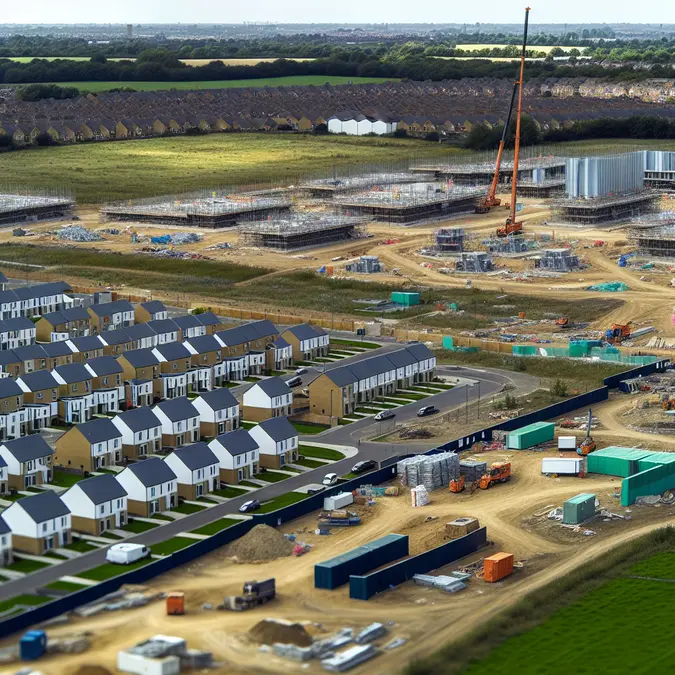
www.tnsmi-cmag.com – South Essex new homes plans are moving from political rhetoric to concrete reality, as local councils quietly advance long-term strategies that will deliver tens of thousands of properties across the region over the next two decades, reshaping communities, infrastructure, and the local economy.
South Essex new homes and a once-in-a-generation reshaping of the region
Across south Essex, local authorities are working on strategic planning frameworks that will determine where people live, how they travel, and what kinds of services they can access by the mid-2040s. While the full policy documents often sit behind consultation portals and committee papers, the trajectory is clear: substantial housing growth is coming, and it will transform the character of this part of England.
These evolving plans form part of England’s wider planning system for managing population growth and tackling the country’s chronic housing shortage. South Essex, lying within the orbit of London and served by strategic transport corridors, is under particular pressure to accommodate new homes. Councils across the sub-region are therefore drawing up or refreshing their Local Plans, masterplans, and regeneration strategies to meet both national housing targets and local ambitions.
For readers, this moment matters. Decisions taken in planning committees today will define housing supply, affordability, commuting patterns, and green space for the next generation. Understanding the scale, locations, and implications of South Essex new homes projects is essential not only for residents and businesses, but also for investors, developers, and policymakers.
Why South Essex is at the frontline of England’s housing debate
To grasp why South Essex sits at the center of the current housebuilding push, we need to look at geography, economics, and politics together.
- Strategic location: South Essex is within commuting distance of London, linked by c2c and Greater Anglia rail services and key roads such as the A13 and A127. That connectivity makes the area attractive for both residents and employers.
- Existing urban centers: Towns such as Southend-on-Sea, Basildon, Thurrock, and their surrounding settlements already possess employment hubs, hospitals, colleges, and retail centers, enabling higher-density development if infrastructure can keep pace.
- Government pressure: Central government has repeatedly signalled that high-demand regions must plan for significant numbers of new homes. South Essex councils therefore operate under market and political pressure to deliver.
At the same time, these opportunities collide with very real constraints: protected green belt, flood risk zones, environmental sensitivities along the Thames estuary, and long-standing concerns over congestion, school places, and GP capacity. The challenge is not simply to build more; it is to build better, in a way that local communities can accept and benefit from.
As we have explored in other coverage on regional transformation and infrastructure within Economy and Infrastructure topics, large-scale growth strategies succeed only when they align housing, jobs, transport, and environment. South Essex is now testing that alignment in real time.
Seven critical forces driving South Essex new homes over the next 20 years
While each council has its own Local Plan timetable and political dynamics, several common factors are pushing the build-out of South Essex new homes. Let’s examine seven of the most important.
1. National housing targets and the pressure to deliver numbers
Successive UK governments have pledged to increase annual housing supply, targeting levels such as 300,000 homes a year across England. Although these figures are not always legally binding, they set expectations that filter down through regional and local housing need assessments.
For south Essex councils, this translates into locally specific housing numbers calculated using the government’s standard method and then negotiated through the plan-making process. Failure to plan for sufficient homes can leave authorities vulnerable to speculative planning applications or government intervention. This backdrop explains why councils are pressing ahead with long-term frameworks, even when individual schemes can be contentious.
2. Local Plans as the master blueprints for growth
Local Plans are the central documents that determine where new development will go, how much will be built, and what infrastructure should accompany it. In south Essex, multiple Local Plans are at different stages: some in early consultation, others being examined or updated after delays.
These documents identify broad growth locations: urban extensions, town-center regeneration, brownfield land along riverside and industrial corridors, and, in some cases, contentious releases of green belt. Every policy choice within a Local Plan has knock-on effects for existing communities, property markets, and development viability.
Once adopted, a Local Plan shapes the trajectory of South Essex new homes for at least 15 years, often longer, by defining which sites stand a realistic chance of securing planning permission.
3. Brownfield regeneration versus greenfield expansion
One of the most politically sensitive questions is where to locate tens of thousands of additional homes. Councils face a balancing act between:
- Brownfield regeneration – redeveloping previously used land such as former industrial estates, redundant offices, or underused town-center sites.
- Greenfield or edge-of-settlement growth – building on farmland or open land at the edge of existing towns and villages, sometimes within or adjacent to green belt.
Brownfield development is often seen as more sustainable and publicly acceptable, reusing existing infrastructure and reducing sprawl. However, such sites can be complex and expensive to remediate. Greenfield sites, by contrast, can offer cleaner, more flexible plots but trigger community opposition and raise environmental concerns.
How South Essex councils strike this balance will define not only the landscape but also the pattern of community life: whether future residents live in dense, walkable centers or dispersed extensions reliant on the car.
4. Transport and infrastructure as the make-or-break factor
No discussion of South Essex new homes is complete without transport. Major housing growth without credible improvements to road and rail capacity quickly breeds congestion and frustration. Local people frequently highlight pressure on junctions along the A13 and A127, crowding on commuter rail lines, and limited bus links between residential areas and employment hubs.
Councils and developers therefore need to prove, through evidence and infrastructure delivery plans, that new homes will be supported by:
- Upgraded or redesigned road junctions and corridors.
- Investment in rail stations, frequency, and park-and-ride options.
- New or enhanced bus and active travel routes, including safe cycling and walking links.
- Utility upgrades for water, energy, and digital connectivity.
This is not just a matter of local convenience. As the UK seeks to meet climate commitments and decarbonise transport, developments that lock residents into car dependency risk being at odds with national policy. Bodies such as the UK Climate Change Committee and international organisations like the International Energy Agency repeatedly stress the importance of low-carbon urban forms.
5. Community facilities, health, and education capacity
Beyond roads and rails, social infrastructure is central to whether new neighbourhoods function well. Large-scale housing growth must account for:
- Primary and secondary school places, including catchment impacts.
- GP surgeries, community health centers, and hospital pressures.
- Parks, play spaces, and sports pitches.
- Local centers with shops, services, and community halls.
Modern planning policy promotes the idea of 15-minute neighbourhoods and walkable communities where daily needs are close at hand. South Essex councils are under pressure to demonstrate that their new communities will reflect these principles, rather than simply extending existing estates without a social heart.
6. Affordability, tenure mix, and who benefits from South Essex new homes
Quantity alone cannot solve the housing crisis if the homes delivered are unaffordable to those most in need. The tenure mix of forthcoming schemes – the proportion of social rent, affordable rent, shared ownership, and market sale or rent – will influence who can access new housing.
Local Plans and site-specific negotiations under Section 106 agreements typically set affordable housing targets. But these targets can be challenged on viability grounds, especially where infrastructure costs are high. South Essex must therefore navigate competing demands: the need for genuinely affordable homes, the financial realities of development, and the wider objective of attracting investment and employment.
7. Environmental resilience and the Thames estuary context
South Essex occupies a sensitive environmental location along the Thames estuary, an area characterised by marshlands, habitats of national importance, and varying degrees of flood risk. Strategic growth must now be climate-aware: developments have to consider flood resilience, sustainable drainage, biodiversity net gain, and long-term sea level rise.
National policy increasingly requires new schemes to go beyond “do no harm” towards measurable environmental enhancement. In practice, this means integrating green infrastructure, from wetlands and nature corridors to street trees and sustainable urban drainage systems. The location and design of South Essex new homes will determine whether they support or strain fragile ecosystems along the estuary.
How local voices and consultation shape the future map of South Essex
Although the phrase “long-term plans” can sound technocratic, these documents are open to public scrutiny and influence through formal consultations. Residents, businesses, civic groups, and professional bodies all have opportunities to comment on draft Local Plans, specific allocation sites, and supplementary planning documents.
Engagement levels can be uneven, with well-organised groups sometimes dominating responses. Yet for readers who care about the direction of South Essex growth – whether to support, oppose, or reshape it – understanding how and when to intervene is essential. Well-evidenced feedback on infrastructure, environmental impact, heritage, or design quality can and does influence final policies.
Moreover, the politics of planning remains highly local. Councillors scrutinise proposals and ultimately vote on key decisions. Elections can shift the balance of priorities, from more pro-growth stances to more protective approaches to green belt and village character. Over a 20-year horizon, those political cycles will play a significant role in how many of the planned South Essex new homes actually materialise.
Economic opportunity, risk, and the broader regional picture
Tens of thousands of new homes over two decades do not represent only a local story; they form part of a broader economic narrative. Housing growth can drive:
- Construction and related employment: from building trades to professional services such as architecture, engineering, and planning consultancy.
- Local spending power: more residents can support new retail, hospitality, and service-sector businesses.
- Investment in infrastructure: with large sites often unlocking funding for roads, schools, and digital networks.
However, unmanaged or poorly sequenced growth can also create risk: overheating local markets, stretching services beyond capacity, or generating friction between long-standing communities and new arrivals. The challenge for South Essex leaders is to weave housing delivery into an integrated economic strategy that supports job creation, skills, and productivity.
National bodies such as the Office for National Statistics and think tanks regularly highlight the link between housing supply, labour mobility, and regional competitiveness. South Essex, given its position within the wider South East economy, stands at a crossroads: it can leverage its growth to attract higher-value employment and innovation, or drift into a pattern of dormitory settlements serving jobs elsewhere.
Design quality and the character of future communities
Numbers and locations often dominate the debate, but the lived experience of future residents will depend heavily on design quality. Current planning guidance at national level, including the National Design Guide and local design codes, emphasises:
- Human-scaled streets and public spaces.
- Clear, walkable layouts with legible routes.
- Integration of green space and biodiversity.
- Energy-efficient, low-carbon buildings.
- Respect for context, heritage, and landscape.
For South Essex new homes, that means moving beyond standardised, car-dominated estates towards mixed, vibrant neighbourhoods that feel distinct rather than generic. The risk, as seen in some post-war expansions across the UK, is that insufficient attention to place-making can produce isolated, infrastructure-poor developments that struggle socially and economically over time.
By contrast, well-designed growth can enhance town centers, unlock brownfield assets, and support cultural and leisure offerings that appeal to both existing and new residents. The quality bar set today will shape perceptions of South Essex for decades.
What readers should watch next in the South Essex planning story
Given the long timescales involved, it can be challenging to track progress. Key milestones to watch include:
- Publication of draft and revised Local Plans by individual councils.
- Public consultation periods, including exhibitions and online surveys.
- Examination in Public hearings, where independent inspectors review soundness.
- Major outline planning applications for strategic sites and urban extensions.
- Funding announcements for transport and social infrastructure.
For professionals in housing, planning, and investment, south Essex now represents a critical testbed of how medium-sized English authorities can deliver significant growth under tight fiscal constraints and high public scrutiny. For residents, it is a question of how to secure the benefits of regeneration – better homes, improved services, cleaner transport – without losing the environmental and community qualities that make the area distinctive.
Conclusion: South Essex new homes as a defining test of balance and vision
Over the next two decades, the roll-out of planned South Essex new homes will provide a defining test of how England manages growth in pressure areas: can councils, developers, and communities together deliver the volume of housing national policy demands, while safeguarding infrastructure, environment, and quality of life? The answer will not hinge on a single scheme, but on the cumulative effect of thousands of decisions, large and small, across the region. As these plans advance, readers would do well to scrutinise not only how many homes are being built, but where, for whom, and with what long-term vision for South Essex as a connected, resilient, and thriving place to live and work.