
 0
0
 0
0
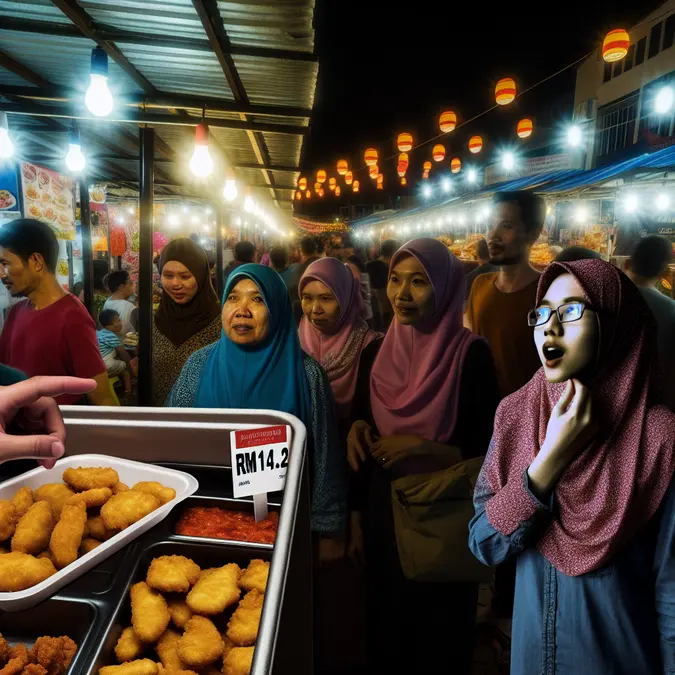
www.tnsmi-cmag.com – The JB nuggets price controversy over RM14.20 for just six tiny pieces at Johor Bahru’s popular Bazaar Karat has ignited a nationwide debate about food inflation, transparency, and what diners today consider fair value.
JB nuggets price debate: why one viral receipt matters more than it seems
When a customer shared a photo online alleging that a Johor Bahru eatery at Bazaar Karat charged RM14.20 for six small nuggets, the reaction was swift and unforgiving. Netizens called the portion “overpriced” and “not even presentable,” accusing the stall of exploiting visitors to the bustling night market.
This single JB nuggets price receipt has become a symbol of deeper frustrations. Malaysians already feel the squeeze from rising living costs, and food prices sit at the emotional heart of that anxiety. Similar public outcries have surfaced globally whenever an everyday food item suddenly appears wildly expensive — from viral cafe bills in Singapore and Hong Kong to London restaurants called out on social media for charging eye-watering sums for basic dishes.
Beyond the jokes and anger, this episode raises serious questions: How should small food businesses set prices in an era of inflation? What do customers expect in return for premium pricing? And where is the line between fair profit and perceived profiteering?
Understanding the JB nuggets price backlash in context
To analyze the uproar around the JB nuggets price, we need to consider three overlapping realities: economic pressure, consumer expectations, and the amplifying power of digital platforms.
JB nuggets price and the inflation squeeze
Malaysia, like many countries, continues to manage the impact of global inflation. According to official data from Malaysia’s Department of Statistics, food and non-alcoholic beverages are among the primary contributors to the cost-of-living burden. Ingredients, cooking oil, electricity, stall rental, and labor costs have all risen steadily in recent years.
From a stall operator’s point of view, pricing six nuggets at RM14.20 may reflect not just raw ingredient costs, but rent at a high-traffic tourist location, staff wages, packaging, utilities, and the need to turn a sustainable profit. Night markets like JB’s Bazaar Karat are prime locations, and higher operating costs often translate directly into higher menu prices.
Yet for the average customer, this economic logic is rarely the first thing that comes to mind. They see a small paper tray, six tiny nuggets, and a bill that feels more like a cafe price than a night market snack. The perceived mismatch between expectation and price triggers a strong emotional reaction.
Perceived value: more than just the JB nuggets price on paper
Price alone does not dictate fairness; value perception does. Consumers ask themselves: What am I getting for my money? In the case of the JB nuggets price, netizens highlighted two specific complaints:
- The portion size: six “tiny” nuggets for RM14.20 was seen as poor value.
- The presentation: photos showed a basic, almost careless plating, described as “not even presentable.”
In other words, the backlash was not only about the number printed on the receipt. It was about the total experience — from visual appeal to perceived effort — falling short of what many felt RM14.20 should reasonably buy at a bazaar stall.
Contrast this with specialty cafes or branded fast-food chains, where customers accept paying more because they receive consistent quality, brand assurance, and often better ambiance. At a street bazaar, where the expectation is “local, fun, affordable,” a similar price tag demands much stronger justification.
The social media effect: when one meal becomes a national talking point
In the pre-digital era, an overpriced meal was a personal annoyance. Today, it is ready-made viral content. A single image of the JB nuggets price at Bazaar Karat, paired with a sharp caption, can instantly travel across X (formerly Twitter), Facebook, TikTok, and WhatsApp groups.
Platforms reward outrage and surprise. Users share content that feels shocking or unfair, especially when it confirms existing worries about cost of living. This feedback loop amplifies cases like this far beyond the original stall, turning one questionable transaction into a symbol of a broader problem.
We have seen similar patterns in international news cycles, where seemingly minor price disputes at tourist hotspots or trendy cafes become headline stories in outlets like Reuters or local dailies. Malaysia is no exception to this trend.
7 critical lessons from the JB nuggets price controversy
To move beyond outrage, we can extract actionable insights. The JB nuggets price saga offers at least seven important lessons for food operators, policymakers, and consumers.
1. Transparency in pricing isn’t optional anymore
Customers today expect clear, upfront information on what they are paying for. Menus without prices, vague bundle deals, or hidden charges immediately raise suspicion.
Stalls at popular bazaars and markets should display visible price lists with portion sizes clearly stated. For example: “Chicken nuggets – 6 pcs, RM14.20.” If the price is higher because of premium ingredients, imported brands, or unique preparation methods, state that explicitly. Transparency does not just prevent conflict; it builds trust.
2. Presentation strongly influences perceived fairness
The scathing comment “not even presentable” is a crucial clue. If an operator intends to charge a premium JB nuggets price, the product must look and feel premium. That means consistent portion size, clean and attractive serving ware, and at least basic attention to plating.
In competitive food scenes such as Food and Beverage, simple upgrades — a branded paper tray, a small garnish, or a well-designed menu board — can significantly change how people interpret value.
3. Social media is your judge, jury, and sometimes executioner
Every stall, no matter how small, now operates in a hyper-visible environment. Any customer with a smartphone is a potential reviewer, photographer, and broadcaster. This dynamic makes reputation fragile but also gives operators a chance to differentiate through service quality.
Food vendors need a basic online strategy, even if it is as simple as a polite, factual response when a complaint goes viral. Silence or defensiveness often deepens public anger. An honest explanation of costs, a willingness to offer refunds where appropriate, and visible efforts to improve can turn a negative spotlight into a story of accountability.
4. Cost pressures are real — but must be communicated better
Many netizens react to the JB nuggets price as if it exists in a vacuum, but stall operators face harsh realities: higher wholesale costs, fuel prices affecting logistics, and stiff competition for foot traffic. A price that shocks a customer may be the operator’s calculated attempt to stay afloat.
Instead of simply quoting a number, businesses can educate their customers gently. A small sign noting “Imported chicken, no fillers” or “Cooked in premium sunflower oil” can frame the price as value rather than exploitation. At scale, industry associations and local councils could do more public communication about what drives street food prices today.
5. Consumer literacy about pricing needs to evolve
On the other side of the counter, diners must adapt to a new era where the historic ‘mental price list’ for common foods is no longer realistic. The idea that nuggets, burgers, or local snacks must always cost what they did five or ten years ago ignores inflation, wage expectations, and better food safety standards.
This does not mean consumers should accept any JB nuggets price without question. It means evaluating price against context: location, quality, brand, and overall experience. A bazaar in a tourist-heavy district may always cost more than a neighbourhood warung, just as a city-center cafe costs more than a suburban kopitiam.
6. Regulators and councils play a subtle but important role
Most markets, including JB’s Bazaar Karat, operate under local council regulations. While outright price controls can create distortions and black markets, there is room for guidelines and basic consumer protections.
Authorities can encourage standardized menu displays, require clear labelling of portion sizes, and provide channels for complaints that feel fair to both stall owners and diners. Publicly available best-practice toolkits for bazaar operators could help avoid future JB nuggets price controversies while maintaining a dynamic street food culture.
7. Brand reputation now starts at the smallest stall
In a platform-driven economy, even micro-vendors can develop a distinct brand. Being known as the stall that offers generous portions, friendly service, or creative presentations can be as powerful as being known for a signature dish.
Conversely, being associated with viral outrage over a JB nuggets price can haunt a stall long after the online anger subsides. This makes day-to-day consistency crucial: fair prices, honest communication, and visible respect for customers form the foundation of a resilient brand.
What readers can learn from the JB nuggets price uproar
For readers observing this story from a distance, the JB nuggets price saga highlights how quickly narratives form online and how thin the line can be between a legitimate grievance and a viral pile-on.
When we encounter such posts, it helps to ask:
- Do we have both sides of the story (customer and stall owner)?
- Is the price clearly displayed, or is this a surprise charge?
- How does the price compare with similar stalls in the same area?
- Are there factors such as rental, ingredients, or tourism that might explain the higher charge?
Objective assessment does not diminish legitimate frustration with rising costs. Instead, it keeps us grounded and encourages more constructive solutions, from improved regulation to smarter consumer choices.
How Malaysia’s food scene can move forward after the JB nuggets price incident
Malaysia’s food culture is one of its greatest national assets, and night markets like Bazaar Karat are part of that living heritage. To ensure that episodes like the JB nuggets price backlash do not erode trust or damage the ecosystem, multiple stakeholders need to act.
Food entrepreneurs should treat pricing, communication, and presentation as strategic decisions, not afterthoughts. Consumers should continue to hold businesses accountable, but with an understanding of broader economic realities. Policymakers and city councils can bridge the gap with light-touch regulation, education, and transparent complaint mechanisms.
Media outlets, including analytical magazines such as Business-focused platforms, can contribute by going beyond outrage headlines to unpack the real dynamics at play: inflation, wage pressures, competition, and digital reputational risk.
Conclusion: why the JB nuggets price story is a warning signal
The uproar over the JB nuggets price at RM14.20 for six small pieces may seem trivial on the surface, but it serves as an early warning signal. It reflects growing sensitivity to food costs, rising expectations for transparency, and the unforgiving glare of social media on every transaction. If vendors, consumers, and regulators treat this moment as an opportunity to rebalance value, communication, and trust, Malaysia’s vibrant food ecosystem can emerge stronger, fairer, and more sustainable for everyone involved.