
 0
0
 0
0
www.tnsmi-cmag.com – The Indian look is far more than a matter of taste or trend; it is a daily referendum on identity, belonging, and power in a country fractured by gender hierarchies, caste privilege, class aspiration, and regional diversity. A new wave of writing and reportage around how Indians dress – sparked by works like Shefalee Vasudev’s explorations of style and politics – shows that what we wear is never neutral, never simple, and never just personal.
The Indian look and why it defies easy definition
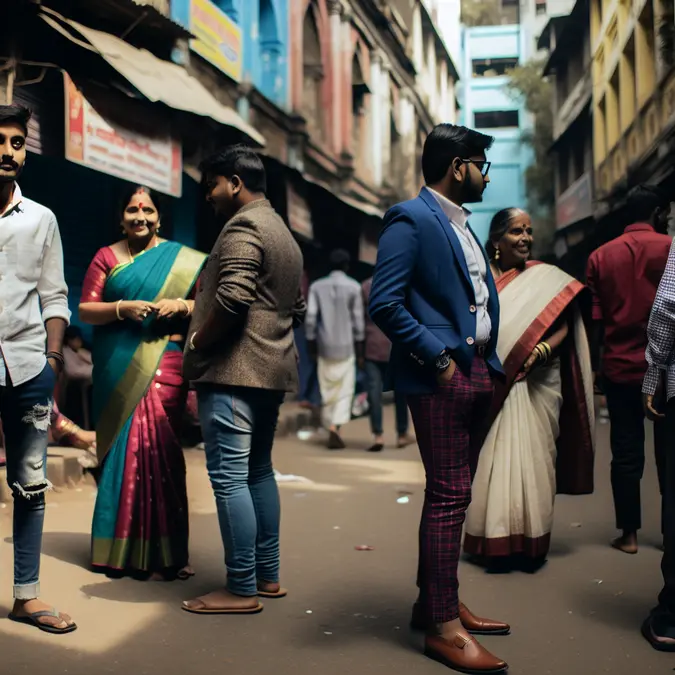
The phrase Indian look sounds deceptively straightforward, as if there were a single visual template that could summarize a nation of more than a billion people. In reality, any attempt to pin down what an Indian should look like runs into immediate contradiction. A sari-clad bureaucrat in Delhi, a software engineer in Bengaluru wearing jeans and a hoodie, a gig worker in a faded kurta, a young Dalit activist in slogan T-shirts, a Muslim entrepreneur in a sharply tailored suit – all of them can claim to embody an Indian look, yet none of them fully define it.
Fashion theorists have long argued that clothing functions as a language, a system of signs loaded with social meaning. As the British cultural theorist Dick Hebdige famously noted in his work on subcultures, style both communicates belonging and contests authority. In India, that idea is amplified by the weight of caste, gender, and regional tradition. The Indian look is not a fixed aesthetic; it is a contested battlefield over who gets to be seen, who gets to be respected, and who remains invisible.
Furthermore, the very term carries an implicit power imbalance. Who decides which hairstyle, fabric, or silhouette counts as authentically Indian? Elites in cities, global fashion houses, cinema stylists, or the millions of ordinary people who dress themselves every morning? The struggle over this definition reveals the deeper politics of representation that shape contemporary India.
How the Indian look is shaped by gendered expectations
When we speak about the Indian look, gender almost always sits at the center. Women in particular are expected to carry the burden of representing culture and tradition on their bodies. The sari, salwar-kameez, bindi, bangles, long hair, and modest silhouettes have all been mobilized, at different times, as markers of respectability and national pride.
Contrary to popular belief, these expectations are not timeless. They emerged from specific historical moments – the colonial encounter, the freedom struggle, and the post-Independence nation-building project. As scholars such as Partha Chatterjee and others have noted, the idea of the “modern Indian woman” (often upper-caste and urban) was constructed as a bridge between Western modernity and Indian tradition. Dress became the most visible site where this compromise played out.
Today, that legacy persists in subtle but powerful ways:
- Professional respectability: Women in offices are often praised for looking “properly Indian” when they wear saris or neatly pressed kurtas, while Western wear can draw comments about being too bold, too casual, or too Westernized.
- Marriage markets: Matrimonial ads and family expectations still promote a narrow image of the ideal bride – fair, slim, “homely” but educated – whose clothes must signal both modern competence and traditional obedience.
- Public morality: Women who step outside these norms, whether by wearing shorts, ripped jeans, or body-hugging silhouettes, are vulnerable to moral policing, harassment, and victim-blaming.
Meanwhile, men navigate a different terrain. For urban, upper- and middle-class men, the Indian look has often meant a mix of global and local: shirts and trousers at work, jeans and T-shirts in casual spaces, and kurta-pajama or sherwani for festivals and weddings. They are rarely asked to prove their cultural loyalty through dress in the same way women are. Yet even here, class and caste shape what is considered respectable, modern, or stylish.
Unpacking caste and class inside the Indian look
Any serious discussion of the Indian look must confront caste. Clothing has long been a marker of caste hierarchy in South Asia, from prohibitions on what marginalized communities could wear, to specific fabrics and ornaments reserved for dominant groups. Contemporary India has legally outlawed caste discrimination, but its social traces remain woven into wardrobes.
In many regions, certain drapes, ornaments, or colors still signal caste location to those who know how to read them. Dalit and Bahujan movements have, in response, used clothing as a site of resistance – wearing blue associated with Ambedkarite politics, adopting Western wear in defiance of traditional codes, or publicly rejecting symbols associated with servility. As B.R. Ambedkar argued in a broader context, dignity demands both legal and symbolic equality, and dress plays a role in that symbolic realm.
Class, too, cuts sharply across the idea of an Indian look. Consider the following contrasts:
- An expensive handloom sari worn by an urban professional signals taste, heritage, and disposable income, while a similar sari worn by a domestic worker can be read as ordinary or even invisible.
- A kurta on a management consultant in a co-working space reads as “ethnic-chic” or startup-cool; the same garment on a rural migrant worker can be perceived as rustic or backward.
- Logos, sneakers, and fast fashion may signal aspiration for first-generation college students, but can be mocked as “trying too hard” by established elites.
What looks effortlessly Indian on one body appears out of place or pretentious on another. These double standards reveal how clothing encodes unspoken assumptions about who belongs in which space. They also explain why discussions of fashion in India cannot be separated from debates on inequality, mobility, and social justice.
The Indian look in politics, media, and pop culture
The Indian look does not just live in closets; it plays out on television screens, social media timelines, political rallies, and red carpets. Politicians, film stars, and influencers consciously deploy clothing to send messages about their values and loyalties.
In electoral politics, the kurta, Nehru jacket, crisp white cottons, and regional headgear have become visual shortcuts for authenticity and rootedness. Leaders keen to project humility may adopt simple handspun fabrics or repeat the same outfits in public, even as teams of image consultants carefully calibrate each appearance. Conversely, tailored suits, designer sarees, and luxury watches can trigger backlash for seeming out of touch with voters’ realities.
Cinema and streaming platforms reinforce and reshape these codes. Bollywood heroines often toggle between ultra-glamorous Western looks in songs and demure Indian wear in emotional scenes, reinforcing the notion that true Indianness rests in traditional dress. Television serials amplify this further, dressing women in impossibly ornate saris and jewelry, even when plots suggest financial struggle. These stylized depictions seep into viewers’ expectations about what an ideal woman – or an ideal family – should look like.
Digital culture adds another layer. Instagram, YouTube, and short-video apps have created a new economy of influencers, stylists, and micro-celebrities who curate the Indian look for specific audiences: NRI nostalgia, small-town aspirants, queer communities, or luxury consumers. Algorithms reward visually striking outfits and recognizable aesthetics, which can both democratize style and reinforce narrow beauty standards.
Readers interested in how media narratives shape national identity will find deeper context in our coverage under Media, where we explore the feedback loop between representation, aspiration, and policy.
Seven powerful insights about the Indian look today
To move beyond clichés and marketing slogans, we can distill the current debate around the Indian look into seven key insights that help explain why it matters so deeply – and why it resists simple categorization.
1. The Indian look is plural, not singular
There is no single Indian look. Instead, there are countless regional, religious, linguistic, and subcultural aesthetics that co-exist, overlap, and sometimes clash. A Manipuri dancer’s costume, a Kashmiri pheran, a Tamil Brahmin’s nine-yard sari, a Northeastern youth’s streetwear, a Mumbai corporate wardrobe – each is fully Indian in its own right. Attempts to impose one dominant template, whether through politics or commerce, erase this diversity.
2. It is a daily negotiation, not a fixed uniform
Most Indians do not adopt one look and stick to it. They shift between wardrobes depending on context: work, home, religious spaces, nightlife, family gatherings, or protest marches. This fluidity exposes how identity itself is negotiated daily. The pressure to conform may be stronger in some settings than others, but the act of getting dressed is always a negotiation between self-expression, safety, and societal judgment.
3. Gendered policing of the Indian look remains intense
Women, trans, and non-binary people bear the brunt of moral surveillance around the Indian look. Clothing choices can invite unsolicited advice, harassment, or violence. For LGBTQ+ Indians, visible non-conformity may affirm identity but heighten risk. Research by organizations tracking gender-based violence, as well as global reports such as those cited by UN Women, underscore how dress is still weaponized in victim-blaming narratives, despite growing awareness.
4. Caste remains encoded in fabrics and silhouettes
Even when people deny reading caste from clothing, subtle cues persist: where a garment is bought, how it is draped, what accessories accompany it, and when it is worn. Fashion-conscious elites may champion handloom and heritage weaves, yet rarely acknowledge the histories of bonded labor, exclusion, and appropriation behind these crafts. Dalit and Bahujan thinkers continue to challenge the romanticization of tradition, urging a more honest reckoning with who historically produced and who proudly wore those “heritage” looks.
5. Globalization has made the Indian look both wider and narrower
Global supply chains and social media have expanded access to brands, fabrics, and trends, allowing more Indians to experiment with hybrid styles. Simultaneously, global fashion and advertising industries often promote a narrow, export-friendly image of Indianness – ornate bridal wear, yoga-chic loungewear, exoticized prints – that can flatten internal diversity. NRIs and international consumers may then mirror that stylized version back to India, shaping local aspirations in complicated ways.
6. Economic aspiration is written on the body
For many, the Indian look is a project of upward mobility. Carefully chosen brands, grooming routines, and styles signal entrance into a different class world: the corporate floor, the global university, the startup ecosystem. This performative modernity can open doors but also generate anxiety, impostor syndrome, and ridicule from older elites who police what counts as “good taste”. Fashion becomes a test of belonging that is never fully passed.
7. Resistance and reclamation are changing the script
Finally, resistance movements – feminist, anti-caste, queer, environmental, and regional autonomy campaigns – are rewriting what the Indian look can mean. Protest T-shirts, shaved heads, visible disability aids, gender-neutral clothing, and proudly worn regional textiles have all been reclaimed as political statements. These choices challenge the idea that looking Indian must always align with middle-class respectability or patriarchal norms.
For a broader political backdrop to these struggles, readers can explore analyses under Politics, where style and symbolism often intersect with electoral and policy trends.
Can the Indian look ever be neatly categorized?
At one level, attempts to codify the Indian look are understandable. Brands seek a marketable identity, policymakers seek visual unity, and cultural institutions seek recognizable symbols. Yet every time we try to settle on a definitive description, real lives and real bodies slip out of the frame.
Urban, upper-caste, able-bodied, heterosexual, cisgender, and relatively affluent Indians have disproportionately shaped mainstream images of Indianness – in films, advertising, and politics. Those on the margins often appear either as colorful backdrops or as problems to be solved, rather than as authors of their own aesthetics. A truly inclusive understanding of the Indian look would start from these margins, recognizing that the center of gravity has already shifted.
Furthermore, climate change, digital labor, migration, and generational shifts will keep transforming how Indians dress. Heatwaves are pushing people toward lighter, more breathable fabrics; remote work is reshaping office wear; second-hand and rental markets are challenging the idea of ownership; and younger citizens are increasingly skeptical of rigid gender codes in clothing. The Indian look, in other words, is a moving target.
Conclusion: Why the Indian look debate matters
The struggle to define the Indian look is really a struggle over who gets to define India itself. Clothing sits at the intersection of everyday life and grand narrative; it condenses histories of colonization, resistance, aspiration, and exclusion into choices made in front of a mirror. When we talk about what counts as properly Indian – modest enough, traditional enough, modern enough – we are also debating which bodies matter, which voices are heard, and which futures are possible.
To reduce this complexity to a single dress code or visual template would be to betray the very plurality that makes India what it is. Instead, embracing the multiple, evolving, sometimes conflicting versions of the Indian look may be our best hope for an honest, democratic cultural conversation – one in which every citizen, regardless of gender, caste, class, or region, can decide for themselves how they wish to be seen.