
 0
0
 0
0
www.tnsmi-cmag.com – The current fuel crisis is not only pushing pump prices higher, it is also exposing consumers to overpricing, hoarding, and other illegal practices that can quietly drain household budgets and destabilize local markets. As the Philippine National Police (PNP) reports at least six formal complaints related to fuel crisis offenses, the issue is no longer theoretical. It is a real risk that drivers, business owners, and everyday consumers need to understand and act on.
Energy shocks have always tested societies. From the oil crises of the 1970s to the more recent volatility linked to geopolitical tensions, war, and supply-chain disruptions, spikes in fuel prices tend to invite opportunistic behavior. Unscrupulous traders exploit fear, misinformation, and technical gaps in regulation. Readers who rely on fuel for transport, logistics, or power generation cannot afford to treat these incidents as mere headlines. They directly affect the cost of goods, mobility, and economic stability.
In this in-depth explainer, we break down the key illegal acts associated with a fuel crisis, what Philippine law actually says, how authorities like the PNP and regulators are responding, and what you can do to protect yourself and your business. We also explore the broader economic and legal context so you can distinguish between legitimate price movements and unlawful profiteering.
Fuel crisis: understanding the legal and economic backdrop
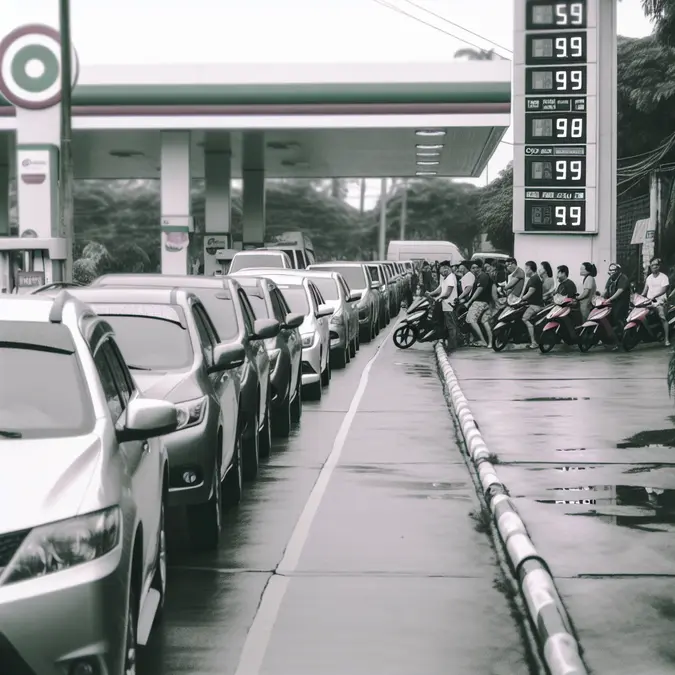
Every fuel crisis has its own triggers, but the downstream effects often look similar: rapid price increases, supply uncertainty, long queues at gas stations, and rising consumer anxiety. In such conditions, the line between lawful price adjustments and illegal conduct becomes critically important.
In the Philippines, the Downstream Oil Industry Deregulation Act (Republic Act No. 8479) liberalized fuel pricing, allowing oil companies to set prices based on global market conditions and competition. That framework encourages investment and efficiency, but it also raises the stakes during times of disruption. When international oil benchmarks trend upward, local prices will reflect that change. However, the law still prohibits abusive conduct, price manipulation, cartel behavior, and misleading trade practices.
To understand the enforcement landscape, readers should note that the Department of Energy (DOE) oversees fuel pricing and supply monitoring, while the PNP, in coordination with local government units, handles the criminal aspects of hoarding, overpricing, and fraud on the ground. This inter-agency set-up aims to ensure that both economic and criminal law tools are available when a crisis intensifies.
For additional background on how global oil markets shape local fuel prices, readers can consult the Oil price entry on Wikipedia and current market coverage from Reuters Energy & Oil News, which track the international benchmarks that often drive domestic fuel movements.
Fuel crisis and illegal acts: 7 critical offenses to watch
Against the backdrop of the current fuel crisis, at least six complaints have already reached law enforcement agencies, according to recent reports. While each case has its own facts, they tend to fall into a handful of recurring categories that consumers should recognize quickly.
Fuel crisis: overpricing beyond lawful and market-based increases
Overpricing is one of the most visible illegal responses to a fuel crisis. It usually involves retailers charging prices that are unjustified by market conditions, official advisories, or their own cost structures. In deregulated markets, there is no fixed government-set pump price, but authorities still monitor whether increases are consistent with the movements of global benchmarks, import costs, and taxes.
Red flags for overpricing may include:
- Sudden, outsized price jumps at specific stations that far exceed average market increases in the same locality.
- Failure to post clear and updated price boards visible to motorists.
- Refusal to issue receipts or sales invoices that confirm the actual price charged per liter.
In extreme cases, overpricing can qualify as profiteering under Philippine law, particularly when it exploits an emergency or calamity. The Price Act (Republic Act No. 7581, as amended) empowers government to act against unjustified price spikes in basic and prime commodities, and fuel often forms part of that broader economic ecosystem.
Hoarding during a fuel crisis: creating artificial scarcity
Hoarding refers to the deliberate withholding of goods from the market to create artificial scarcity and drive prices higher. In the context of a fuel crisis, this may happen when wholesalers or retailers keep significant fuel stocks in storage while claiming supply shortages, thereby pressuring consumers to accept higher prices or stricter purchase limits.
Laws against hoarding focus on intent and effect. Authorities look at whether the volume being stored is reasonable for operational needs or clearly beyond normal inventory practices, and whether the action is designed to manipulate prices. When a station with full tanks refuses to dispense fuel or selectively serves only certain customers, regulators and the PNP may treat that as a potential hoarding scenario.
Readers should also distinguish between hoarding and legitimate rationing. During severe supply disruptions, companies may lawfully impose purchase limits per vehicle or per customer to ensure that more people have access to limited stocks. What crosses the line is secretly stockpiling fuel while publicly claiming to be out of supply, in order to sell later at inflated rates.
Misrepresentation of fuel quantity and quality
Another set of illegal acts during a fuel crisis involves tampering with the product itself. Unscrupulous operators may:
- Manipulate pump calibrations so that customers receive fewer liters than what appears on the meter.
- Mix fuel with unauthorized substances or lower-grade products, degrading quality and potentially damaging engines.
- Mislabel fuel grades, selling regular gasoline as premium or diesel with additives as a higher-value product without proper disclosure.
These practices constitute fraud and can fall under consumer protection, criminal, and trade regulation laws. During a crisis, when every peso counts and supply is tight, the temptation to cut corners grows—but so do the risks to consumers and the legal exposure for offenders.
False information and panic-inducing messages
Modern fuel crisis episodes unfold in an information environment dominated by social media. False posts about imminent shortages, alleged shutdowns of major refineries, or invented government directives can spread rapidly. These messages often trigger panic buying, long station queues, and opportunistic price moves even when supply fundamentals remain stable.
Philippine authorities have increasingly warned that the deliberate spread of false information about fuel supply or pricing—with the intent to cause panic or gain financially—can be prosecuted under various laws, including those on cybercrime, public order, and unfair trade. The public has a responsibility to verify messages from official sources such as the DOE, PNP, and established news outlets before acting on them.
Cartel behavior and price-fixing
While harder to detect and prove, cartel behavior is a serious concern in any deregulated fuel market. During a fuel crisis, companies may be tempted to coordinate prices, share market information improperly, or divide territories to limit competition.
Philippine competition law prohibits anti-competitive agreements such as price-fixing, bid-rigging, and market allocation. The Philippine Competition Commission (PCC) has the mandate to investigate such conduct, while sector regulators monitor price trends for signs of collusion. Although the presence of similar prices across stations may sometimes reflect common cost factors, suspiciously synchronized movements without clear economic justification raise red flags.
Violations of local ordinances and emergency regulations
Local government units (LGUs) may issue special ordinances or executive orders during a fuel crisis, especially when it coincides with natural disasters or declared states of emergency. These rules can cover:
- Prohibition of selling fuel in unapproved containers.
- Temporary limits on per-transaction fuel purchases.
- Requirements for clear pricing signage and operating hours.
Failure to comply can result in administrative sanctions, fines, or even criminal liability, depending on the enabling law. Fuel retailers and distributors must stay updated on both national and local directives, while consumers should be aware that some restrictions are designed to promote fairness and safety—not to restrict access arbitrarily.
Abuse of position and official corruption
Finally, a fuel crisis can expose governance vulnerabilities. There have been historical instances, globally and locally, where public officials or enforcement personnel were accused of using shortages to solicit bribes, extract favors, or selectively enforce regulations.
Such behavior undermines public trust and weakens the rule of law at precisely the moment when society most needs credible institutions. Anti-corruption frameworks, internal affairs units in agencies like the PNP, and independent media play a vital role in deterring and exposing these abuses.
How authorities respond to fuel crisis abuses
When the PNP reports multiple complaints tied to a fuel crisis, it signals a shift from routine monitoring to active enforcement. Typical government responses include:
- Surprise inspections and calibration checks: Teams from the DOE, local governments, and law enforcement conduct unannounced visits to gas stations and depots to verify pump accuracy, inventory levels, and compliance with licensing requirements.
- Price trend analysis: Regulators track movements across regions and brands to spot anomalies that may indicate overpricing or collusion.
- Public hotlines and complaint channels: Citizens can report suspicious price changes, fuel quality issues, or hoarding behavior. Well-documented complaints often form the backbone of successful enforcement.
- Sanctions and public disclosure: Violators may face fines, permit suspensions, criminal charges, or public naming, which serves as both punishment and deterrent.
Enforcement, however, is only as effective as the legal tools, institutional capacity, and political will behind it. Readers interested in law and governance can explore more analysis on Politics and related public policy issues within our magazine, where we examine how regulation evolves in response to crises.
Protecting yourself and your business during a fuel crisis
Beyond what the state can do, individuals and enterprises have practical options to reduce their exposure to illegal acts during a fuel crisis. Responsible behavior also helps stabilize the wider economy.
Practical steps for consumers
- Monitor official advisories: Check DOE updates, credible news portals, and reliable industry sources rather than relying on forwarded messages or unverified social media posts.
- Compare prices across stations: While fuel costs may trend upward nationally, major price discrepancies within the same area, absent a clear explanation, should prompt questions.
- Demand receipts: Always ask for an official receipt or invoice showing the price per liter, volume purchased, and date/time. This documentation can be crucial if you later file a complaint.
- Check pump readings: Before fueling, ensure the pump meter is reset to zero. Afterward, compare the displayed volume and total cost with what appears on the receipt.
- Avoid panic buying: Stockpiling fuel at home is risky and often unsafe. It can also inadvertently contribute to local shortages.
Risk management for businesses
Companies that depend heavily on fuel—logistics firms, public transport operators, construction companies, and even large retail chains—should create structured response plans for any fuel crisis. These may include:
- Supplier diversification: Avoid dependence on a single fuel provider. Multiple suppliers reduce vulnerability to isolated hoarding or overpricing incidents.
- Contract clarity: Where possible, formalize pricing formulas and delivery schedules in contracts, with clear provisions for crisis scenarios.
- Fuel efficiency measures: Invest in route optimization, preventive vehicle maintenance, and driver training to lower overall fuel consumption.
- Internal audit trails: Implement strong monitoring over internal fuel use to deter internal fraud, which can surge during price spikes.
For businesses tracking consumer trends and mobility during an energy shock, the role of market research and performance analytics becomes even more strategic. Readers interested in measurement and insights can explore our coverage tagged under Marketing, where we analyze how brands adapt to disruptive shifts such as a sustained fuel crisis.
The bigger picture: what each fuel crisis teaches policymakers
Every fuel crisis exposes gaps in regulation, infrastructure, and public communication. Once the immediate volatility subsides, policymakers face critical decisions:
- Should emergency powers be activated sooner or more sparingly? Overly aggressive intervention can distort markets, while delayed action can enable rampant abuse.
- Are penalties for overpricing and hoarding sufficient? If fines remain lower than the illicit gains from illegal conduct, the deterrent effect will be weak.
- Is data transparency adequate? Publishing frequent, accessible updates on import costs, stock levels, and planned price movements can counter rumors and reduce panic.
- How resilient is the energy mix? A country highly dependent on imported fuel will always be vulnerable. Diversification into alternative energy sources is both an economic and security imperative.
Crises do not create weaknesses; they reveal them. A fuel crisis, in particular, shines a harsh light on how fairly markets operate and how effectively institutions protect the public.
For the Philippines, and for many emerging economies, the current turmoil should prompt renewed debate on strategic fuel reserves, public transport investment, and the balance between deregulation and consumer protection.
Conclusion: navigating a fuel crisis with vigilance and clarity
A fuel crisis magnifies both our dependence on energy and the vulnerabilities in the systems that deliver it. Overpricing, hoarding, fuel adulteration, and misinformation are not inevitable byproducts of global shocks; they are preventable abuses that thrive in confusion and weak enforcement. When citizens understand their rights, regulators act decisively, and businesses commit to fair dealing, the space for exploitative behavior shrinks dramatically.
As the PNP and other Philippine authorities pursue complaints related to the latest fuel disruptions, readers should remain watchful but not panicked—armed with facts, documentation, and a clear sense of which behaviors cross the legal line. Each reported case, investigation, and successful prosecution sends an important message: even in the most turbulent fuel crisis, the rule of law still applies, and the public interest must remain paramount.