
 0
0
 0
0
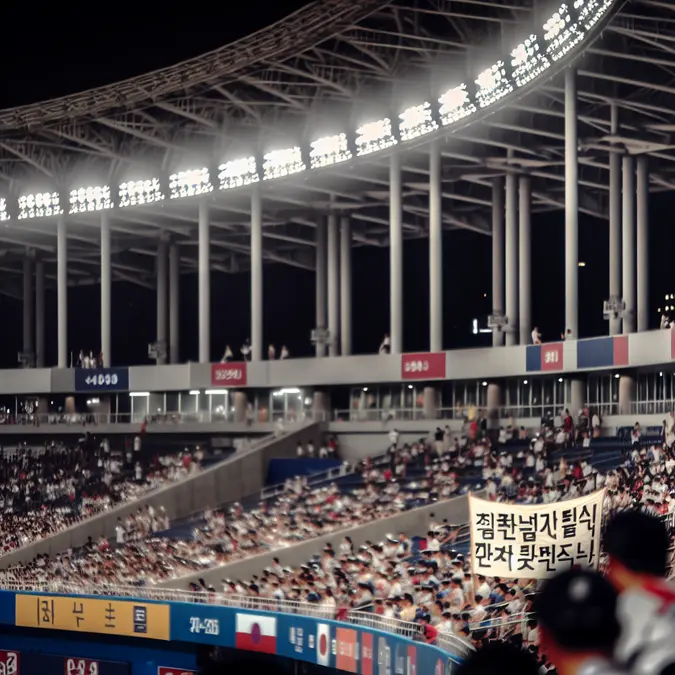
www.tnsmi-cmag.com – A bold Cuba World Baseball Classic protest sign flashed across television screens during Cuba’s 3–1 victory over Panama, transforming a global sports broadcast into an unexpected referendum on the island’s political reality and the power of live international events to expose dissent.
Cuba World Baseball Classic Protest: Why This Moment Matters
For years, Cuba has used international sports as a pillar of national pride and a showcase of the Revolution’s supposed success. Baseball, in particular, has symbolized identity, nationalism, and soft power. When a protest sign denouncing the Cuban regime interrupted the World Baseball Classic broadcast, it punctured that carefully managed image in real time. Viewers did not just watch a close 3–1 win over Panama; they saw a visible sign of rebellion aimed directly at Havana’s rulers.
While details of the exact wording of the sign remain limited outside paid sources, its impact is clear: dissidents, exiles, and critical voices are increasingly using high-visibility international platforms to challenge the Cuban government. This incident adds to a growing catalog of moments when politics seep into supposedly neutral sports spaces, from kneeling protests in American football to anti-regime banners in European soccer stadiums.
To understand why the Cuba World Baseball Classic protest matters, we must situate it in a broader context: the evolution of Cuban baseball, the island’s human-rights landscape, and the strategic use of live broadcasts by both states and their critics.
The Political Weight of a Baseball Broadcast
Sports broadcasts are more than entertainment; they are powerful messaging channels. Cuba’s participation in the World Baseball Classic (WBC) carries heavy symbolic meaning. The team represents not only athletic excellence but also the Cuban state and its political project. When a protest emerges within that space, it challenges the narrative that the regime remains universally supported or unchallenged.
Historically, regimes have leveraged sports victories to legitimize themselves. From Cold War Olympic medal counts to national football championships, governments have treated athletic success as proof of ideological superiority. Cuba has been no exception, celebrating its baseball achievements as evidence of the Revolution’s vitality. Against that backdrop, a visible anti-regime statement on an international broadcast undermines the intended message.
Furthermore, televised tournaments like the World Baseball Classic reach audiences well beyond typical news consumers. Fans tuning in for box scores and pitching duels suddenly confront a visual reminder that the Cuban reality includes dissent, repression, and exile. The sign becomes a counter-message, competing with official narratives about unity and national pride.
Cuba World Baseball Classic Protest and the History of Political Dissent in Sport
The Cuba World Baseball Classic protest fits into a long history of activists using sports as a stage. From the iconic raised fists of Tommie Smith and John Carlos at the 1968 Olympics to the more recent protests around racial justice and human rights, athletes and spectators have repeatedly turned tournaments into forums of political expression.
International competitions create a rare combination of visibility, emotion, and global media coverage. For Cuban dissidents and exiles, this environment offers an invaluable opportunity to break through censorship and indifference. While state media inside Cuba often filter or downplay dissent, live international feeds and social media amplification make it much harder to erase an image once it appears on screen.
Organizations such as Human Rights Watch and Amnesty International have documented patterns of repression, arbitrary detention, and restrictions on free expression in Cuba. A protest sign at a WBC game does not exist in a vacuum; it resonates because viewers, journalists, and diaspora communities can connect it with documented political and human-rights concerns on the island.
Baseball, Identity, and the Cuban Diaspora
Baseball is not simply a sport in Cuba; it is a cultural language shared across generations and borders. Many of the loudest critics of the Cuban regime today are part of a broad diaspora scattered across the United States, Latin America, and Europe. For them, Cuba’s national team at the World Baseball Classic evokes both pride in their heritage and pain tied to repression, economic crisis, and forced migration.
This duality is particularly visible in cities like Miami, Tampa, and Houston, where Cuban communities gather to watch WBC games. Scenes of fans cheering Cuba’s players often coexist with banners, placards, or chants demanding political change on the island. The protest sign that interrupted the Panama game likely emerged from this diaspora ecosystem—where sport, memory, and activism intersect.
Readers familiar with exile politics will recognize a pattern: as traditional media gatekeepers recede and broadcast sports become increasingly intertwined with social platforms, moments like this Cuba World Baseball Classic protest can travel far beyond the stadium. Screenshots, short video clips, and translations circulate almost instantly, allowing even small gestures to reach large audiences.
How the Cuba World Baseball Classic Protest Reverberated Online
Although the original Cuban broadcast and certain regional feeds may have tried to minimize or cut away from the protest sign, online ecosystems ensure that such images are preserved. Social media users often capture broadcasts in real time, sharing clips across platforms within seconds. Hashtags, fan forums, and diaspora news outlets magnify the effect.
Independent Cuban and Latin American media frequently pick up these fragments, adding context and commentary. They link them to broader debates about political prisoners, the July 11, 2021 protests, and ongoing economic hardships. In this way, a brief on-screen moment can trigger extensive discussions that outlast the game itself.
For deeper regional perspectives, readers can explore our coverage under Politics and Latin American democratic movements, where we regularly examine how public spaces and cultural events become arenas for political contestation.
Media Control, Censorship, and the Limits of Narrative Management
One of the most revealing aspects of the Cuba World Baseball Classic protest lies in how it tests the limits of media control. Inside Cuba, the state has historically maintained a tight grip over television, radio, and print. However, when events unfold on internationally produced broadcasts, that control weakens.
The World Baseball Classic is organized by Major League Baseball (MLB) and its partners, not by Cuban state television. While local broadcasters may carry or rebroadcast the signal, they do not fully control camera angles, crowd shots, or editorial priorities. This opens cracks through which unsanctioned images—like a protest sign—can appear.
Attempts to censor or digitally blur such content often backfire. Viewers notice abrupt cuts or odd framing. Online commentators point out what was removed. Ironically, efforts to hide dissent can amplify it, drawing more attention to the underlying grievance.
Cuba World Baseball Classic Protest as a Test of Soft Power
Soft power depends on credibility, appeal, and the ability to attract rather than coerce. Cuba has relied on cultural diplomacy, sports, and medical missions to project an image of resilience and moral authority. When critics use those very platforms to broadcast accusations of repression or failure, the soft-power equation shifts.
International observers judge not just the regime’s handling of dissent, but also its openness to pluralism in cultural and sporting arenas. If the global audience concludes that Cuba cannot tolerate even a silent banner within a baseball crowd, the country’s carefully built soft-power narrative may weaken.
Readers interested in how communication strategy, reputation management, and public perception intersect with politics can find additional analysis in our Media coverage, where we examine state and non-state actors competing for narrative dominance.
Perspectives from Players, Fans, and Analysts
Any fair, expert-driven examination of the Cuba World Baseball Classic protest must acknowledge the diversity of perspectives surrounding the event.
- Players often navigate a delicate balance. Many feel deep pride in representing Cuba while also grappling with personal or family experiences of hardship. Some have defected in previous tournaments, seeking professional opportunities and freedom abroad. Their silence or neutrality on visible protests does not necessarily imply agreement or disagreement; it reflects the complex pressures they face.
- Fans both inside and outside Cuba are equally divided. Some view political messages at games as an unwelcome intrusion, believing sport should remain a neutral, unifying space. Others argue that, in the absence of free elections or open media inside Cuba, international events are one of the few remaining stages where grievances can be aired safely.
- Analysts and scholars of sport and politics generally see such protests as inevitable. In tightly controlled societies, high-profile events become magnets for dissent. The more the state invests symbolically in a team or competition, the more tempting that stage becomes for protesters seeking maximum visibility.
We should also recognize the emotional complexity for many Cuban families. A grandmother in Havana might cheer the national team with genuine enthusiasm while silently wondering whether her grandson, who emigrated, had anything to do with the protest sign she heard about via a foreign broadcast. In that sense, the WBC protest speaks to the fragmentation and transnationalization of Cuban identity itself.
Global Reactions and the Role of International Media
The global media’s treatment of the Cuba World Baseball Classic protest will shape its long-term impact. When outlets highlight the incident as more than a curiosity, they invite audiences to consider the underlying grievances that prompted the sign. When coverage focuses solely on the final score—Cuba 3, Panama 1—it risks treating the protest as mere background noise.
High-quality journalism has a responsibility to contextualize. That means explaining the state of civil liberties in Cuba, noting recent waves of protests and arrests, and recognizing the role of the diaspora in amplifying dissent abroad. It also means listening to multiple voices: government representatives, critical activists, neutral sports analysts, and ordinary fans.
International sports organizations face their own choices. Do they treat political signs as prohibited behavior, punishable under stadium regulations? Or do they recognize that fans and even players will continue to use these stages for expression, and that overpolicing such acts may generate even more negative headlines?
What Comes Next After the Cuba World Baseball Classic Protest?
In the short term, we may see increased security and tighter screening at venues where Cuba plays, particularly in cities with large Cuban exile communities. Stadium operators may try to limit the display of overtly political banners, citing safety and neutrality.
Yet such measures are unlikely to fully contain dissent. Fans will adapt, using clothing, gestures, or digital tools to communicate their messages. Journalists and social media users will continue to capture and disseminate these acts. In the medium and long term, the more pressing question is how the Cuban government responds to the broader climate of dissatisfaction that made this protest resonate.
Repressive crackdowns risk further international isolation. Meaningful reforms—on civil liberties, economic policy, and political participation—could help defuse tensions, but they remain politically sensitive and uncertain.
Conclusion: Cuba World Baseball Classic Protest as a Warning Signal
The Cuba World Baseball Classic protest during the Panama game was more than a fleeting on-screen disruption. It served as a warning signal—for Havana, for international sports bodies, and for global audiences—that the boundaries between sport and politics are increasingly porous, especially when human-rights questions hang over a nation's image.
As readers, we should resist the temptation to treat this as a spectacle detached from lived reality. Behind that protest sign stand real individuals facing constraints on speech, movement, and opportunity. The World Baseball Classic offered them a moment to be seen and heard beyond the island's borders.
Whether policymakers, sports institutions, and the Cuban government itself learn from this moment will determine if future tournaments feature fewer confrontations—or far more. Either way, the Cuba World Baseball Classic protest has already secured its place as a vivid example of how a single televised image can disrupt carefully crafted narratives and force difficult questions into the center of the global conversation.