
 0
0
 0
0
www.tnsmi-cmag.com – The Bondi terror attack and Israeli President Isaac Herzog’s subsequent visit to Sydney have become a powerful prism through which we can examine rising antisemitism, community trauma, and the political challenges facing Australia’s leaders today. As wreaths were laid at Bondi and survivors met the Israeli head of state, a broader story unfolded: one about security, social cohesion, and how democracies respond when hatred erupts on their streets.
Bondi terror attack and Isaac Herzog’s message of shared Jewish pain
In the aftermath of the Bondi terror attack, Isaac Herzog met survivors and families of the victims, emphasizing a message that echoed across Jewish communities worldwide: “When one Jew is hurt, all Jews feel their pain.” This statement, while emotional, also carries deep political and historical weight. It links a local Australian tragedy to a long global history of antisemitic violence and collective Jewish memory.
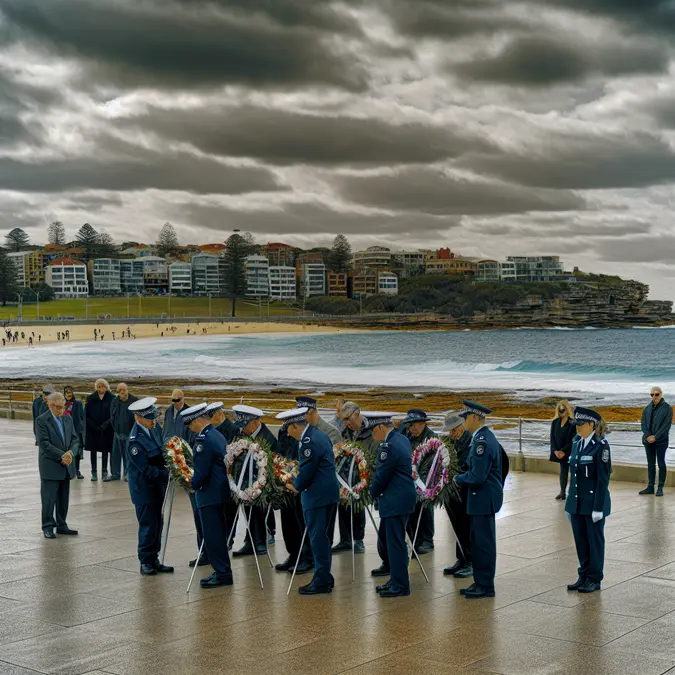
Herzog’s wreath-laying ceremony at Bondi was not merely symbolic. It represented Israel’s role as a self-declared guardian of Jewish communities worldwide, even far beyond its borders. For many Australian Jews, especially in Sydney’s eastern suburbs, that presence reinforced both solidarity and the perception that their local experience is deeply connected to global Jewish vulnerability.
For readers seeking broader regional and geopolitical context, this moment sits squarely in the shadow of the ongoing Israeli–Palestinian conflict and the documented global rise in antisemitic incidents since October 7, 2023, as tracked by organizations such as the Anti-Defamation League. Australia, often seen as relatively insulated from the world’s worst conflicts, now finds itself grappling with the same tensions that have gripped Europe and North America.
How the Bondi terror attack reshaped the debate on antisemitism in Australia
The Bondi terror attack has rapidly accelerated a national conversation about antisemitism, hate crimes, and the limits of lawful protest. In the days following the violence, Jewish organizations, civil libertarians, and political leaders put forward very different interpretations of what the attack represents.
For many Jewish leaders, the incident fits into a clear pattern: a surge in antisemitic rhetoric and harassment tied to conflicts in the Middle East. This reflects wider international trends documented by research institutions such as the European Union Agency for Fundamental Rights and others via Wikipedia’s antisemitism overview, where spikes in local incidents often correspond to flare-ups in Gaza, the West Bank, or Israel’s borders.
However, in Australia, the debate is layered with local complexities:
- Freedom of expression: Civil rights advocates warn that governments must carefully balance the response to hate crimes with the protection of protest rights, including those critical of Israeli policy.
- Policing and security: Law enforcement agencies face pressure to be more proactive in monitoring extremist rhetoric without indiscriminately targeting specific communities.
- Community cohesion: Muslim, Arab, and Palestinian communities fear that condemnation of extremist individuals could bleed into scapegoating entire groups.
These tensions have played out not only on Sydney’s streets but also across the media landscape, in parliament, and in courtrooms where protest restrictions and bail conditions are being challenged.
Media scrutiny, ABC controversy, and the politics around the Bondi terror attack
The Bondi terror attack has also intensified scrutiny of how Australian media covers Israel, Palestine, and domestic security. The ABC’s flagship investigative program Four Corners came under criticism, including from Australia’s domestic intelligence agency, Asio, for a recent episode exploring extremism and foreign influence. The public broadcaster, however, has stood by its editorial decisions.
This clash is not trivial. It goes to the heart of how democracies manage national security narratives without slipping into state-driven messaging. When an intelligence chief publicly criticizes a respected investigative program, it raises fundamental questions:
- Are journalists being pressured, directly or indirectly, to avoid sensitive topics?
- Is national security being used, even unintentionally, to shield particular political positions from scrutiny?
- How can audiences trust media coverage when the boundaries between public interest journalism and state messaging appear to blur?
At the same time, conservative commentators have accused sections of the Australian media of not taking antisemitism seriously enough, particularly in the context of pro-Palestinian demonstrations. Progressive voices, meanwhile, have criticized some outlets for conflating legitimate criticism of Israeli government policy with hate speech against Jews.
This polarized media environment mirrors what we see in other democracies. As coverage of the Politics of the Middle East becomes more intense, editorial decisions on language, framing, and choice of guests take on outsized significance. Every program and headline becomes a proxy battle over national identity, minority rights, and the nature of public debate itself.
Protests, legal battles, and the contested public space in Sydney
While Isaac Herzog laid a wreath at Bondi, activists from the Palestinian Action Group planned new protests in Sydney, and legal challenges over previous protest restrictions moved through the courts. The result: the Bondi terror attack has become intertwined with ongoing contention over who controls the streets and symbols of Australia’s largest city.
From the perspective of civil liberties, the right to protest near high-profile visits or symbolic sites is a litmus test of democratic resilience. Governments and police often argue that security concerns justify buffer zones, limited routes, or outright bans. Activists, however, counter that such measures dilute the impact of their message and risk setting precedents that can later be used against climate, labor, or Indigenous rights movements.
Bondi, in this sense, is more than a beach; it is a public stage where competing narratives of victimhood, solidarity, and geopolitical grievance are being acted out. The presence of an Israeli president makes rallies, counter-rallies, and police decisions even more charged.
Australian politics under pressure: leadership strains and party rifts
The political ramifications of the Bondi terror attack are also unfolding inside party rooms. Reports of nervous Liberal MPs anticipating a leadership spill underscore how volatile the broader environment has become. When foreign policy crises and domestic security concerns dominate headlines, opposition parties often struggle to find coherent, unifying responses.
Some conservatives believe that a harder line on protests, immigration, or public expressions of solidarity with Palestinians will resonate with worried voters. Others fear that such positions risk alienating younger Australians and multicultural constituencies. The Labor government, meanwhile, faces its own internal pressures between pro-Israel caucus members, left-wing critics of Israeli policy, and electorates with large Muslim or Jewish populations.
We have seen this pattern in other Western democracies: the politics of the Middle East rarely stay “over there.” They reshape domestic debates on multiculturalism, free speech, intelligence powers, and foreign alliances. Australia is no exception, and Bondi will likely be remembered as a moment when these tensions intensified dramatically.
Bondi terror attack: historical echoes and global Jewish solidarity
To fully understand the emotional resonance of the Bondi terror attack for Jewish communities, we need to place it within a broader historical arc. Within living memory, Jews endured industrialized genocide in Europe. In the decades that followed, Jewish communities in the diaspora built synagogues, schools, and cultural institutions that were often designed not just for worship or education but also for security.
Attacks on Jewish targets in Paris, Pittsburgh, Copenhagen, Brussels, and elsewhere have entrenched the sense that synagogues, kosher restaurants, and Jewish schools can quickly become focal points for violent extremists. Even when an attack occurs far from a religious setting, as in Bondi, the perception remains that Jews are being targeted for who they are, not where they are.
Herzog’s phrase, “When one Jew is hurt, all Jews feel their pain,” reflects this transnational network of empathy and fear. It also affirms Israel’s self-appointed role as the guardian of global Jewry. Critics argue that this framing risks conflating diaspora communities with the policies of any given Israeli government, potentially increasing their vulnerability. Supporters counter that, given history, a strong, vocal Israel is indispensable for Jewish security.
For Australian Jews, Herzog’s presence at Bondi validated their pain and brought global attention. For some Australians who are critical of Israeli government actions, however, the visit risked blurring a domestic tragedy with a controversial foreign policy agenda. Navigating that tension will remain a challenge for community leaders and policymakers alike.
Bondi terror attack and the struggle to define antisemitism
A crucial debate emerging from the Bondi terror attack concerns the definition of antisemitism and how it should be applied in law, education, and public discourse. Various definitions, such as that of the International Holocaust Remembrance Alliance (IHRA), have been adopted by many governments and institutions but remain contested by some academics and activists.
Supporters of the IHRA definition argue that it captures the modern reality where antisemitism often manifests through hostility to Israel as a Jewish state, including through double standards or denial of Jewish self-determination. Detractors warn that overly broad definitions could chill legitimate criticism of Israeli policies, especially regarding the Palestinians.
Bondi has thrown these theoretical arguments into sharp relief:
- When does a protest chant cross the line from political speech into harassment or intimidation?
- How should universities, media outlets, and workplaces respond when Jewish staff or students feel targeted?
- Can governments clearly criminalize hate without conflating it with dissent?
These are not abstract questions. They will shape Australia’s legal frameworks, educational curricula, and community relations for years to come. Readers interested in broader civil rights debates can explore more context via our coverage of World affairs and democratic norms.
The road ahead: policy, community resilience, and responsible leadership
Looking beyond the immediate shock of the Bondi terror attack, the key challenge for Australia’s leaders will be designing responses that enhance safety without eroding the liberal democratic values that underpin the country’s social contract.
Several policy and social priorities are already emerging:
- Targeted security support: Synagogues, mosques, and other at-risk community institutions may require enhanced funding for security infrastructure and liaison with law enforcement, delivered in a way that does not stigmatize them.
- Data-driven policing: Intelligence-led approaches to extremism, whether Islamist, far-right, or other forms, must rely on clear evidence and strong oversight to prevent abuses.
- Education for resilience: Comprehensive education on antisemitism, Islamophobia, racism, and democratic values can help younger Australians recognize and reject dehumanizing narratives.
- Political restraint: Leaders across the spectrum should resist the temptation to instrumentalize tragedies like Bondi for short-term political gain, especially in leadership contests or factional battles.
Community resilience will matter just as much as state policy. Jewish, Muslim, and other minority organizations have already begun quiet dialogues behind the scenes, seeking to prevent further polarization. These efforts rarely capture headlines, but they are critical if Australia is to avoid importing the worst sectarian divisions seen elsewhere.
Conclusion: why the Bondi terror attack matters far beyond Sydney
The Bondi terror attack is far more than a local crime story or a brief diplomatic photo opportunity. It is a revealing moment in which Australia’s commitments to pluralism, free expression, and minority protection are being tested under intense pressure. Isaac Herzog’s solemn words, the mourners at Bondi, the angry chants of protesters, and the debates in newsrooms and parliaments all point to a nation wrestling with what kind of democracy it wants to be in an era of globalized conflict and online radicalization.
For readers, the essential question is not only how we respond to this single attack, but whether we allow it to deepen divides or use it as a catalyst to strengthen institutions, refine laws, and build more resilient communities. How Australia chooses to address antisemitism, protect protest rights, and manage political fallout in the wake of the Bondi terror attack will signal, to its own citizens and to the world, the values it is ultimately prepared to defend.