
 0
0
 0
0
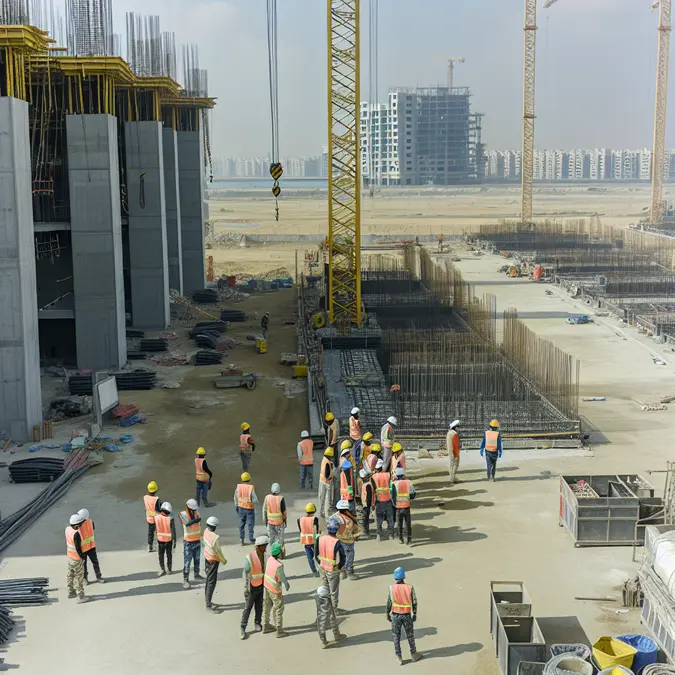
www.tnsmi-cmag.com – Qatari Diar CityGate has taken a decisive step forward as Qatari Diar Egypt awards one of the main construction packages for its flagship New Cairo project to Concrete Plus, signaling renewed momentum in Egypt’s high-end real estate and infrastructure development pipeline.
Qatari Diar CityGate: A Strategic Turning Point for New Cairo
Qatari Diar CityGate is not just another real estate development in Egypt’s booming New Cairo corridor. It represents a large-scale, mixed-use urban project backed by Qatari Diar, the real estate investment arm of the Qatar Investment Authority, with a mandate to deliver world-class urban communities. The recent contract award to Concrete Plus, one of Egypt’s established construction firms, underscores how the project is entering a more decisive execution phase after years of design, planning, and regulatory review.
CityGate is strategically positioned along the Cairo–Suez Road, linking it to both central Cairo and the New Administrative Capital. In an environment where Egypt continues to invest heavily in new cities and infrastructure, this project fits into a broader national strategy to decongest Greater Cairo while attracting foreign direct investment and boosting the construction sector.
For readers tracking regional investment flows, the move shows that Gulf capital, particularly from state-backed entities such as Qatari Diar, remains actively committed to Egypt’s long-term urbanization plans despite global macroeconomic uncertainties.
Why the Qatari Diar CityGate Contract Matters Now
The awarding of a main construction package for Qatari Diar CityGate to Concrete Plus is significant for several reasons. First, it marks a shift from conceptual masterplans to on-the-ground implementation. Second, it sends a clear signal of confidence in Egypt’s construction ecosystem and regulatory environment. Third, it highlights New Cairo’s continued evolution into a regional hub for business, retail, and premium residential living.
For stakeholders — from investors and developers to contractors and suppliers — this contract acts as a milestone that helps de-risk the project. Once a credible main contractor is in place, financing, pre-sales, and ancillary service agreements typically accelerate. Qatari Diar’s decision to partner with Concrete Plus is therefore both a technical and a market signal.
Profile of Concrete Plus and Its Role in Qatari Diar CityGate
Concrete Plus has emerged as one of Egypt’s leading construction companies, handling complex commercial, residential, and infrastructure projects. The firm’s portfolio spans large mixed-use developments, hospitality assets, and high-spec office buildings, giving it the technical capacity to deliver on Qatari Diar CityGate’s demanding specifications.
In projects of this scale, the main contractor’s responsibilities often include structural works, core and shell construction, and coordination with specialist subcontractors in mechanical, electrical, and plumbing (MEP), façade engineering, and smart-city technologies. While the exact scope of this specific package has not been publicly detailed, industry patterns suggest that Concrete Plus will be central to the early structural and infrastructure backbone of the development.
The choice of a strong local contractor also reflects a broader regional trend: international developers increasingly partner with experienced domestic firms to mitigate execution risk, navigate regulatory frameworks, and tap into local supply chains. This model has been visible in other large Egyptian developments around New Cairo and the New Administrative Capital, where local contractors provide both cost efficiency and contextual expertise.
Qatari Diar CityGate in the Context of Egypt’s Urban Expansion
To understand the importance of Qatari Diar CityGate, we need to place it within Egypt’s wider urban strategy. Over the past decade, Egypt has embarked on a program of new city development, including New Cairo, 6th of October City, and the New Administrative Capital. These projects aim to redistribute population density, modernize infrastructure, and attract foreign investment.
New Cairo, in particular, has become a magnet for upper-middle and high-income residents, multinational corporations, and international schools and universities. Its appeal lies in better urban planning, wider roads, and a growing network of amenities. Qatari Diar CityGate adds another layer to this evolving landscape: a master-planned community that blends residential, commercial, and leisure components with a focus on integrated living.
According to multiple market analyses from regional property consultancies and sources like Reuters’ business and real estate coverage, such projects are seen as long-term hedges against inflation and currency volatility, particularly in emerging markets. When backed by sovereign wealth capital, they often carry an additional perception of stability.
7 Critical Insights Shaping the Future of Qatari Diar CityGate
To unpack the long-term significance of Qatari Diar CityGate, we highlight seven critical insights that professionals in real estate, finance, and construction should monitor closely.
1. Qatari Diar CityGate as a Benchmark for Gulf–Egypt Investment Ties
First, Qatari Diar CityGate functions as a barometer of Gulf investor appetite for Egyptian real assets. When a state-linked developer advances a major project by appointing a main contractor, it signals confidence in both the host market and the project’s fundamentals. This can encourage other investors to move forward with stalled or planned projects, particularly in adjacent corridors like New Cairo and the New Administrative Capital.
We can expect that, as construction advances, banks, institutional investors, and high-net-worth individuals will reassess their exposure to similar large-scale developments in Egypt, potentially unlocking further capital inflows.
2. Impact on Egypt’s Construction and Materials Supply Chain
Second, the construction phase of Qatari Diar CityGate will have a direct impact on Egypt’s construction supply chain. Large contracts typically generate demand for steel, cement, aggregates, electrical components, and finishing materials. This demand can support capacity utilization among local manufacturers and, in some cases, justify new investment in plant expansion or modernization.
Moreover, through subcontracts and framework agreements, Concrete Plus is likely to engage a broad network of specialized firms. This multiplier effect can create jobs, enhance technical capabilities, and strengthen Egypt’s overall construction ecosystem.
3. Urban Design and Sustainability Expectations
Third, stakeholder expectations around sustainability, livability, and smart infrastructure are rising. Global investors and high-end buyers now evaluate projects based on green building credentials, energy efficiency, and digital connectivity. Qatari Diar CityGate will face competitive pressure to integrate features such as optimized energy systems, water-saving technologies, and smart mobility solutions.
Readers who follow our coverage on innovation and green infrastructure through sections such as Sustainable Development will recognize the growing link between ESG (Environmental, Social, Governance) standards and the long-term value of real assets. If Qatari Diar CityGate successfully embeds such principles, it could set a new benchmark for integrated communities in Egypt.
4. Positioning Within the New Cairo Competitive Landscape
Fourth, the project must compete with a crowded field of developers and master-planned communities in New Cairo. A number of prominent regional and local players are already active, offering gated compounds, mixed-use complexes, and large commercial hubs. Differentiation will be critical.
Qatari Diar CityGate’s strengths will likely lie in its scale, design coherence, and the reputational weight of Qatari Diar as a global developer with projects spanning Europe, the Middle East, and Asia. Brand trust, combined with a reputation for delivery, could help it stand out amid intense competition.
5. Macroeconomic Headwinds and Risk Management
Fifth, the broader macroeconomic environment cannot be ignored. Egypt has faced currency fluctuations, inflation pressures, and evolving subsidy and interest-rate policies over recent years. For a long-horizon project like Qatari Diar CityGate, financial structuring and risk management are crucial.
Developers and contractors often resort to phased construction, flexible payment plans, and diversified revenue models to mitigate volatility. As the project advances, analysts will closely watch how sales performance, pricing strategies, and construction timelines adjust to macroeconomic shifts.
6. Employment and Skills Development
Sixth, large construction contracts such as the one granted to Concrete Plus typically create substantial employment opportunities. These range from on-site labor and engineering roles to off-site design, project management, legal, and financial services. Over the life cycle of Qatari Diar CityGate, thousands of direct and indirect jobs may be generated.
Beyond immediate employment, such projects help transfer knowledge and build technical capacity. Local engineers and technicians gain exposure to international standards, digital construction tools, and advanced project management methodologies, raising the overall skill baseline in Egypt’s construction sector.
7. Long-Term Socioeconomic Footprint of Qatari Diar CityGate
Seventh, and perhaps most importantly, Qatari Diar CityGate will shape the socioeconomic fabric of New Cairo for decades. By clustering residential, commercial, hospitality, and leisure components within a single masterplan, the project has the potential to create a self-sustaining ecosystem that attracts both local residents and foreign businesses.
Mixed-use communities often catalyze secondary development around them — from schools and clinics to retail centers and business parks. Over time, this compounding effect can transform entire corridors and influence commuting patterns, consumption behavior, and even lifestyle choices.
Governance, Transparency, and Market Confidence
Investor and buyer confidence in large-scale projects increasingly depends on governance and transparency. Regular progress updates, clear legal documentation, and adherence to contractual obligations all contribute to perceived trustworthiness. For Qatari Diar CityGate, public clarity around timelines, infrastructure commitments, and delivery milestones will be central to sustaining market confidence.
In this context, the contract award to Concrete Plus can be seen as an inflection point. Once principal contractors mobilize on site, it becomes easier for stakeholders to track physical progress. That visibility often translates into greater willingness by banks to provide project finance and by buyers to commit to off-plan purchases.
In capital-intensive real estate developments, each executed contract is not just a technical step; it is a signaling event that reconfigures risk perceptions across the entire stakeholder landscape.
Lessons for Regional Developers and Policymakers
The trajectory of Qatari Diar CityGate offers several lessons for regional developers and policymakers. First, long-term alignment between state-backed investors and host-country regulators can unlock transformative urban projects, even in challenging macroeconomic climates. Second, collaboration with competent domestic contractors such as Concrete Plus can reduce execution risks while maximizing local economic benefits.
Policymakers, meanwhile, can draw insights from how projects like CityGate interact with infrastructure planning, housing policy, and investment regulations. A stable, predictable regulatory framework helps attract cross-border capital and ensures that flagship projects advance from concept to completion.
For more context on how large-scale developments intersect with economic strategy and policy in the region, readers can explore related coverage in our Business section, where we analyze similar mega projects and investment agreements across the Middle East and North Africa.
Conclusion: Qatari Diar CityGate and the Next Phase of New Cairo
As Qatari Diar Egypt formalizes its partnership with Concrete Plus for a key construction package, the Qatari Diar CityGate project is moving from vision to tangible reality. This transition marks an important chapter not only for New Cairo’s urban evolution but also for Egypt’s positioning as a prime destination for Gulf-backed real estate and infrastructure investment.
The development’s future will depend on the careful orchestration of design, financing, construction, and market strategy. Yet the latest contract award sends a clear, positive signal: major institutional investors remain engaged, capable local contractors are mobilized, and the long-term story of New Cairo as a dynamic, multi-dimensional urban hub is far from complete. As construction progresses, stakeholders will watch closely to see whether Qatari Diar CityGate delivers on its promise to become a benchmark for integrated, sustainable urban living in Egypt’s rapidly changing real estate landscape.