
 0
0
 0
0
www.tnsmi-cmag.com – Auckland housing intensification has reached a decisive moment, as city councillors prepare to vote on which suburbs will absorb townhouses and apartments and which will effectively keep their traditional backyards and lawns. Behind this seemingly technical planning decision lies a profound reshaping of Auckland’s suburbs, property values, and the way residents will live, move, and invest in the decades ahead.
Auckland housing intensification and the battle for the suburban lawn
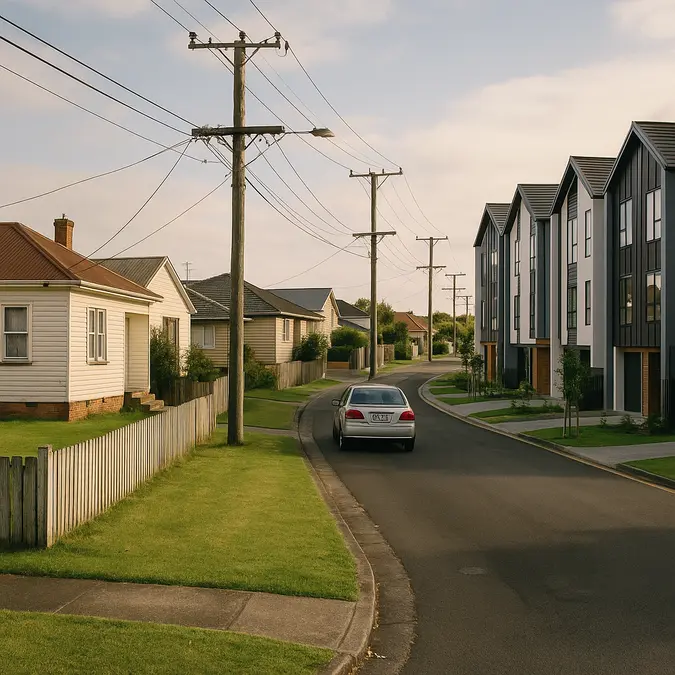
The immediate trigger for this debate is a proposed planning map released by Auckland Council, ahead of a contentious vote that will determine where higher-density development will be encouraged and where lower-density, garden-style living will remain protected. While the underlying policy details sit inside technical planning documents, the core question for many residents is brutally simple: Will my street become a townhouse zone, or will it keep its lawns?
This is not just a local squabble. Around the world, major cities are grappling with similar questions of urban density, housing affordability, and infrastructure stress. From New Zealand’s national housing crisis to global debates over “missing middle” housing in cities like Toronto and Sydney, the question of how and where to intensify has become central to urban policy. Auckland, as New Zealand’s largest city, is now a high-profile test case.
7 Critical shifts driving Auckland housing intensification
To understand what this vote means for homeowners, renters, developers and investors, we break down seven critical shifts behind Auckland housing intensification and what they may signal for the city’s future.
1. Zoning maps become political fault lines
At the heart of the current decision is a set of zoning maps that show where Auckland Council proposes to allow greater density. These maps divide suburbs into areas that can accommodate townhouses and small apartment blocks, and areas that will largely retain detached homes and larger sections.
In practical terms, Auckland housing intensification will be concentrated along key transport corridors, near town centres, and in suburbs that already have strong infrastructure. That aligns with long-standing planning principles that aim to minimise sprawl and make better use of existing public transport, schools, pipes, and roads. However, once these principles are converted into street-by-street maps, politics takes over.
Homeowners in leafy, low-density areas often argue they will bear the brunt of congestion, shadowing, and character loss if townhouse developments cluster nearby. Meanwhile, housing advocates and younger residents see intensification as essential to avoiding runaway prices and long commutes from distant fringe suburbs.
Similar disputes have unfolded in other global cities. In the United States, for example, proposed reforms to single-family zoning in cities like Minneapolis and Oregon sparked fierce debate, yet ultimately led to more flexible land use rules, as reported by outlets such as The New York Times. Auckland now stands at a comparable pivot point.
2. Housing affordability and the promise – and limits – of density
Many supporters of Auckland housing intensification argue that unlocking more land for multi-unit housing is one of the few tools that can genuinely ease the city’s affordability crisis. Increasing the supply of homes in desirable, well-connected areas can moderate price growth over time, especially for smaller households and first-home buyers.
Yet density is not a magic bullet. International evidence shows that zoning reform must coincide with actual construction, competitive building markets, and streamlined consenting to deliver meaningful affordability gains. If landowners simply “bank” their up-zoned sites without building, or if infrastructure and consent delays choke supply, potential benefits will be blunted.
Furthermore, if higher-density areas cluster overwhelmingly in suburbs with lower incomes and fewer amenities, the result can be an intensification of disadvantage rather than a fairer housing system. Auckland councillors must therefore balance the imperative of supply with the principle of equity: who gets townhouses, and who gets to keep their lawns, cannot be determined purely by who shouts the loudest.
3. Infrastructure under pressure: pipes, buses, and schools
One of the most common objections to Auckland housing intensification is the claim that existing infrastructure is already at breaking point. Residents point to crowded buses, overloaded schools, and aging water systems as evidence that their suburbs cannot cope with hundreds of new residents.
There is truth in these concerns. Infrastructure investment has not always kept pace with growth, particularly during Auckland’s rapid population increases of the last decade. Intensification must therefore be matched with targeted upgrades: smarter bus networks, high-frequency public transport, expanded school capacity, and resilient three-waters infrastructure.
On the other hand, low-density sprawl also imposes heavy infrastructure costs, requiring longer pipes, more roads, and car-dependent commuting patterns. As organisations like the New Zealand Council for Infrastructure Development have often noted, focusing growth where services already exist can be more cost-effective over time. The council’s maps of intensification therefore double as a de facto infrastructure strategy.
4. Character suburbs, heritage, and the politics of “charm”
Another tension inside Auckland housing intensification is the protection of so-called “character” suburbs: areas with older villas, bungalows, and mature trees that many residents regard as the visual identity of Auckland. These neighbourhoods often command premium prices and strong emotional loyalty.
Planners face a difficult question: how much heritage and character should be protected, and how much should be allowed to evolve? In some cases, blanket character overlays have effectively restricted intensification in precisely the areas that are closest to jobs and services. Critics argue that this can entrench exclusivity and push development into less well-served suburbs.
There is room for nuance. Sensitive design guidelines, incentives to retain street-facing facades, and careful height controls can enable higher-density forms that respect local character rather than erase it. But that requires a sophisticated urban design conversation, not simply a binary choice between lawns and townhouses.
5. Winners and losers: property values and investment strategies
Any major move in Auckland housing intensification will create clear winners and losers in the property market. Owners of sites that are up-zoned for greater height and density may see a surge in land values, particularly if their properties sit on corners or near town centres. Developers and build-to-rent operators will likely target these locations aggressively.
Meanwhile, homeowners in areas that retain strict low-density protections may see the relative scarcity of their large sections underpin sustained high values, especially among families who prize gardens, privacy, and space. The choice between intensification and lawn preservation, in other words, directly influences investment strategies across the city.
For readers tracking these dynamics, it is vital to examine not just the headline zoning categories but also the detailed overlays, transport plans, and town centre strategies tied to each suburb. Cross-referencing council proposals with independent analysis through resources such as Property coverage can provide deeper insight into how value may shift over the medium term.
6. Climate, emissions, and the 15-minute city debate
Auckland housing intensification is also inseparable from climate and emissions policy. Compact cities generally support lower per-capita emissions by shortening commutes, enabling public transport, and reducing the need for energy-intensive infrastructure expansion.
The “15-minute city” concept – where most daily needs can be met within a short walk or cycle from home – has gained prominence in global planning circles and on urban planning forums. Auckland’s intensification maps can be seen as an attempt, however imperfect, to move in that direction. Concentrating townhouses near local centres, shops, and bus routes allows more residents to live car-light or car-free lifestyles.
However, if intensification is not accompanied by safe walking and cycling infrastructure, frequent public transport, and accessible green spaces, the promised environmental gains may prove elusive. Simply replacing lawns with townhouses, without redesigning streets and transport networks, risks creating denser but still car-dependent communities.
7. Democratic legitimacy and the risk of backlash
Finally, the success or failure of Auckland housing intensification will depend heavily on public trust. Planning reforms that are perceived as technocratic or imposed can trigger a significant backlash, driving homeowners into organised resistance and turning council elections into de facto referendums on density.
To avoid that outcome, councillors and planners need to engage transparently, explain trade-offs clearly, and provide tools for residents to understand how proposals affect their specific properties. Interactive maps, neighbourhood workshops, and accessible explanatory material can turn a polarised debate into an informed conversation.
Media and analysis platforms have a role to play as well. In-depth coverage through sections such as Urban Development helps readers see beyond immediate headlines and understand the structural forces at work – from national policy mandates to demographic shifts and global capital flows.
What Auckland homeowners and renters should watch next
As councillors approach their vote, both homeowners and renters should pay close attention to several key factors that will shape the trajectory of Auckland housing intensification over the coming years.
A closer look at your suburb’s proposed zoning
For individual property owners, the most immediate question is how their specific street is classified under the proposed intensification plan. Is your property in a mixed housing urban zone, a terrace housing and apartment building zone, or largely protected as a single house zone? Each designation carries different implications for future value, redevelopment potential, and neighbourhood character.
Even within the same suburb, outcomes can vary sharply block to block, depending on proximity to transport hubs, town centres, or environmental constraints. Investors and residents alike should study official maps carefully and seek professional advice where stakes are high.
Timing, phasing, and the construction pipeline
It is also important to remember that Auckland housing intensification is a long-term process, not a single event. Even if councillors approve wide-ranging zoning changes, actual development will roll out over years or decades. Construction cycles, interest rates, building costs, and regulatory settings will all influence the pace of change.
We can expect initial activity to cluster in high-demand, high-return locations: near rapid transit stations, established centres, and key employment nodes. Over time, as infrastructure improves and markets adjust, second-tier areas may follow. For residents anxious about immediate transformation, it is worth noting that most neighbourhoods will evolve gradually rather than overnight.
National policy, court challenges, and future reviews
Auckland Council does not operate in a vacuum. National housing and planning laws, including requirements for medium-density residential standards in urban areas, strongly shape what the council can and cannot do. Legal challenges from residents’ associations, developers, or advocacy groups may further refine how intensification rules are applied.
Future councils could also revisit zoning decisions, particularly if political tides turn or if emerging data suggests unintended consequences. That uncertainty underscores the importance of designing an intensification framework that is robust, evidence-based, and capable of evolving without constant upheaval.
Balancing lawns and townhouses: what is at stake
The core tension inside Auckland housing intensification is not simply aesthetic – lawns versus townhouses – but deeply structural. It is a question of who gets to live close to jobs, schools, and services; how the city manages growth; and whether housing will remain within reach for the next generation.
Protecting some areas of low density and character can be legitimate, especially where heritage or environmental constraints are compelling. But if too much of the city is locked up, the pressure will spill elsewhere, driving up prices and pushing growth to the fringe. Conversely, unrestrained, poorly designed intensification can damage liveability, strain infrastructure, and erode public support for planning altogether.
The upcoming council decision is therefore best seen not as a final answer, but as a major step in a long-running negotiation between competing values: stability and change, private amenity and public need, backyard space and urban access.
Conclusion: Auckland housing intensification as a defining test
For Auckland, the current round of planning decisions may prove to be a defining test of its maturity as a modern, globally connected city. Auckland housing intensification offers a pathway to more inclusive, efficient and sustainable urban living – but only if executed with care, transparency, and a willingness to confront difficult trade-offs. As councillors determine where townhouses will rise and where lawns will endure, the real issue is not just the physical shape of suburbs, but the kind of city Auckland chooses to become.