
 0
0
 0
0
www.tnsmi-cmag.com – B.C. government investment in Nanaimo’s Niik Steel is more than a regional funding announcement; it is a revealing case study in how public capital can reshape local manufacturing capacity, accelerate the clean economy, and redefine what sustainable industrial growth looks like on Canada’s West Coast.
B.C. government investment and the rise of Niik Steel in Nanaimo
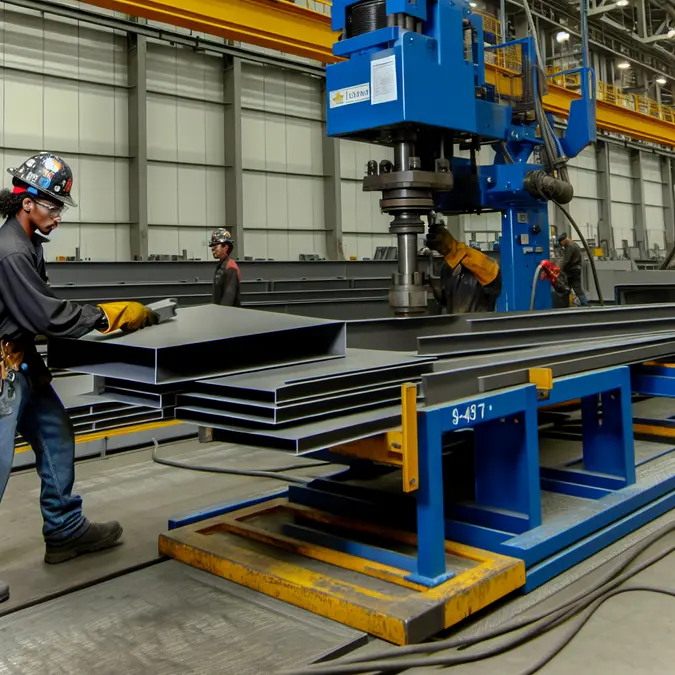
When the Province of British Columbia commits major funding to a regional manufacturer like Niik Steel in Nanaimo, readers should see it as part of a larger industrial strategy. According to local reporting, the latest B.C. government investment will allow Niik Steel to triple the amount of steel it fabricates. That single data point has sweeping implications for jobs, supply chains, climate policy, and how we think about resilient regional economies.
Niik Steel, based in Nanaimo on Vancouver Island, operates in a sector that often flies under the radar: specialized steel fabrication that feeds construction, infrastructure, maritime, and potentially renewable-energy projects. In a period when governments worldwide are reevaluating their dependence on long, fragile supply chains, this type of investment reflects a clear shift toward local capacity and value-added manufacturing.
As we analyze this development, we will explore what this funding tells us about British Columbia’s industrial priorities, what it means for businesses across the province, and how Nanaimo can leverage this moment to position itself as a manufacturing and innovation hub. For broader context on economic and industry developments, readers can also explore our coverage under Business and Economy.
Why this B.C. government investment matters now
The timing of this B.C. government investment into Niik Steel is not accidental. It lands at the intersection of multiple economic and policy trends:
- Post-pandemic supply-chain rethinking – Governments and businesses are seeking shorter, more reliable supply routes for essential materials like steel.
- Infrastructure and housing pressure – British Columbia is undertaking ambitious infrastructure, transportation, and housing programs that demand a steady supply of structural steel and fabricated components.
- Climate and clean-economy transition – Steel fabrication facilities are being pushed to adopt lower-emissions processes and to support green infrastructure, from mass transit to wind and solar projects.
According to global industry data on steel, governments have historically played a pivotal role in keeping core industrial capacity onshore, especially in regions that rely on construction and infrastructure as economic engines. British Columbia is following a familiar but evolving playbook: target strategic sectors, consolidate regional strengths, and align funding with long-term policy goals.
5 critical impacts of the B.C. government investment in Niik Steel
To understand the full weight of this funding initiative, it is useful to break it down into five core impact areas that matter to our readers: jobs, regional supply chains, innovation, climate policy, and community resilience.
B.C. government investment and local job creation
Tripling fabrication capacity is not a minor operational change. It suggests new equipment, expanded facilities, and, crucially, more workers on the shop floor and in engineering, logistics, and management roles.
From a labor-market perspective, this B.C. government investment will likely produce:
- Direct jobs – Welders, fabricators, engineers, safety professionals, and quality-control specialists.
- Indirect jobs – Positions in supply companies providing raw steel, fasteners, coatings, fabrication tools, and industrial services.
- Induced jobs – Local service jobs generated because more workers have incomes to spend in Nanaimo’s retail, hospitality, and housing markets.
While the exact employment numbers have not yet been made public, economic multipliers from the steel and fabrication sectors suggest that each direct job can support several additional jobs in the local economy. Research from organizations such as the OECD Steel Committee consistently highlights the outsized role of steel manufacturing in regional employment stability.
Strengthening Vancouver Island’s industrial supply chain
Vancouver Island has traditionally been known for its forestry, tourism, and public-sector employment. Heavy manufacturing, by contrast, has remained relatively limited, with many major fabricated components imported from the Lower Mainland or overseas. This B.C. government investment into Niik Steel subtly but significantly shifts that balance.
With the ability to triple output, Niik Steel can:
- Serve a larger share of Vancouver Island’s construction and infrastructure projects without relying on off-island suppliers.
- Shorten timelines for complex steel components, from design to delivery.
- Increase reliability for contractors who are often exposed to delays on ferries and at ports.
This may sound technical, but for contractors trying to build housing, bridges, or municipal facilities on schedule, having a high-capacity fabricator within a two-hour drive can be the difference between profit and loss. Regionally anchored supply capacity also reduces vulnerability to global shocks, shipping disruptions, and commodity volatility.
B.C. government investment as a lever for innovation and productivity
Public funding on this scale rarely comes without expectations. The Province will want to see more than headline job numbers; it will be looking for innovation, training, and productivity gains that keep B.C. competitive in a global industry.
Tripling fabrication capacity typically requires:
- Advanced machinery – CNC cutting tables, robotic welders, automated handling systems, and computer-aided design (CAD) integration.
- Digital workflows – Tighter links between engineering, procurement, and production so that errors are caught early and material waste is minimized.
- Upskilling programs – Training existing staff to operate new systems and attract young talent into skilled trades and engineering roles.
This is where a B.C. government investment can have a multiplier effect. When one manufacturer raises its technological baseline, competitors and partners often react by upgrading their own capabilities. Over time, that dynamic can generate a regional cluster of advanced manufacturing on Vancouver Island, anchored by firms like Niik Steel.
Aligning steel fabrication with B.C.’s clean-economy goals
British Columbia has set ambitious climate targets and clean-growth strategies. A modern fabrication plant can play a surprisingly important role in meeting those goals.
There are several ways this B.C. government investment in Niik Steel can support the clean economy:
- Lower-carbon processes – By adopting efficient equipment and process optimization, Niik Steel can reduce energy use and emissions per tonne of fabricated steel.
- Supplying green infrastructure – Fabricated steel is essential for transit systems, bridges, water-treatment plants, and renewable-energy installations such as wind and solar mounting systems.
- Enabling circular practices – Capacity expansions create opportunities for more effective recycling, re-use of offcuts, and integration of recycled content where feasible.
In this sense, the B.C. government investment is not just about supporting traditional industry; it is about future-proofing that industry so it can actively participate in, rather than be sidelined by, the transition to a low-carbon economy.
Community resilience and the long-term payoff
For Nanaimo, this announcement is also a story about community resilience. Medium-sized cities often struggle to diversify their economies beyond a narrow set of sectors. A strong, technologically advanced fabrication company helps to rebalance that equation.
Long-term benefits may include:
- Stable tax base – A thriving steel manufacturer contributes significant property, payroll, and business taxes over time.
- Local supplier ecosystems – Smaller firms in machining, logistics, coatings, and quality testing can grow around Niik Steel.
- Educational partnerships – Colleges and trade schools on Vancouver Island may expand programs in welding, fabrication, and engineering to meet industry demand.
These community-level impacts rarely generate headlines, but they are critical to understanding why public officials support such projects and why the B.C. government investment in Niik Steel matters far beyond the company’s walls.
B.C. government investment in the context of industrial policy
To fully grasp the strategic significance of this funding, readers should place it alongside other provincial and federal initiatives aimed at rebuilding domestic manufacturing capacity. Canada, like many advanced economies, is reevaluating decades of deindustrialization and offshoring. The vulnerabilities laid bare by the pandemic have only sharpened this focus.
At the federal level, initiatives under the Innovation and Skills Plan and various clean-technology funds have directed capital into sectors like battery manufacturing, critical minerals, and advanced materials. In B.C., the emphasis has extended to LNG, forestry innovation, and increasingly to high-value manufacturing linked to construction and infrastructure.
Viewed through that lens, this B.C. government investment in Niik Steel is part of a layered strategy:
- Regional balance – Ensuring that the benefits of industrial funding are not concentrated solely in Metro Vancouver.
- Sectoral diversification – Supporting not only high-tech digital firms but also advanced applications of traditional industries like steel.
- Strategic autonomy – Reducing dependence on external suppliers, particularly for materials vital to infrastructure and housing commitments.
For policy watchers, the Niik Steel case offers a concrete example of how macro-level industrial strategy translates into specific investments with measurable outcomes in capacity, employment, and regional development.
Risks, oversight, and accountability
No public investment is risk-free. A professional, critical assessment must also highlight the challenges and potential pitfalls associated with this B.C. government investment.
Key questions include:
- Market exposure – Can Niik Steel maintain sufficient order volume to justify its expanded capacity in downturns?
- Cost discipline – Will the funding be paired with strong project-management practices to prevent cost overruns or delays in facility upgrades?
- Environmental performance – How will the company document and report on emissions, waste management, and energy efficiency tied to the new capacity?
Government agencies typically address these concerns through performance contracts, milestone-based disbursements, and periodic reporting. While details specific to this arrangement have not been released publicly, industry-standard practice suggests a clear expectation of transparency and measurable return on public funds.
B.C. government investment and the role of local stakeholders
For this initiative to succeed over the long term, it cannot be a government-and-corporation story alone. Local stakeholders—unions, educational institutions, Indigenous communities, municipal governments, and neighboring businesses—will all shape how the B.C. government investment ultimately plays out.
Constructive engagement could yield:
- Inclusive hiring strategies that open pathways for under-represented groups into skilled trades.
- Apprenticeship pipelines linking local schools and colleges to new job opportunities at the expanded facility.
- Shared infrastructure planning for roads, utilities, and port access needed to support higher freight volume.
By weaving these elements into the rollout, Nanaimo can turn a single corporate expansion into a broader community development project anchored in public-private collaboration.
What readers and businesses should watch next
For readers following regional economic trends, several signposts will indicate whether this B.C. government investment achieves its potential:
- Construction and commissioning timelines for Niik Steel’s expanded capacity.
- Announcements of new contracts tied to major infrastructure or housing projects in B.C.
- Partnerships with educational institutions or training programs on Vancouver Island.
- Updates to environmental performance metrics and sustainability commitments.
Businesses across the province—particularly in construction, engineering, and project management—should evaluate whether a larger, more capable Nanaimo-based fabricator can improve their own cost structures and scheduling reliability. Incorporating regional suppliers into procurement strategies may offer both economic and risk-management advantages.
For ongoing coverage and broader analysis of policy, markets, and industrial trends, readers can refer to our in-depth sections such as Business and Economy, where we track how similar investments reshape Canada’s economic landscape.
Conclusion: B.C. government investment as a blueprint for regional industrial renewal
The expansion of Niik Steel in Nanaimo, powered by significant B.C. government investment, encapsulates a pivotal moment for British Columbia’s industrial policy. It demonstrates how targeted public funding can trigger private-sector growth, strengthen regional supply chains, and support the clean-economy transition—all while creating tangible benefits for workers and communities.
As Niik Steel moves from funding announcement to physical expansion, the real test will lie in execution: delivering on promised capacity, embedding innovation, maintaining environmental stewardship, and building durable local partnerships. If those pieces come together, this project could become a template for how B.C. deploys capital into strategic industries across the province. For Nanaimo, and for Vancouver Island as a whole, the B.C. government investment in Niik Steel is not just an economic headline; it is a long-term bet on a more resilient, diversified, and forward-looking industrial future.