
 0
0
 0
0
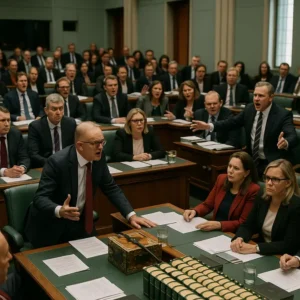
www.tnsmi-cmag.com – The newly elected Myanmar Parliament is set to convene in mid-March, according to the ruling junta, in what could become a decisive moment for the country’s contested political future and the broader stability of Southeast Asia.
After initial meetings, the two houses of parliament are expected to reconvene to select a new president who will assume office in April. On the surface, this looks like a routine constitutional process. In reality, it unfolds against a backdrop of military rule, civil conflict, international sanctions, and a deep crisis of political legitimacy.
Myanmar Parliament and the 2026 Political Crossroads
The announcement that the Myanmar Parliament will gather in mid-March raises immediate questions: Who truly holds power? How representative is this new parliament? And what does the planned presidential selection mean for Myanmar’s fractured political landscape?
Since the military seized power in February 2021, overthrowing the elected government of Aung San Suu Kyi’s National League for Democracy (NLD), Myanmar has experienced one of its most turbulent periods in modern history. Mass protests, the emergence of armed resistance, economic collapse, and widespread human rights abuses have turned the country into a focal point of global concern, as documented by organizations such as the Office of the United Nations High Commissioner for Human Rights.
In this context, any move to convene a new parliament will be judged not just on procedure but on credibility. Let’s examine seven critical questions that will determine whether this new legislative session is a genuine step toward political normalization or merely a carefully staged performance of democracy.
1. Is the New Myanmar Parliament Legitimate or Largely Symbolic?
The core issue surrounding the Myanmar Parliament is legitimacy. While the junta claims to be following a constitutional roadmap, much of the international community, as well as a significant segment of Myanmar’s population, views the military’s post-coup political process as fundamentally flawed.
Key concerns include:
- Election conditions: Reports of restricted political participation, bans on certain parties, and tight control over media and communications cast doubt on the fairness of any electoral process leading to this parliament.
- Exclusion of major stakeholders: Figures from the pre-coup civilian government, including Aung San Suu Kyi and senior NLD leaders, remain jailed or sidelined. Many opposition forces are either in exile or operating underground.
- Military-designed framework: The current political architecture still stems from the 2008 Constitution, which reserves 25% of parliamentary seats for the military by default and grants the armed forces extensive veto powers.
For many citizens and observers, a parliament produced under these constraints risks functioning more as a legitimizing instrument for military power than as a truly representative legislature.
2. How Will the Two Houses of the Myanmar Parliament Operate?
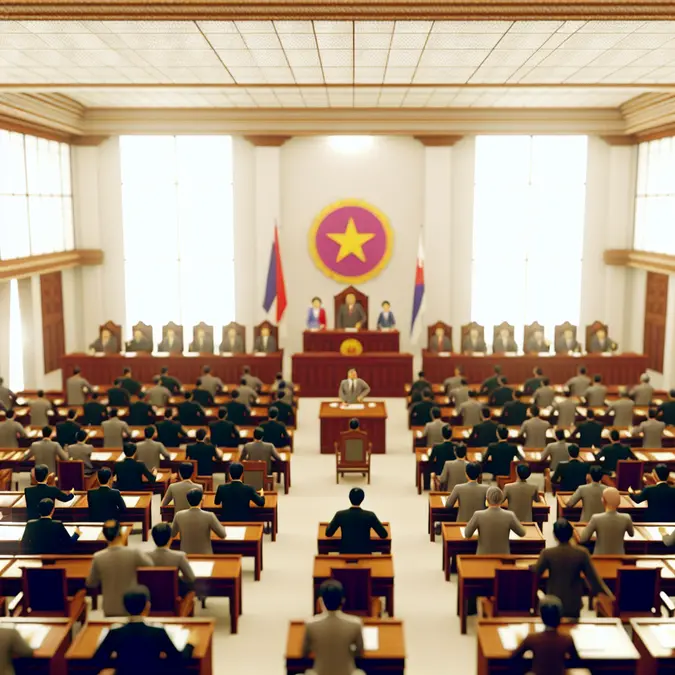
Under the 2008 constitutional framework, the Myanmar Parliament (known collectively as the Pyidaungsu Hluttaw) consists of two chambers:
- Pyithu Hluttaw (House of Representatives) – the lower house, representing townships and population-based constituencies.
- Amyotha Hluttaw (House of Nationalities) – the upper house, representing Myanmar’s states and regions.
Both houses are expected to hold initial meetings in mid-March, followed by a reconvening to select the president. In theory, this structure allows for regional representation and a balance of power. In practice, several dynamics will shape how they function:
- Military bloc: Uniformed officers appointed by the commander-in-chief occupy a quarter of the seats in each house. This bloc often acts as a disciplined voting machine, safeguarding core military interests.
- Pro-junta civilian parties: Civilian parties aligned with or tolerated by the military are likely to dominate the remaining elected seats, especially if opposition parties have been disbanded or restricted.
- Limited space for genuine opposition: Any remaining independent or ethnic parties face enormous pressure, including surveillance, legal threats, and systemic marginalization.
The net effect is a parliament whose internal operations may be tightly managed, with limited room for authentic debate on security policy, federalism, or transitional justice—issues that many citizens consider existential.
3. Choosing a President: Procedure Versus Real Power
According to the junta’s announcement, after their initial convening, the two houses of the Myanmar Parliament will meet again to select a new president, who is expected to assume office in April.
Myanmar Parliament and the High-Stakes Presidential Vote
Under the 2008 Constitution, the president is elected by an electoral college drawn from three groups of lawmakers: lower house, upper house, and military-appointed members. Each group nominates a candidate, and the combined assembly votes to select the president, with the remaining two becoming vice presidents.
In theory, this provides a semi-competitive process. In reality, several structural constraints shape the outcome:
- Military leverage: With a built-in 25% military bloc plus pro-military parties, the armed forces can effectively ensure that the president is either a loyalist or a carefully vetted figure.
- Security portfolios: Even an ostensibly civilian president has limited authority over defense, home affairs, and border affairs, which remain under military control.
- International optics: The junta may favor a more civilian-looking president to soften international criticism while maintaining real control behind the scenes.
For Myanmar’s opposition forces and many civil society groups, any presidential transition within this framework risks being seen as cosmetic rather than transformative.
4. What Does This Mean for the Wider Conflict and Civil Resistance?
The convening of the Myanmar Parliament is not happening in a vacuum. Across the country, resistance to military rule remains active and, in many regions, intensifying. Ethnic armed organizations and new resistance groups, sometimes referred to as People’s Defense Forces, continue to challenge the junta’s control.
Key conflict dynamics include:
- Territorial control: In several border regions, local armed groups exert de facto authority, running schools, courts, and health systems outside junta control.
- Civil disobedience: Civil servants, teachers, and health workers have participated in the Civil Disobedience Movement (CDM), undermining state capacity and legitimacy.
- Humanitarian crisis: Millions have been displaced internally, while economic contraction and sanctions have deepened poverty, as highlighted by institutions such as the World Bank.
Against this backdrop, a new parliamentary session that excludes major resistance stakeholders is unlikely to calm the conflict. Instead, it could harden parallel structures: one centered in Naypyidaw’s official buildings, the other dispersed across contested territories and exile hubs.
5. Regional and International Reactions: ASEAN, Neighbors, and the West
The role of the Myanmar Parliament will be closely watched by regional and global actors, many of whom have struggled to formulate an effective response to the post-coup crisis.
ASEAN’s Dilemma: The Association of Southeast Asian Nations has attempted to mediate through its Five-Point Consensus, which calls for dialogue, an immediate cessation of violence, and humanitarian access. Yet implementation has been minimal. A new parliament and president may allow some ASEAN members to argue for deeper engagement with the junta-led process, while others push for continued exclusion of Myanmar’s military representatives from high-level summits.
Neighboring powers: China, India, and Thailand prioritize border stability, refugee flows, and economic corridors. They may treat the new parliament as a pragmatic interlocutor, regardless of legitimacy concerns.
Western governments: The United States, European Union, and allied partners have largely condemned the coup, imposed targeted sanctions, and engaged with opposition structures such as the National Unity Government (NUG). For them, the new Politics-driven parliamentary process may be seen as insufficient, especially if political prisoners remain detained and violence persists.
6. Economic Stakes: Can a New Parliament Reverse Myanmar’s Downturn?
The economic implications of the Myanmar Parliament convening should not be underestimated. Myanmar’s economy has contracted sharply since 2021, with investors withdrawing, supply chains disrupted, and the local currency under pressure.
A functioning legislature could, in theory, pass budgets, approve infrastructure projects, and signal a return to some degree of predictability. However, several structural challenges remain:
- Sanctions and reputational risk: Many multinational firms remain wary of re-entering the market while sanctions persist and human rights concerns remain high.
- Security risks: Conflict in production zones and along trade routes raises costs and deters long-term investment.
- Policy uncertainty: Without broad political consensus and rule-of-law guarantees, any legislation passed by the parliament may be viewed as reversible or fragile.
For businesses and investors, the question is not just whether Myanmar has a parliament on paper, but whether it has a stable, legitimate, and predictable governance environment. That threshold remains distant.
7. What Are the Long-Term Scenarios for Myanmar’s Political System?
The March convening of the Myanmar Parliament and the April presidential transition form part of a broader, high-stakes struggle over the country’s long-term political architecture. Several scenarios can be sketched, each with different implications for citizens, neighbors, and the international community.
Myanmar Parliament at the Center of Competing Futures
- Managed authoritarian continuity: The junta uses the new parliament to entrench a controlled political system, presenting a civilian façade while retaining decisive power over security, foreign policy, and critical economic sectors.
- Incremental opening: Under pressure from conflict dynamics, international sanctions, and internal elites, the leadership gradually widens political space—allowing more opposition participation and limited reforms through the parliamentary framework.
- Fragmented dual power: The official parliament coexists with parallel revolutionary or resistance institutions. Neither side holds complete territorial or political control, leading to ongoing instability.
- Negotiated transition (longer-term): If battlefield balances shift or economic collapse deepens, elements within the military and opposition might eventually accept a negotiated settlement, possibly requiring a rewritten constitution and a re-founded parliament.
Today, the first scenario—managed authoritarian continuity—remains the most plausible in the short term. Yet Myanmar’s recent history, including the surprising opening of the 2010s and the landslide NLD victories documented by sources such as international election observers, reminds us that political trajectories are rarely linear.
The convening of a new parliament may look like a return to procedural normality, but it does not resolve the foundational dispute over who holds sovereign power in Myanmar—the people, or the guns.
Media, Information Control, and the Battle for Narrative
How the 2026 Myanmar Parliament is perceived will depend heavily on control over information. Independent media have been shuttered, journalists detained, and digital freedoms curtailed since the coup. At the same time, exiled media and citizen journalists continue to document abuses, often at great risk.
State-linked outlets will likely present the mid-March session as a normal, even celebratory, restoration of democratic procedure. In contrast, many independent analysts and civil society groups see it as part of a broader campaign to normalize military dominance. Readers seeking deeper regional context, institutional analysis, and long-form coverage can explore related reporting on International affairs at our magazine.
The struggle over narrative is not merely symbolic. It shapes diplomatic responses, aid flows, public opinion, and ultimately the leverage that domestic and international actors can bring to bear on Myanmar’s rulers.
Conclusion: Why the Myanmar Parliament Matters Beyond Naypyidaw
The convening of the Myanmar Parliament in mid-March and the subsequent election of a new president in April mark a consequential moment in the country’s contested political trajectory. For some, it represents progress toward a controlled, constitutional order under military oversight. For others, it is a performance designed to disguise the persistence of authoritarian rule and the exclusion of key political forces.
What happens inside the parliamentary chambers in Naypyidaw will ripple far beyond their walls. It will shape the prospects for peace in conflict-affected regions, influence regional diplomacy within ASEAN and beyond, and determine whether Myanmar’s economy remains in prolonged stagnation or begins a slow path to recovery.
Ultimately, the measure of this new Myanmar Parliament will not be its ceremonies or schedules, but its willingness and ability to reflect the diverse voices of Myanmar’s people, to curb unchecked power, and to create a credible framework for inclusive dialogue. Until those benchmarks are met, skepticism will remain high—and the gap between formal institutions and lived reality will continue to define Myanmar’s uncertain future.