
 0
0
 0
0
www.tnsmi-cmag.com – Trump heaven has suddenly become more than a late-night punchline or a social media meme. As commentators report that Donald Trump has openly worried about whether he will “get into heaven” when he dies, readers are confronted with an extraordinary collision of religion, politics, and personal legacy. What does it mean when one of the most polarizing figures in modern American history appears to fear divine judgment?
That simple, almost offhand remark about the afterlife opens a much deeper conversation. It forces us to examine how political leaders use faith rhetorically, how voters project moral narratives onto public figures, and how history eventually weighs the lives of powerful people. In this analysis, we explore the symbolic limbo “between heaven and hell” in which Trump now appears to sit – not only spiritually, but politically and culturally.
Trump Heaven: Why a Casual Remark Became a National Rorschach Test
When Trump reportedly admits he worries he might not make it into heaven, the statement resonates because it clashes with his carefully cultivated public persona. For decades, Trump has presented himself as a winner, a dealmaker, a man who never apologizes and rarely concedes error. Within that narrative, self-doubt feels out of character. Yet spiritual insecurity – especially about salvation – is deeply human.
Historically, American presidents have spoken about faith in carefully measured ways. From Abraham Lincoln\’s anguished reflections during the Civil War to Jimmy Carter’s open born-again Christianity, leaders have treated the question of eternal destiny with solemn restraint. Trump, by contrast, has often approached religion as branding: holding up a Bible in front of St. John’s Church, promising to defend Christianity, and courting evangelical leaders while seldom speaking in traditional theological terms. In that context, the specter of Trump heaven versus hell feels less like piety and more like a cultural flashpoint.
For some supporters, any discussion of Trump and heaven is simply another arena for loyalty tests: if you believe he was unfairly persecuted on earth, perhaps you also believe he will be vindicated in eternity. For critics, the suggestion that Trump worries about his soul becomes an opening to revisit unresolved questions about character, ethics, and the moral cost of his political style.
How Religion and Politics Converge Around Trump
To understand why the idea of Trump heaven has traction, we need to look at how faith and politics intertwine in the United States. According to Pew Research Center, a majority of Americans still identify with some religious tradition, and large blocs of voters consistently say that moral character and religious values matter in their political choices. At the same time, surveys show deepening polarization over how faith should shape public life.
Trump’s rise reconfigured that landscape. White evangelical support for Trump remained remarkably high during his presidency, even as controversies, scandals, and indictments accumulated. Many religious leaders justified that alliance on transactional grounds: he would appoint conservative judges, oppose abortion, and defend religious liberty. In this framing, Trump became a kind of flawed instrument of God’s purposes, similar to biblical figures like King Cyrus, who were seen as vessels for divine plans despite their personal shortcomings.
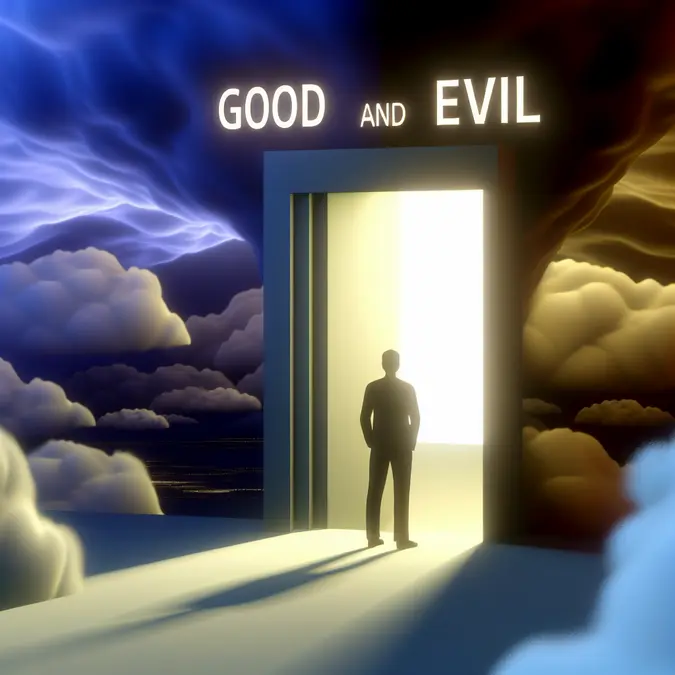
That narrative pushes the question of heaven and hell into a distinctly political key. If you believe Trump was chosen for a special historical role, you may be inclined to assume a benevolent eternal verdict. If you believe he damaged democratic institutions, elevated personal gain above public trust, or inflamed social divisions, you may interpret the limbo “between heaven and hell” as a metaphor for unresolved moral accountability.
For deeper context on how religion has historically influenced U.S. politics, readers may consult this overview of religion in American politics, which traces the evolution from the Founders to the culture wars of the late 20th and early 21st centuries.
Seven Critical Dimensions of the Trump Heaven Debate
To move beyond partisan reactions, we can break the Trump heaven discussion into seven critical dimensions that shape how voters and historians will ultimately read this moment:
Trump Heaven and Personal Conscience
First, there is the question of conscience. When any public figure admits fear about their eternal destination, it suggests some recognition of moral stakes beyond public approval ratings or election outcomes. Whether Trump’s remark reflects genuine spiritual anxiety or a rhetorical device to connect with religious voters, it acknowledges that power has limits. Money, influence, and media coverage cannot settle the question of a person’s soul.
From a psychological perspective, late-in-life reflections on mortality often trigger reevaluation. Biographers of political leaders frequently note a final phase in which legacy, regret, and meaning come to the forefront. If Trump, at this phase of his life, contemplates where he stands “between heaven and hell,” he is participating in a universal human drama – one that transcends party lines.
Evangelical Theology and the Promise of Redemption
Second, we must recognize how American evangelical theology frames these concerns. Within many evangelical circles, the central message is that no one earns heaven through good works alone; instead, salvation comes through faith and repentance. By that logic, even the most controversial public figure can, in principle, be forgiven if they turn sincerely to God.
This theology has been a powerful part of why many evangelicals felt comfortable supporting Trump despite misgivings about his personal conduct. The possibility of redemption allowed them to separate political effectiveness from individual virtue. In that view, the doorway to heaven remains open as long as repentance remains possible. For those who embrace this framework, Trump heaven is not a contradiction but a potential fulfillment of grace.
The Moral Ledger: Policy, Conduct, and Consequence
Third, there is the secular moral ledger. Even without religious belief, societies judge their leaders in quasi-theological terms, weighing achievements against harms. Historians will debate Trump’s record on the economy, foreign policy, judicial appointments, pandemic management, and civic norms. Did he strengthen or weaken institutions? Did he elevate truth or normalize disinformation? Did he expand opportunity or entrench inequality?
This moral accounting is not the same as divine judgment, but it mirrors the logic. Voters, journalists, and scholars collectively decide whether a leader belongs in the pantheon of the “great,” the “ordinary,” or the “dangerous.” In that historiographical limbo, Trump currently stands between figurative heaven and hell, awaiting the verdict of time.
Cultural Mythmaking and the Afterlife of Public Figures
Fourth, we should consider how culture mythologizes leaders after they leave office – sometimes long after they leave this world. Figures like Richard Nixon or Lyndon B. Johnson still occupy contested moral territory, their legacies revised as new archives open and new generations reassess them. Trump will be no different.
In literature, film, and television, the theme of a powerful individual confronting the possibility of damnation recurs again and again. From Dante’s Inferno to modern political dramas, creators explore whether those who wield power can ever fully atone for the damage they cause. The image of Trump heaven versus Trump in hell will likely inspire decades of satire, commentary, and serious artistic work, reflecting the unresolved nature of his impact.
The Voter’s Moral Mirror
Fifth, the Trump heaven debate doubles as a mirror for voters themselves. Debates about whether Trump deserves heaven inevitably slide into questions about what we, as a society, are willing to tolerate or excuse. If a leader can act without restraint and still claim moral vindication, what does that say about our own standards?
Conversely, if we insist that some offenses place a person beyond the reach of grace or forgiveness, we risk hardening into moral absolutism that leaves no room for growth or change. This tension sits at the heart of democratic life: we want leaders to be accountable, but we also recognize that human beings are imperfect and capable of surprising transformation.
Media, Outrage, and Spiritual Irony
Sixth, the media ecosystem plays a crucial role in amplifying or distorting spiritual questions. A single line about not “getting into heaven” can become a headline, a talking point, or a meme stripped of nuance. Outrage-driven platforms thrive on these morally charged soundbites, which can eclipse more substantive debates about policy, governance, and institutional health.
Yet there is also irony here. By commercializing the question of Trump heaven, media outlets highlight exactly the kind of moral commodification that religious traditions often warn against. When eternal questions become clickbait, something essential about faith’s depth is lost. Responsible journalism must resist that temptation, contextualizing such remarks rather than exploiting them.
Limbo as the Defining Metaphor of Our Era
Seventh, the notion of Trump “waiting in limbo between heaven and hell” is an apt metaphor not only for one man, but for a political culture caught between competing futures. The United States stands at a crossroads on questions of democracy, truth, and pluralism. We inhabit a liminal space in which old certainties have eroded but new consensus has not yet formed.
In that sense, Trump heaven is less about the fate of a single soul and more about a nation’s unfinished moral journey. Will the country move toward greater inclusion, accountability, and institutional resilience, or will it drift toward cynicism, tribalism, and permanent distrust? The answer will determine how future generations read not only Trump’s life, but our own.
Historical Parallels: Leaders, Guilt, and the Afterlife
History offers many examples of leaders who faced spiritual turmoil as their careers ended. Some, like Charles de Gaulle, retreated into reflection and writing. Others sought absolution through philanthropy or confession. Still others insisted until the end that history would vindicate them, treating the judgment of posterity as a secular stand-in for heaven.
Trump’s situation is unique, but not entirely without precedent. Leaders who polarize their societies almost always leave a contested moral legacy. Over time, scholars sift the record, weighing rhetoric against reality. For readers interested in how historians approach such figures, our long-form analyses in sections like Politics and Opinion at TNSMI-CMAG provide useful frameworks for thinking about power, responsibility, and consequence.
One lesson from these historical cases is that leaders rarely control how they are ultimately remembered. They may shape narratives, publish memoirs, or rally loyalists, but once they exit the public stage, a longer, slower process of collective evaluation begins. Whether the public associates Trump heaven with redemption, irony, or unresolved conflict will depend less on his words and more on what tangible outcomes his era left behind.
Ethics, Accountability, and the Limits of Power
The fascination with whether Trump will “get into heaven” underscores a deeper anxiety: how do we hold powerful people accountable when legal systems, political incentives, and partisan loyalties often fall short?
- Legal accountability can investigate and punish specific violations of law, but it cannot fully address questions of truth-telling, empathy, or civic virtue.
- Political accountability operates through elections and public opinion, but can be distorted by disinformation, gerrymandering, and structural inequities.
- Moral accountability ultimately depends on shared norms – on what citizens collectively agree is acceptable behavior from those who seek power.
Religious language about heaven and hell becomes a kind of shorthand for these larger concerns. When institutions fail to deliver clear accountability, people turn to spiritual or symbolic frameworks to express their unease. Talk of Trump heaven is, in this sense, a way of asking whether justice – in any form – will finally prevail.
For a broader view of accountability and leadership ethics, resources such as Forbes Leadership offer ongoing analysis of how values, responsibility, and decision-making intersect at the highest levels of power.
Why This Conversation Matters Now
Some readers might wonder why it matters what Trump says about heaven when the country faces urgent challenges: economic uncertainty, climate disruption, geopolitical risk, and social fragmentation. Yet symbolic conversations often reveal underlying realities. By asking who deserves heaven, we are implicitly asking what kind of society we want to be.
Furthermore, the Trump era has blurred lines between private faith and public posture, between spiritual language and political messaging. Parsing remarks about heaven is not an exercise in theological speculation alone; it is an inquiry into how leaders use moral narratives to fortify their base, deflect criticism, or invite sympathy.
When a leader wonders aloud if they will “get into heaven,” they invite us to look beyond the next election cycle and ask what remains when the rallies end, the cameras switch off, and history – or eternity – renders its own verdict.
Conclusion: Trump Heaven as a Test of Our Own Values
In the end, the fixation on Trump heaven tells us as much about ourselves as it does about Donald Trump. We project onto this phrase our hopes for justice, our fears of impunity, and our unresolved conflicts over truth, leadership, and moral responsibility. Whether one views Trump with admiration, alarm, or exhaustion, the question of his eternal fate is less important than the very real, present-tense question of what kind of political culture we are building.
If heaven signifies ultimate reconciliation and hell signifies ultimate rupture, then contemporary America stands, like Trump himself, in a kind of limbo. We are still deciding whether we will move toward greater honesty, accountability, and empathy, or whether we will normalize deception, division, and disdain for institutions. How we answer that collective question will shape not only how historians write about this era, but how future generations live with its consequences.
As we reflect on Trump heaven, we are invited to step back from personalities and ask harder questions about character, community, and the standards to which we hold those who lead us. That reflection, more than any soundbite or campaign slogan, may ultimately determine whether our political life moves closer to its own version of heaven – or drifts further toward a civic hell of permanent mistrust.