
 0
0
 0
0
www.tnsmi-cmag.com – French pastry has arrived on Victoria’s Broad Street with a new seriousness of purpose, as Le Croissant Chaud opens its doors not only as a café, but as a living classroom dedicated to the craft, culture, and science behind great patisserie.
French pastry and the rise of Le Croissant Chaud in Victoria
Victoria’s food scene has grown steadily more sophisticated over the past decade, but the arrival of Le Croissant Chaud on Broad Street marks a new chapter: a dedicated hub for French pastry that places equal weight on technique, storytelling, and customer education. Rather than operating as a simple takeaway bakery, the café positions itself as part atelier, part community space, and part culinary school.
This shift fits into a broader global trend. Around the world, artisan bakeries are no longer content to just display perfect croissants and éclairs in a glass case. They increasingly invite guests behind the curtain, explaining dough fermentation, lamination, and the delicate role of butter and temperature. According to Wikipedia’s overview of pastry, the technical distinction between puff, choux, and shortcrust is as much about method as ingredients – a fact that serious cafés like Le Croissant Chaud are making part of their daily customer conversation.
For readers who follow culinary innovation and consumer trends, this opening is not just a local story. It is a case study in how high-skill, heritage-driven food businesses can thrive in compact urban spaces, engage tourists and locals alike, and build a brand on authenticity rather than novelty alone. It also illustrates how European techniques can be integrated into a distinctly West Coast context, where conscious sourcing and education matter as much as flavor.
French pastry as craft: Why technique matters more than trends
When we speak about French pastry, we are really talking about a disciplined craft that balances precision with creativity. In France, aspiring pâtissiers train for years, mastering core preparations – croissant dough, pâte à choux, crème pâtissière, ganache – before putting their own artistic spin on them. The best modern cafés outside France are adopting a similar philosophy.
Le Croissant Chaud appears to align with this tradition by emphasizing technique over gimmickry. That means:
- Slow fermentation for croissants and viennoiserie, which deepens flavor and improves digestibility.
- Strict temperature control to keep laminated dough layers distinct and flaky.
- Measured sweetness that allows butter, nuts, chocolate, and fruit to shine without overwhelming sugar.
- Consistency from batch to batch, achieved through systematic processes rather than improvisation.
Consumers may not know every detail of these processes, but they experience the difference in texture, aroma, and how they feel after eating. This is one reason why demand for authentic French pastry has been rising in North American cities. As diners become more knowledgeable, they are more willing to travel a few blocks out of their way – or pay slightly more – for demonstrably higher quality.
From an industry perspective, cafés that invest in rigorous training and technique can differentiate themselves in a crowded marketplace. A croissant that shatters into honeycomb layers when torn open, or a lemon tart with perfectly balanced acidity and silk-smooth curd, creates a memory that fuels repeat visits and word-of-mouth marketing. In a tourism-heavy city like Victoria, that impact compounds quickly.
French pastry education: Turning customers into informed enthusiasts
What sets Le Croissant Chaud apart, based on the available information, is its explicit focus on education. Rather than treating recipes as trade secrets, the café leans into explanation, demonstration, and conversation about French pastry techniques.
This educational mission can manifest in several ways:
- Open kitchen design that lets guests see rolling, folding, and baking in real time.
- Workshops or short classes on croissant lamination, tart construction, or choux pastries.
- Informational signage describing key processes, from proofing times to the role of steam in the oven.
- Staff training so front-of-house team members can confidently answer technical questions.
For many readers, this approach will feel familiar from craft coffee and natural wine culture, where transparency and dialogue have become powerful marketing tools. In the patisserie world, this strategy is still emerging, which gives early adopters like Le Croissant Chaud a competitive edge.
There is also a deeper cultural dimension. French pastry, as codified by figures like Auguste Escoffier and later innovators such as Pierre Hermé, sits at the intersection of art and science. Educational cafés help preserve that heritage while translating it for a modern audience who may have first encountered croissants in a supermarket freezer rather than a Parisian bakery. By teaching technique, these businesses invite customers into a more respectful, informed relationship with the food on their plate.
Readers interested in broader culinary culture and hospitality innovation can explore how this educational model compares with trends in coffee, tea, and fine dining via our coverage on Food, where technique-driven concepts increasingly define the most resilient brands.
Broad Street as a stage for culinary tourism and local identity
Location always matters, especially for a niche offering like French pastry. Victoria’s Broad Street combines daily foot traffic, proximity to key tourist routes, and a growing density of independent shops and cafés. That creates an ecosystem where a focused concept like Le Croissant Chaud can thrive.
For the city, the café’s arrival reinforces Victoria’s image as a walkable, food-forward destination. Visitors who might originally be drawn by the harbor or historic architecture increasingly seek out curated culinary experiences: a morning espresso and croissant, an afternoon tasting flight, an evening at a farm-to-table restaurant. Each high-quality stop adds to the overall impression of the city – and encourages longer stays and return visits.
On a local level, the presence of serious French pastry also communicates something about community aspirations. In many mid-sized cities, the shift from generic baked goods to carefully executed patisserie often signals a demographic that values craftsmanship, is willing to pay for quality, and takes pride in supporting independent producers. It also hints at a workforce of skilled bakers and hospitality professionals who see long-term career paths rather than temporary service jobs.
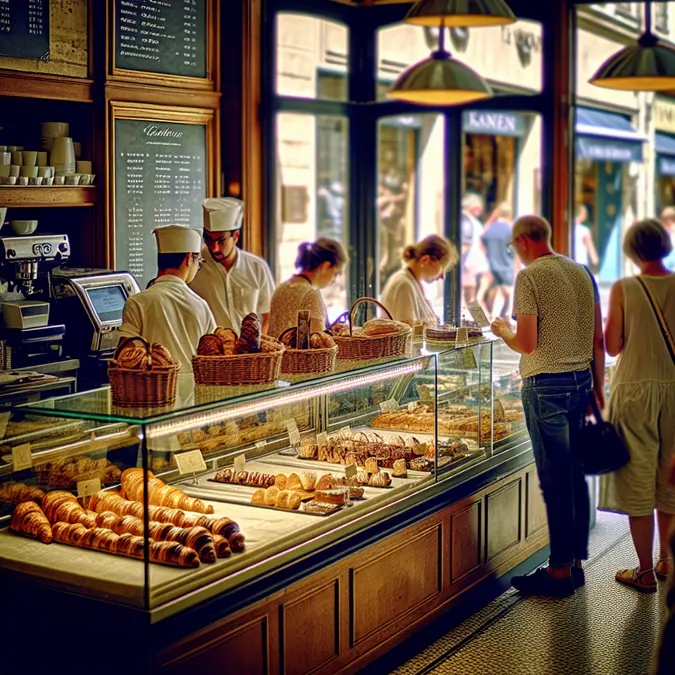
From a business standpoint, Broad Street offers crucial visibility. A well-designed storefront that showcases croissants, pains au chocolat, seasonal tarts, and signature desserts can attract both intentional visitors and curious passersby. If the café integrates thoughtful branding – clear signage, cohesive interior design, and consistent packaging – it can quickly become a recognizable landmark within Victoria’s urban fabric.
French pastry and the business model behind an artisan café
Beyond romance and nostalgia, an artisan French pastry café must also make financial sense. Margins are often tight: butter, flour, chocolate, and fresh fruit costs have risen markedly in recent years, and labor-intensive products demand skilled staff. To succeed, owners must design a smart mix of offerings and revenue streams.
Common strategies that a concept like Le Croissant Chaud might employ include:
- Core morning items such as croissants, brioche, and coffee, which drive daily repeat traffic.
- Higher-margin specialties like entremets, celebration cakes, or plated desserts that showcase technique and justify premium pricing.
- Beverage pairing – expertly brewed coffee, tea, or even non-alcoholic pairings – to complement the pastry experience.
- Classes and workshops that turn the educational mission into an additional revenue stream.
- Seasonal boxes and gift sets targeting holidays and tourist seasons.
In this context, education is not just a cultural value; it is a strategic asset. Teaching customers why certain ingredients cost more, why slow-fermented dough is worth the wait, or why a butter-forward croissant uses specific imported or high-fat butters makes them more comfortable paying for quality. Transparency builds trust – a key factor in any premium food business.
Industry analysts have noted a similar pattern in specialty coffee and craft chocolate, where knowledgeable consumers actively seek out and reward transparent supply chains. Publications such as Forbes Business Council frequently highlight how storytelling and education can increase perceived value and build resilient brands in competitive markets.
French pastry in the age of social media and digital discovery
In 2026, no discussion of a new French pastry café is complete without considering digital visibility. Visually striking pastries – from glossy fruit tarts to beautifully layered viennoiserie – are inherently shareable. Le Croissant Chaud’s success will likely depend in part on how effectively it translates the sensory richness of its offerings into online narratives.
Photogenic displays, behind-the-scenes video clips of dough being laminated, or short educational reels about the difference between puff and croissant dough can all help the café reach audiences far beyond its immediate neighborhood. For readers in hospitality and marketing, this is a clear example of experiential content: educational, aesthetically pleasing, and strongly tied to an on-site visit.
At the same time, social media puts pressure on consistency. A single disappointing croissant can quickly become a negative review. That is where the technical rigor of French pastry training pays off. When process is standardized and staff are deeply trained, the café can deliver a reliable experience that lives up to the images circulating online.
Our broader coverage of Business repeatedly shows that independent operators who invest early in brand storytelling and simple digital systems—online ordering, accurate mapping, and active social feeds—often outperform better-funded but less focused competitors.
French pastry, sustainability, and sourcing choices
Modern consumers increasingly evaluate cafés not only on flavor and ambiance, but also on sourcing and sustainability. This is particularly relevant in French pastry, where butter, eggs, flour, and chocolate form the backbone of nearly every product. How a business like Le Croissant Chaud approaches these inputs can significantly shape its identity and its appeal.
Some of the key questions readers and customers are likely to ask include:
- Are dairy and eggs sourced from local or regional farms with strong animal welfare standards?
- Is flour milled locally, or chosen for specific performance characteristics in laminated dough?
- Does the café prioritize fair-trade or transparently sourced chocolate and coffee?
- How are food waste, packaging, and energy use managed on a daily basis?
While the raw news data doesn’t detail Le Croissant Chaud’s specific policies, we can note that cafés which communicate clearly on these issues generally enjoy stronger loyalty among younger demographics. Furthermore, sustainable sourcing can become part of the educational narrative, linking classic French techniques to contemporary values.
For instance, explaining why a particular high-fat butter is chosen – and how it supports local agriculture – deepens the story behind each croissant. Customers who understand that connection are more inclined to identify with the brand, recommend it to others, and treat a visit as part of a responsible lifestyle rather than mere indulgence.
French pastry: 7 essential insights from Le Croissant Chaud’s debut
To bring these threads together, we can distill seven key insights from the emergence of Le Croissant Chaud on Broad Street and what it signals for the wider French pastry movement in cities like Victoria:
- Craft is central. Technique-driven pastry—proper lamination, fermentation, and temperature control—creates a clear distinction from mass-market baked goods.
- Education is a differentiator. By teaching guests how French pastry works, cafés build trust, justify pricing, and cultivate loyal, informed customers.
- Location amplifies impact. A visible address in a walkable area like Broad Street turns a single café into a city-level culinary signal.
- Business models must be multi-layered. Daily staples, specialty items, classes, and seasonal offerings combine to support financial sustainability.
- Digital presence extends the brand. High-quality imagery and short educational content can make local pastry globally discoverable.
- Sourcing and sustainability matter. Transparent ingredient choices resonate with modern consumers and enrich the brand story.
- Cultural heritage remains a powerful asset. By honoring the roots of French pastry while adapting to local tastes, cafés like Le Croissant Chaud connect global tradition with local identity.
For Victoria, this means more than another café opening. It suggests that the city has reached a level of culinary maturity where nuanced, technique-intensive ventures can find an audience that not only consumes but also seeks to understand what is on their plate.
French pastry and the future of urban café culture
Looking ahead, Le Croissant Chaud’s approach offers a template for how French pastry and similar craft-driven concepts can shape urban café culture. As cities compete to attract residents, tourists, and talent, small but sophisticated venues like this play a disproportionate role in defining place identity. They offer daily rituals—a morning croissant, a weekend class, a quiet moment over a carefully made tart—that connect people to their neighborhoods in tangible ways.
If Le Croissant Chaud sustains its focus on excellence, education, and community engagement, it could become a reference point not only for Victoria but for other mid-sized cities exploring how to elevate their food landscapes. In that sense, its opening on Broad Street is both a milestone and a starting line. It confirms that there is an audience ready for serious French pastry – and it challenges other operators to meet that standard, one laminated layer at a time.