
 0
0
 0
0
www.tnsmi-cmag.com – The En’owkin Centre in British Columbia’s Okanagan region has secured new federal funds for a national arts scholarship program, a development that could quietly reshape how Indigenous artists across Canada access training, visibility, and long-term professional support.
En’owkin Centre and the New Wave of Indigenous Arts Investment
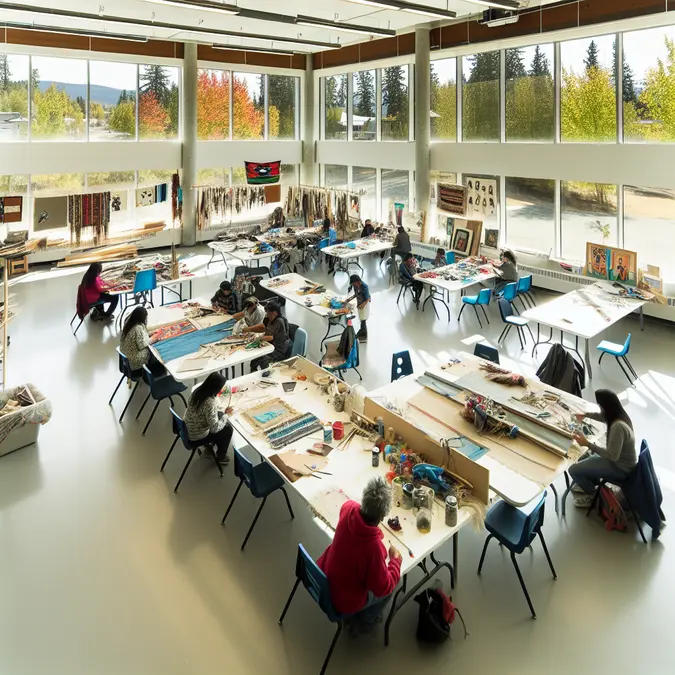
The En’owkin Centre, an Indigenous cultural, educational, and arts institution based in the Okanagan, has long served as a creative and intellectual hub for First Nations, Métis, and Inuit artists and scholars. With fresh federal investment now directed to its national arts scholarship program, the centre is positioned to scale its impact far beyond the Okanagan Valley.
While the precise amount of the federal contribution has not been publicly detailed in the raw news brief, the strategic significance is clear: Ottawa is recognizing the need to back Indigenous-led institutions that are already trusted in their communities. This funding flows not through a generic national program, but through a centre that has deep roots in Indigenous knowledge, language, and artistic practice.
For readers tracking cultural policy, this move sits within a wider context. The Government of Canada has, in recent years, expanded support for Indigenous arts and languages through programs under Canadian Heritage and the Canada Council for the Arts, which publicly documents its Indigenous arts strategy and funding streams on its site (Canada Council for the Arts). The En’owkin Centre funding reinforces that shift from symbolic support toward targeted, structural backing of Indigenous-run organizations.
Why the En’owkin Centre Matters in Canada’s Cultural Ecosystem
To understand why this funding announcement matters, we need to examine what the En’owkin Centre represents within the broader Canadian arts and education landscape.
Founded by Indigenous leaders with a vision to protect and revitalize Indigenous knowledge systems, the centre functions as much more than an arts school. It is a community-rooted institution that integrates language preservation, land-based learning, literature, visual arts, and governance. The name “En’owkin” itself, as widely referenced in academic and cultural literature, derives from the Syilx Okanagan language and refers to a process of consensus-building and respectful dialogue, a philosophical foundation for how the centre operates.
From an educational perspective, the centre’s programs frequently intersect with university-level study, creative writing workshops, and intergenerational mentorship. For instance, Indigenous creative writing and fine arts programs have historically linked emerging creators with established authors and artists who carry both professional experience and cultural responsibility. This is precisely the kind of ecosystem where scholarship funding has a multiplicative effect: it removes financial barriers while reinforcing existing networks of mentorship and community accountability.
Readers can situate this within a broader conversation about Indigenous resurgence and self-determination, themes that frequently surface in our coverage of cultural policy and civic life on Culture and Politics. The En’owkin Centre operates at this intersection, using the arts as both a shield and a compass for Indigenous futures.
How Federal Funds Will Strengthen a National Indigenous Arts Scholarship Network
The heart of this announcement is the centre’s scholarship program for Indigenous artists across Canada. Rather than serving only local participants in the Okanagan, the En’owkin Centre already attracts and supports creators from multiple provinces and territories. Federal funds give it the capacity to deepen and broaden that reach.
En’owkin Centre Scholarships: Focus Keyword in a National Context
What does this mean in practice? Based on patterns from existing Indigenous arts funding models, we can reasonably expect several key impacts from the newly strengthened scholarship program administered by the En’owkin Centre:
- Expanded Access: More Indigenous artists from remote and northern communities may be able to relocate or travel temporarily to the Okanagan for intensive artistic residencies or training programs.
- Multi-Disciplinary Support: Scholarships may cover visual arts, literary arts, performance, digital media, and other hybrid forms that are increasingly common among younger Indigenous creators.
- Intergenerational Mentorship: With greater financial stability, the En’owkin Centre can more consistently bring in senior Indigenous artists as mentors, facilitators, and visiting faculty.
- National Peer Networks: Scholars attending programs form peer cohorts that persist well beyond a single workshop or semester, ultimately shaping Indigenous arts conversations at festivals, galleries, and conferences nationwide.
This model aligns with best practices cited in international cultural policy research. UNESCO and other global bodies have repeatedly emphasized the importance of empowering Indigenous-run institutions to lead cultural programming for their own communities (UNESCO offers extensive documentation on this principle). The En’owkin Centre is a living example of that principle in action.
The Strategic Significance for Federal Arts Policy
Beyond the immediate benefits for individual artists, this funding decision illuminates a deeper strategic shift in federal arts policy. Instead of solely distributing support through large national organizations based in major cities, Canada is investing more directly in regional, Indigenous-led centres that have demonstrated track records.
Several implications stand out for policymakers, arts administrators, and readers who follow cultural governance:
- Decentralization of Cultural Power: The En’owkin Centre funding underscores a movement away from a Toronto- or Montreal-centric funding model toward a multi-nodal network of institutions rooted in specific territories and Nations.
- Reconciliation in Practice: Public discussion of reconciliation often focuses on symbolism; however, allocating federal arts funds to Indigenous-run institutions is an example of resource transfer and structural support.
- Evidence-Based Investment: By backing entities such as the En’owkin Centre—which already demonstrates outcomes in publishing, arts production, and language revitalization—governments can point to measurable cultural and educational returns.
For our readers in policy, this particular funding decision may signal how future federal budgets will be structured: not simply adding line items under broad multicultural umbrellas, but co-developing targeted programs with Indigenous institutions.
How Indigenous Artists Stand to Benefit on the Ground
What will the impact look like from the vantage point of an Indigenous artist navigating today’s arts economy? Let us consider several concrete scenarios in which the newly supported scholarships at the En’owkin Centre could prove decisive.
Overcoming Financial Barriers to Advanced Training
Many emerging Indigenous artists carry disproportionate financial burdens, including student debt, caregiving responsibilities, and the costs of traveling from rural or reserve communities to urban cultural hubs. Scholarships administered through the En’owkin Centre can cover tuition, travel, accommodation, materials, or a combination thereof.
Contrary to popular belief, the primary barrier is rarely a lack of talent; it is the precariousness of everyday life. A well-structured scholarship, backed by stable federal funds, can create the conditions in which an artist can commit to a full season of training, complete a substantial body of work, or take part in a major residency without sacrificing basic security.
Building Credibility and Professional Track Records
Participation in nationally recognized programs run by the En’owkin Centre also has reputational benefits. When artists apply for future grants, residencies, or gallery representation, they can point to the centre’s programs as evidence of rigorous training and community endorsement. Over time, this strengthens both individual careers and the profile of Indigenous arts as a whole within Canada’s cultural economy.
For curators, publishers, and festival programmers, seeing the En’owkin Centre on an artist’s CV signals that the artist has been working in an environment that values both artistic excellence and cultural responsibility. That combination is increasingly sought after in a global arts market that demands authenticity but often under-resources the communities from which it draws inspiration.
Embedding Cultural Protocols into Artistic Practice
One of the quiet yet powerful aspects of the centre’s work lies in how it integrates cultural protocols into creative practice. Scholarship recipients are not simply learning craft techniques; they are engaging with Elders, language speakers, and knowledge-keepers who help guide how stories, images, and performances should be carried into public space.
This approach helps prevent extraction and misrepresentation, common problems when non-Indigenous institutions mediate Indigenous narratives. By keeping the locus of decision-making within an Indigenous-run centre, the En’owkin Centre ensures that scholarship-supported projects emerge from processes of accountability and consent.
Regional Impact: Okanagan as a National Cultural Hub
For the Okanagan region itself, the federal investment solidifies its position as not only a tourism destination but also a national cultural hub. Arts centers, galleries, and educational institutions in the region stand to benefit from greater national visibility as the En’owkin Centre attracts scholarship recipients and visiting artists from across the country.
This can translate into:
- Cultural Tourism: Visitors coming for exhibitions, readings, and festivals associated with the centre’s programs.
- Local Collaborations: Joint initiatives between the En’owkin Centre and municipal or regional galleries, museums, and schools.
- Economic Spillover: Artists and participants spending on accommodation, food, transportation, and local services during their residencies or study periods.
From a civic planning perspective, this amplifies the argument for municipalities and provinces to match federal investment with infrastructure, studio spaces, and long-term partnerships. When one institution like the En’owkin Centre becomes a magnet for creative talent, the entire region has an opportunity to position itself as a leader in Indigenous-led cultural innovation.
What Readers and Stakeholders Should Watch Next
As this federal funding for the En’owkin Centre moves from announcement to implementation, several key questions will shape its long-term significance:
- Scale and Duration: Will the investment be multi-year, allowing the centre to plan and recruit far in advance, or will it require annual renewal?
- Partnerships: How will the centre collaborate with other Indigenous organizations, universities, and cultural institutions to co-deliver or expand scholarship-linked programs?
- Evaluation: What metrics will be used to track the success of the scholarship program—number of artists supported, works produced, exhibitions mounted, or community impacts documented?
Readers should also watch for how other Indigenous cultural institutions respond. If the En’owkin Centre funding becomes a model, we may see strengthened support for Indigenous-led arts centres from coast to coast to coast, each serving its own Nations while contributing to a shared national fabric.
Our ongoing coverage at TNSMI-CMAG will continue to follow how these investments intersect with education, governance, and cultural diplomacy.
Conclusion: En’owkin Centre Funding as a Blueprint for Future Cultural Policy
The federal government’s decision to support the national scholarship program at the En’owkin Centre is more than a regional funding story. It is a case study in how Canada can align its cultural policy with the principles of self-determination, equity, and long-term nation-to-nation relationships. By channeling resources through an Indigenous-led institution with a proven record in arts, education, and cultural stewardship, policymakers are acknowledging that the people best placed to nurture Indigenous creativity are Indigenous communities themselves.
For artists, this translates into tangible opportunities: scholarships that reduce financial barriers, training environments grounded in cultural protocols, and national networks built on shared experience and mutual respect. For the Okanagan, it means new visibility as a creative hub. For the country, it offers a blueprint: empower institutions like the En’owkin Centre, and the benefits will flow not just to individual artists, but to the entire cultural ecosystem.
As readers and decision-makers look ahead, the En’owkin Centre stands as a reminder that meaningful reconciliation in the arts requires sustained investment, trust in Indigenous leadership, and a willingness to let Indigenous institutions shape the national narrative on their own terms.